
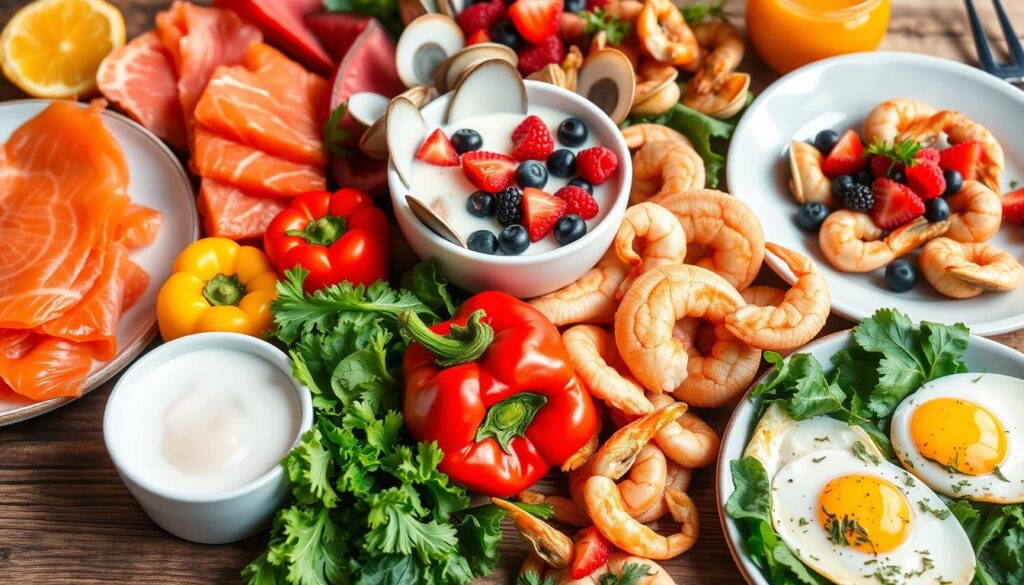
Vitamin B12 is crucial for your body’s health. It supports nerve health, DNA production, and brain performance1. Knowing the best B12 food sources helps ensure you get enough of this vital nutrient.
Your body needs B12 for red blood cell formation and neurological health1. Adults typically require about 2.4 micrograms daily. Some foods provide an impressive percentage of your daily B12 needs2.
Seafood and dairy products offer impressive B12 benefits. Clams provide 7,000% of the Daily Value in just 20 small clams2. Lamb liver is another powerhouse, offering 3,571% of the Daily Value per serving2.
Beef, tuna, and sardines are also excellent B12 sources. These foods can significantly boost your vitamin B12 intake2.
Key Takeaways
- Vitamin B12 is essential for nerve health and DNA production
- Daily requirements vary by age and life stage
- Animal products are primary sources of vitamin B12
- Some foods provide over 1000% of daily vitamin B12 needs
- Dietary diversity helps maintain optimal B12 levels
Understanding Vitamin B12 and Its Vital Role in Your Health
Vitamin B12 is crucial for your health. It supports brain function and red blood cell production. This nutrient is complex, with intricate absorption processes.
Daily Requirements and Absorption Process
Most adults need 2.4 micrograms of Vitamin B12 daily3. Absorption happens in your stomach with intrinsic factor, a protein from stomach cells.
Signs of Vitamin B12 Deficiency
Spotting B12 deficiency symptoms early can help address health issues. Look out for these common signs:
- Persistent fatigue or lack of energy3
- Memory loss, especially in older adults3
- Pale or yellowish skin
- Nerve problems and balance issues4
- Heart palpitations4
Who’s at Risk of B12 Deficiency
Some groups are more likely to have Vitamin B12 deficiency:
| Risk Group | Reason for Increased Risk |
|---|---|
| Older Adults | Reduced stomach acid production4 |
| Strict Vegetarians/Vegans | Limited dietary sources of B12 |
| Individuals with Autoimmune Conditions | Potential interference with B12 absorption4 |
| Those with Digestive Disorders | Impaired nutrient absorption5 |
B12 deficiency affects 3% to 43% of older adults4. Most people in the US get enough B12 from their diet4.
It’s important to know your individual needs. Be aware of potential absorption challenges unique to you.
Your body’s B12 absorption is unique. Understanding your health needs is key to optimal nutrition.
Think you might have a deficiency? Talk to a doctor. They can guide you on B12 absorption and possible supplements5.
Top Animal-Based Vitamin B12 Foods
Animal-based foods offer rich B12 content. They can help you meet daily requirements easily. These foods can transform your nutritional approach.
Seafood is a B12 powerhouse. Clams provide 84.1 mcg of B12 in 3 oz. That’s 3,504% of the daily value6.
Oysters are impressive too. They deliver 24.5 mcg per 3 oz serving. This contributes 1,020% of the daily value6.
Your top foods high in Vitamin B12 include:
- Clams: 84.1 mcg per 3 oz6
- Oysters: 24.5 mcg per 3 oz6
- Beef liver: 70.6 mcg per serving7
- Mackerel: 16.2 mcg per 3 oz7
- Salmon: Nearly 100% of daily value7
The Dutch Food Consumption Survey revealed interesting B12 intake facts. Dairy accounts for 38.5% of total B12 intake. Meat contributes 30%, while (shell)fish provides 8.5%8.
This shows the importance of diverse animal-based foods. They help maintain optimal B12 levels in our bodies.
Remember, variety is key in obtaining your essential nutrients!
Adults need 2.4 micrograms of B12 daily7. Many foods exceed this recommendation. This makes meeting your nutritional needs easier.
Vitamin B12 Foods for Vegetarians and Vegans
Vegetarians and vegans can find reliable Vitamin B12 sources. Several options exist for those on plant-based diets. Your nutrition can thrive with a vegetarian or vegan lifestyle.
Fortified Food Options
Vitamin B12 fortified foods offer great alternatives for meeting nutritional needs. These options are packed with nutrients.
- Breakfast cereals with 25% Daily Value (DV) per serving9
- Nutritional yeast with up to 100% DV per tablespoon9
- Plant-based milk alternatives
- Fortified meat substitutes
Plant-Based B12 Sources
Natural plant sources of B12 are limited. However, some options can boost your B12 intake.
- Dried shiitake mushrooms (requires consuming about 50 grams)9
- Nori seaweed (small amounts)
- Fermented foods
Supplementation Guidelines
Vitamin B12 supplements are often vital for vegetarians and vegans. The recommended daily intake varies by age group.
| Age Group | Daily B12 Requirement |
|---|---|
| Adults | 2.4 micrograms10 |
| Pregnant Women | 2.6 micrograms10 |
| Breastfeeding Women | 2.8 micrograms10 |
Pro tip: B12 supplement absorption rates vary from 50% for lower doses to 0.5% for high doses11. Consult a doctor to find the best supplementation plan for you.
Remember, proactive nutrition planning is key to maintaining optimal health on a vegetarian or vegan diet.
Conclusion
Knowing your Vitamin B12 sources and absorption factors is key to good health. Animal products are the main source, but your diet choices affect B12 levels12. In the US and UK, 6% of adults under 60 lack B12, rising to 20% for those over 6012.
Vitamin B12 is more than basic nutrition. It’s vital for brain function, red blood cell creation, and DNA control12. Vegans and others on strict diets need careful planning to avoid B12 shortages13.
Talk to health experts about meeting your B12 needs. The National Institutes of Health suggests teens and adults need 2.4 micrograms daily12. Your needs may differ, especially if pregnant or breastfeeding12.
Your health depends on keeping good B12 levels. Use a balanced diet or supplements to get enough. Smart nutrition choices help your body work its best13.
FAQ
What is Vitamin B12 and why is it important?
Vitamin B12 is crucial for nerve health, DNA production, and brain function. It supports neurological processes and helps create healthy red blood cells. This water-soluble vitamin is essential for maintaining overall health.
How much Vitamin B12 do I need daily?
Adults need about 2.4 micrograms (mcg) of Vitamin B12 daily. Children require 0.9-1.8 mcg, while pregnant or nursing women need 2.6-2.8 mcg. Requirements vary slightly by age.
What are the best food sources of Vitamin B12?
Animal-based foods are the richest sources of Vitamin B12. These include organ meats, clams, sardines, beef, tuna, trout, salmon, milk, and eggs.
For vegetarians and vegans, fortified foods like nutritional yeast and cereals can provide B12. Non-dairy milk is another option for getting this vital nutrient.
What are the signs of Vitamin B12 deficiency?
Common symptoms include fatigue, memory issues, nerve damage, weakness, and difficulty concentrating. Untreated B12 deficiency can lead to serious neurological problems and pernicious anemia.
Who is most at risk of Vitamin B12 deficiency?
Older adults and strict vegetarians are at higher risk of B12 deficiency. People with intestinal conditions or who’ve had stomach surgery are also vulnerable.
Individuals with autoimmune conditions affecting B12 absorption, like pernicious anemia, face increased risk too.
Can vegetarians and vegans get enough Vitamin B12?
Yes, but they need to be intentional about their B12 intake. Fortified foods like nutritional yeast and plant-based milk can help.
Most vegetarians and vegans will need B12 supplements to meet their daily requirements.
How do I know if I need a Vitamin B12 supplement?
Consult your healthcare provider for a blood test to check your B12 levels. You might need a supplement if you experience persistent fatigue.
Dietary restrictions or being in a high-risk group for deficiency are also indicators.
Are there any side effects of Vitamin B12 supplements?
B12 supplements are generally safe with few side effects. However, always consult your healthcare provider before starting any new supplement regimen.
This is especially important if you have existing health conditions or are taking other medications.
Source Links
- Vitamin B12 foods: What to eat and avoid – https://www.medicalnewstoday.com/articles/vitamin-b12-foods
- Vitamin B12 Foods: 12 Great Sources – https://www.healthline.com/nutrition/vitamin-b12-foods
- How Vitamin B12 Benefits Your Health – https://www.healthline.com/nutrition/vitamin-b12-benefits
- Office of Dietary Supplements – Vitamin B12 – https://ods.od.nih.gov/factsheets/VitaminB12-Consumer/
- Vitamin B-12 – https://www.mayoclinic.org/drugs-supplements-vitamin-b12/art-20363663
- The Top 18 Foods Highest in Vitamin B12 – https://www.health.com/nutrition/vitamin-b12-foods
- The 13 Best Vitamin B12 Foods | Ro – https://ro.co/supplements/vitamin-b12-foods/
- Vitamin B12 Intake From Animal Foods, Biomarkers, and Health Aspects – https://pmc.ncbi.nlm.nih.gov/articles/PMC6611390/
- Vitamin B12: Foods for Vegetarians – https://www.healthline.com/health/vitamin-b12-foods-for-vegetarians
- Vitamin B-12 foods for vegetarians and vegans – https://www.medicalnewstoday.com/articles/320524
- What Every Vegan Should Know About Vitamin B12 – https://www.vegansociety.com/resources/nutrition-and-health/nutrients/vitamin-b12/what-every-vegan-should-know-about-vitamin-b12
- Vitamin B-12: Benefits, foods, deficiency, and supplements – https://www.medicalnewstoday.com/articles/219822
- Vitamin B12 in Health and Disease – https://pmc.ncbi.nlm.nih.gov/articles/PMC3257642/

