
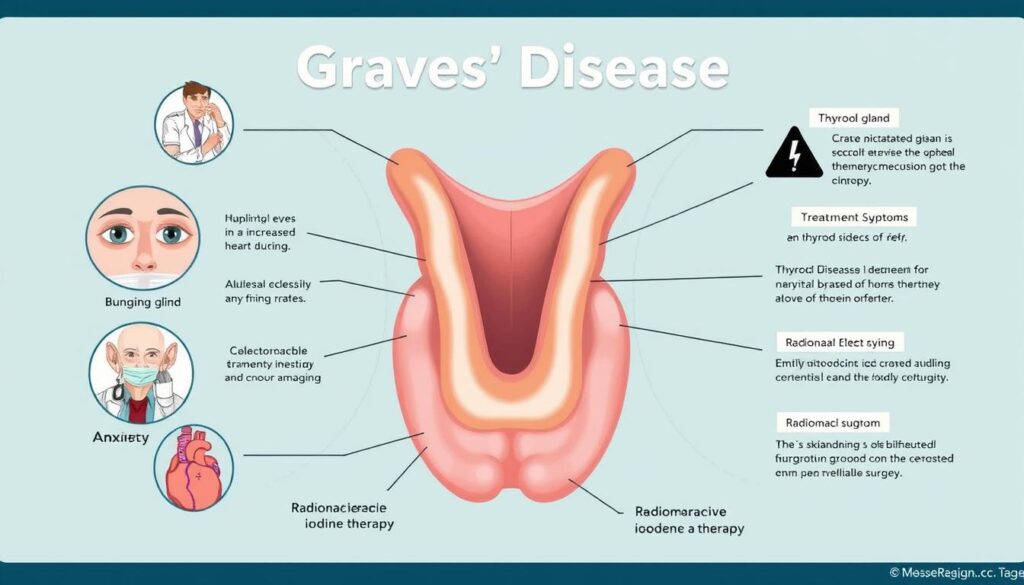
Graves’ disease is an autoimmune disorder that affects your thyroid gland. It causes your thyroid to produce too many hormones. This condition impacts about 1 in 100 Americans1.
Graves’ disease is more common in women and people over 30. It can greatly disrupt your daily life1. The disorder occurs when your immune system attacks your thyroid by mistake.
Thyroid hormones control important body functions like metabolism and heart rate. When your body makes too much, it can cause various symptoms. These symptoms can affect many parts of your body.
Learning about Graves’ disease is crucial for managing it well. It might seem scary at first. However, modern treatments can help control the condition and improve your health2.
Key Takeaways
- Graves’ disease is a common autoimmune disorder affecting the thyroid gland
- Approximately 1 in 100 Americans are diagnosed with this condition
- Women and individuals over 30 are more likely to develop Graves’ disease
- Excessive thyroid hormone production can impact multiple body systems
- Effective treatments are available to manage symptoms and hormone levels
What is Graves’ Disease and How Does It Affect You?
Graves’ disease is a complex autoimmune condition affecting thyroid function and overall health. It occurs when your immune system attacks your thyroid gland. This attack causes an overproduction of hormones3.
The thyrotropin receptor antibody is the main cause of this condition. It triggers excessive thyroid hormone production. Women are more likely to develop this autoimmune disorder3.
Overview of Graves’ Disease
Graves’ disease can manifest through various symptoms, including:
- Thyroid eye disease affecting eye muscles
- Goiter development
- Thyrotoxicosis symptoms
- Rapid heartbeat
- Unexplained weight loss
Causes of Graves’ Disease
The root causes involve complex immune system interactions. Genetic predisposition plays a significant role. Certain factors increase your risk:
- Family history of autoimmune conditions4
- Hormonal changes
- Stress exposure
- Viral infections
Are You at Risk?
Some people are more likely to develop Graves’ disease. Risk factors include:
| Risk Factor | Impact |
|---|---|
| Gender | Women are significantly more prone5 |
| Age | Most commonly diagnosed under 405 |
| Genetics | Family history increases susceptibility4 |
“Knowledge is the first step in managing Graves’ disease effectively.”
Knowing these risk factors can help you monitor your thyroid health. It’s important to seek medical guidance if you’re concerned5.
Recognizing the Symptoms of Graves’ Disease
Graves’ disease has distinct signs that point to thyroid function issues. Your body may signal disruptions through hyperthyroidism and related complications. Spotting these early can lead to better management.
Common Symptoms to Look For
Graves’ disease affects multiple body systems with unique symptoms. You might notice unexpected weight loss despite eating more. Hand tremors, heat sensitivity, and heart palpitations could also occur.
- Unexplained weight loss despite increased appetite
- Persistent hand tremors
- Unusual heat sensitivity
- Heart palpitations
- Frequent bowel movements
How Symptoms Evolve Over Time
Graves’ disease can lead to more complex issues as it progresses. Thyroid eye disease might cause bulging eyes and vision problems6. About one-third of patients develop eye-related complications that impact daily life7.
When to Consult a Healthcare Professional
Some symptoms need immediate medical care. Watch for major vision changes or severe eye pressure. Also, look out for persistent skin changes linked to Graves’ dermopathy.
- Significant vision changes
- Severe eye pressure
- Persistent skin changes associated with Graves’ dermopathy
Early detection and treatment can prevent more serious complications.
Smoking greatly increases the risk of severe eye problems8. If you smoke and have these symptoms, quitting is crucial. It’s an important step in managing your condition7.
Explore more about Graves’ disease symptoms at the Mayo Clinic’s comprehensive guide. It offers valuable insights into this condition.
Diagnostic Insights
| Symptom Category | Potential Indicators |
|---|---|
| Physical Changes | Goiter, weight loss, tremors |
| Emotional/Nervous System | Anxiety, nervousness, irritability |
| Eye-Related | Bulging, pressure, vision changes |
Effective Treatment Options for Graves’ Disease
Graves’ disease management requires a tailored approach. Several treatment strategies exist. Work with your doctor to find the best option for you9.
Antithyroid medications are often the first treatment choice. They reduce thyroid hormone production and manage symptoms9. Methimazole and propylthiouracil are common examples.
Radioiodine therapy offers a more definitive solution. It can control or eliminate Graves’ disease in up to 70% of cases10. This treatment is ideal for elderly patients or those unable to have surgery9.
Beta blockers help manage immediate symptoms. They can reduce rapid heart rate and tremors. These medications work while you undergo primary treatment.
Thyroidectomy is another treatment option. It’s suitable for severe hyperthyroidism or pregnancy planning9. Surgery is considered the most reliable treatment10. However, it carries risks like damage to parathyroid glands9.
Learn more about treatment options at the Mayo Clinic’s comprehensive guide.
Your journey may include corticosteroids for thyroid eye disease. Long-term hormone replacement therapy might be necessary. Up to 50% of patients may experience remission9.
Stay proactive and communicate with your healthcare team. Be patient as you navigate your treatment strategy. Your path to managing Graves’ disease is unique.
FAQ
What exactly is Graves’ Disease?
Graves’ Disease is an autoimmune disorder affecting the thyroid gland. It causes overproduction of thyroid hormones, leading to hyperthyroidism. The immune system mistakenly attacks the thyroid, stimulating it to produce excess hormones.
Who is most likely to develop Graves’ Disease?
Graves’ Disease affects women more often, especially those aged 30-60. Risk factors include family history of thyroid disorders and smoking. Other autoimmune conditions can also increase the likelihood of developing Graves’ Disease.
What are the most common symptoms of Graves’ Disease?
Common symptoms include nervousness, hand tremors, and heat sensitivity. Unexpected weight loss, enlarged thyroid, and heart palpitations may also occur. About 25% of patients experience thyroid eye disease, causing bulging eyes and vision changes.
How is Graves’ Disease typically diagnosed?
Diagnosis involves blood tests to measure thyroid hormone levels. Doctors check for thyroid-stimulating immunoglobulins and perform physical examinations. Imaging tests like ultrasound may be used to assess thyroid function and appearance.
What treatment options are available for Graves’ Disease?
Treatment options include radioactive iodine therapy and anti-thyroid medications. Beta blockers help manage symptoms, while thyroidectomy may be necessary in some cases. Thyroid eye disease treatments include artificial tears, corticosteroids, and orbital decompression surgery.
Can Graves’ Disease be cured?
Graves’ Disease can be effectively managed with proper treatment. Most patients control symptoms through medications, radioiodine therapy, or surgery. Some individuals may need lifelong thyroid hormone replacement therapy after treatment.
What complications can arise if Graves’ Disease is left untreated?
Untreated Graves’ Disease can lead to serious heart problems and pregnancy issues. Thyroid storm, a rare but life-threatening condition, may occur. Brittle bones and vision problems from thyroid eye disease are also possible complications.
How can I manage Graves’ Disease through lifestyle changes?
Lifestyle changes can help manage symptoms of Graves’ Disease. Maintain a healthy diet, exercise regularly, and practice stress management techniques. Quitting smoking and getting enough rest are also important. Work with your doctor to create a tailored management plan.
Source Links
- Graves’ Disease – NIDDK – https://www.niddk.nih.gov/health-information/endocrine-diseases/graves-disease
- Graves disease – https://www.mountsinai.org/health-library/diseases-conditions/graves-disease
- Hyperthyroidism and Graves’ Disease | University of Michigan Health – https://www.uofmhealth.org/conditions-treatments/endocrinology-diabetes-and-metabolism/hyperthyroidism-and-graves-disease
- Graves Disease in Children – https://www.nationwidechildrens.org/conditions/health-library/graves-disease-in-children
- Graves’ Disease – https://www.cooperhealth.org/services/graves-disease
- Graves’ Disease – https://www.thyroidcancer.com/graves-disease
- Hyperthyroidism – https://www.btf-thyroid.org/hyperthyroidism-leaflet
- Graves’ Disease Signs & Symptoms – https://www.rush.edu/conditions/graves-disease
- What’s the Best Way to Treat Graves’ Disease? – https://www.columbiadoctors.org/news/whats-best-way-treat-graves-disease
- How to Treat Graves’ Disease: Top 3 Options – https://www.thyroidcancer.com/blog/how-to-treat-graves-disease-top-3-options

