
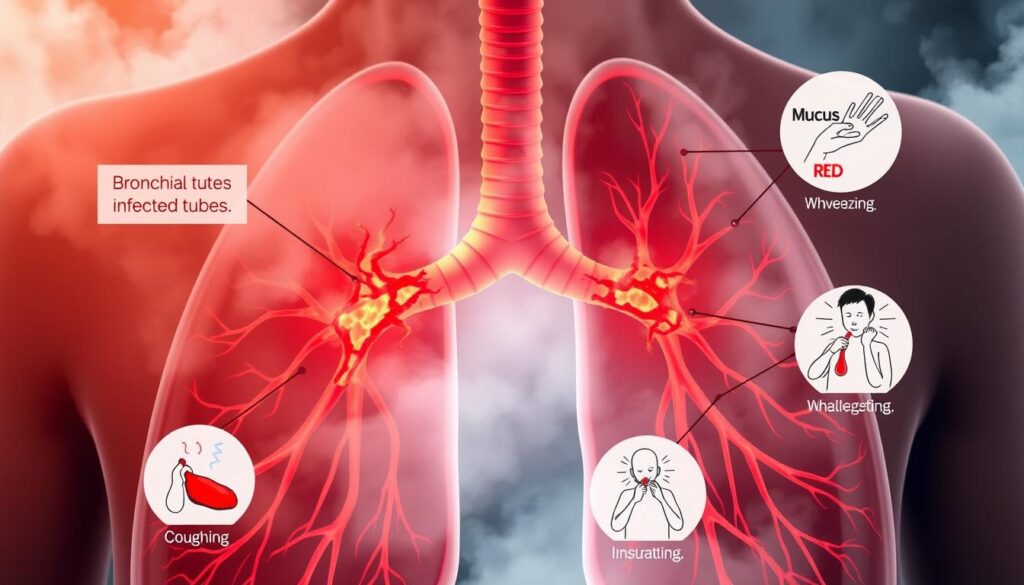
Bronchitis is a respiratory infection that inflames your airways. It causes mucus buildup, leading to a challenging cough. Children under five are especially at risk for acute bronchitis1.
Your body fights to clear the airways. This often results in a cough lasting several weeks2. Most people can recover at home with rest and proper care1.
Common symptoms include coughing, chest congestion, wheezing, and fatigue2. Seek medical help if your cough lasts over three weeks. Also, get help if you notice other worrying symptoms1.
Bronchitis is more than a simple infection. It’s a complex condition affecting lung health. Viruses are the main cause3, but smoking can increase your risk1.
Key Takeaways
- Bronchitis can affect individuals of all ages
- Most cases resolve with home treatment
- Persistent symptoms require medical attention
- Viral infections are the primary cause
- Smoking increases bronchitis risk
Understanding Bronchitis and Its Common Symptoms
Bronchitis is a tough respiratory condition affecting millions yearly. Over 13 million people get acute bronchitis during respiratory virus season4. Knowing its symptoms and types helps manage and recover from it.
Key Signs to Watch For
Bronchitis can cause several distinct symptoms:
- Persistent cough with yellow or green mucus
- Wheezing that creates a whistling sound while breathing
- Chest discomfort and tightness
- Low-grade fever
- Fatigue and general weakness
Types of Bronchitis
There are two main types of bronchitis, each with unique features:
| Acute Bronchitis | Chronic Bronchitis |
|---|---|
| Typically caused by viral infections5 | Often associated with long-term smoking5 |
| Lasts up to two weeks | Persistent condition lasting months |
| Usually resolves without medication4 | Requires ongoing management |
Acute bronchitis usually clears up in two to three weeks. However, the cough may last longer4. Simple steps like washing hands often and avoiding smoke can lower your risk4.
“Understanding your symptoms is the first step towards effective bronchitis management.”
See your doctor if you have ongoing wheezing, recurring fever, or constant chest discomfort. They can provide a thorough check-up and proper treatment.
What Causes Bronchitis and Risk Factors
Knowing the causes of bronchitis helps protect your respiratory health. Respiratory infections are key triggers for this condition6.
Viral infections cause most acute bronchitis cases. These viruses are often the same ones behind colds and flu7. Antibiotics don’t work against viral bronchitis, so prevention is vital7.
- Smoking is the leading cause of chronic bronchitis, with up to 75% of patients being current or former smokers8
- Environmental factors like air pollution and workplace irritants contribute significantly to lung damage6
- Exposure to secondhand smoke increases your bronchitis risk7
Key risk factors for developing bronchitis include:
- Age over 40 years8
- Weakened immune system
- Chronic health conditions
- Occupational exposure to lung irritants7
Genetics can raise your risk of respiratory problems8. Repeated bronchitis episodes might point to a more serious condition like COPD7.
“Prevention is always better than cure when it comes to respiratory health.”
To lower your risk, try quitting smoking and avoiding lung irritants. Good hygiene practices also help protect your respiratory health8.
Conclusion
Managing bronchitis requires a comprehensive approach focusing on symptom relief and prevention. Most acute cases resolve within weeks. Treatment aims to improve your comfort and recovery9. Your doctor might suggest inhalers to ease breathing and support respiratory function10.
Prevention is key in reducing your risk of bronchitis. Good hand hygiene and avoiding tobacco smoke can minimize infection chances10. Staying up-to-date with vaccinations is also crucial. If you smoke, quitting can greatly reduce your risk of chronic respiratory issues11.
Seek medical help if symptoms persist for over three weeks. Also, get help for severe breathing problems. Antibiotics are rarely needed for viral bronchitis9. However, they might be prescribed for bacterial infections.
Your proactive approach to respiratory health can make a big difference. It helps in managing and preventing bronchitis effectively. Take charge of your health today for better breathing tomorrow.
FAQ
What is bronchitis?
Bronchitis is swelling in the airways to your lungs. It causes them to fill with mucus. Your body tries to clear the airways, resulting in a persistent cough.
There are two main types: acute and chronic bronchitis. Acute bronchitis is usually caused by viruses and heals on its own. Chronic bronchitis is long-term and needs ongoing care.
What are the most common symptoms of bronchitis?
The main sign is a lasting cough that may produce yellow or green mucus. Other symptoms include chest congestion, wheezing, and mild fever.
You might also feel tired and have a stuffy nose. The cough can last for two or more weeks.
What causes bronchitis?
Viruses like those that cause colds often lead to acute bronchitis. Smoking is the main cause of chronic bronchitis.
Air pollution and exposure to dust or toxic gases can also cause it. Risk factors include smoking and low resistance from other illnesses.
How is bronchitis treated?
Most cases of acute bronchitis heal on their own within a few weeks. Treatment aims to ease symptoms.
This may include rest, drinking more fluids, and using pain relievers. Doctors might prescribe inhalers to help with breathing. Antibiotics are only used for bacterial infections.
How can I prevent bronchitis?
To avoid bronchitis, stay away from lung irritants, especially smoking. Get yearly flu shots and wash your hands often.
Avoid close contact with people who have breathing infections. Use proper safety gear if you work around lung irritants.
When should I see a doctor?
See a doctor if symptoms last more than three weeks. Seek help if you have a high fever or severe shortness of breath.
Frequent bouts of bronchitis may point to a more serious condition. This could be chronic obstructive pulmonary disease (COPD).
What’s the difference between acute and chronic bronchitis?
Acute bronchitis is short-term, usually caused by viruses. It typically improves within 7-10 days.
Chronic bronchitis is long-term, often due to smoking. It involves a productive cough lasting at least three months. This cough returns for at least two years in a row.
Source Links
- Bronchitis: Symptoms, causes, treatment, and more – https://www.medicalnewstoday.com/articles/8888
- Bronchitis – https://www.healthdirect.gov.au/bronchitis
- Bronchitis – https://www.webmd.com/lung/understanding-bronchitis-basics
- Understanding Bronchitis: A Doctor Answers Your FAQs – https://www.lung.org/blog/bronchitis-frequently-asked-questions
- Bronchitis – https://www.uchealth.org/diseases-conditions/bronchitis/
- Causes and Risk Factors of Bronchitis – https://www.verywellhealth.com/bronchitis-causes-and-risk-factors-4164112
- Bronchitis – Symptoms and causes – https://www.mayoclinic.org/diseases-conditions/bronchitis/symptoms-causes/syc-20355566
- Chronic Bronchitis | Symptoms of Bronchitis | MedlinePlus – https://medlineplus.gov/chronicbronchitis.html
- Acute bronchitis in adults – UpToDate – https://www.uptodate.com/contents/acute-bronchitis-in-adults
- Bronchitis: Symptoms, Causes, Diagnosis, and Treatment – https://www.metropolisindia.com/blog/preventive-healthcare/bronchitis-symptoms-causes-diagnosis-and-treatment
- 12.6: Case Study Conclusion- Bronchitis and Chapter Summary – https://bio.libretexts.org/Courses/Cosumnes_River_College/Introductory_Anatomy_and_Physiology_(Aptekar)/12:_Respiratory_System/12.06:_Case_Study_Conclusion-__Bronchitis_and_Chapter_Summary

