
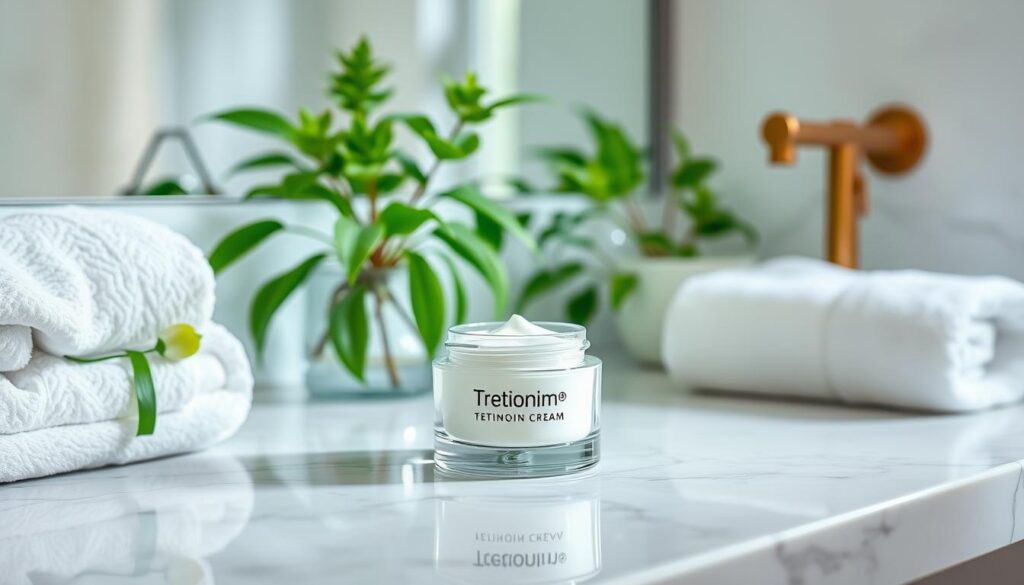
Tretinoin, a powerful vitamin A derivative, can revolutionize your skincare routine. It offers amazing benefits for acne and aging concerns. Get ready to unveil healthier, more radiant skin1.
Tretinoin cream comes in various strengths to address different skin needs. The 0.025% concentration suits beginners and sensitive skin types. Higher strengths of 0.05% and 0.1% target specific skin issues1.
Start with a lower strength to let your skin adjust gradually1. This acne treatment speeds up skin cell turnover, improving texture and appearance2.
You might notice skin improvements within 6 to 8 weeks2. Dermatologists advise careful use of this potent skincare solution. Seek professional advice to find the right approach for your skin1.
Be patient, as full anti-aging benefits may take up to a year to show2. With consistent use, tretinoin can help you achieve the skin you’ve always wanted.
Key Takeaways
- Tretinoin is a powerful vitamin A derivative for skin transformation
- Multiple strength options available for different skin needs
- Improves acne and reduces signs of aging
- Results take time – typically 6-8 weeks for initial improvements
- Professional consultation is crucial before starting treatment
Understanding Tretinoin and Its Benefits
Tretinoin is a powerful retinoid cream that transforms skin care. It offers amazing solutions for various skin issues. From wrinkle reduction to fixing sun damage, tretinoin delivers impressive results3.
What Makes Tretinoin Unique
Tretinoin works by boosting skin cell turnover and collagen production. It’s proven to tackle multiple skin problems effectively3.
- Reducing fine lines and wrinkles
- Treating mild to moderate acne
- Improving overall skin texture
- Fading hyperpigmentation
Key Benefits for Skin Health
Tretinoin provides total skin renewal benefits. It treats sun spots, melasma, and uneven skin tone4. Skin experts recommend it for fixing sun damage4.
Available Forms and Strengths
| Form | Best For | Strength |
|---|---|---|
| Cream | Dry or sensitive skin | 0.025% |
| Gel | Oily skin | 0.05% |
| Compounded | Customized treatment | 0.1% |
Pro tip: Consult a skin doctor to find the best tretinoin formula for you4.
Tretinoin works best with sun protection and regular use in your skincare routine.
How to Use Tretinoin Safely and Effectively
Tretinoin is a powerful skin renewal cream. Using it correctly requires care and patience. Let’s explore how to use this topical cream for healthier skin5.
- Begin with the lowest concentration recommended by your healthcare provider5
- Apply the topical cream at night when skin regeneration is most active5
- Use a pea-sized amount for your entire face
Your skin may need time to adjust. Expect potential side effects like dryness and mild irritation6. These symptoms usually fade as your skin adapts7.
To boost effectiveness and reduce irritation, try these application tips:
- Cleanse your face thoroughly
- Ensure skin is completely dry before application
- Apply a thin layer of tretinoin
- Follow with a moisturizer to reduce potential dryness7
Pro tip: Consider the “sandwich technique” – moisturizer, tretinoin, then another layer of moisturizer for better skin tolerance7.
Sun protection is vital when using tretinoin. Always apply a broad-spectrum sunscreen with SPF 50. This prevents increased sun sensitivity5.
Your skincare routine will change over time. Your skin will adjust to this powerful treatment. Be patient and consistent for best results.
Conclusion
Tretinoin has incredible potential for transforming skin health. It offers significant benefits for anti-aging and acne treatment. Research shows it improves skin texture, reduces fine wrinkles, and addresses hyperpigmentation with regular use.
Patience is key when using tretinoin in your skincare routine. Start with lower concentrations and slowly increase strength. Some may experience initial dryness, but most see substantial improvements over time89.
Seek professional guidance to maximize tretinoin’s benefits. A dermatologist can help choose the right formulation for your skin concerns. Follow expert advice and keep realistic expectations for the best results10.
FAQ
What is tretinoin and how does it work?
Tretinoin is a potent vitamin A derivative used in skincare. It speeds up skin cell turnover and boosts collagen production. This powerful ingredient treats acne, reduces aging signs, and improves skin texture.
What skin conditions can tretinoin treat?
Tretinoin effectively tackles various skin issues. It treats acne, reduces fine lines, and improves overall skin texture. The ingredient also fades hyperpigmentation, sun spots, and melasma.
What strengths of tretinoin are available?
Tretinoin comes in three main strengths: 0.025%, 0.05%, and 0.1%. These options allow for personalized treatment based on skin needs. Dermatologists often suggest starting with the lowest strength.
How should I start using tretinoin?
Begin using tretinoin 2-3 times a week. Apply a pea-sized amount to clean, dry skin. Follow with moisturizer to reduce dryness and peeling.
Always use sunscreen during the day. Tretinoin can increase skin sensitivity. Gradually increase frequency as your skin adjusts.
What side effects can I expect when using tretinoin?
Common side effects include dryness, redness, and peeling. These reactions are normal as skin undergoes increased cell turnover. They typically subside as your skin adapts to the treatment.
Can I use tretinoin with other skincare products?
Be careful when combining tretinoin with other active ingredients. Avoid using it with other retinoids, benzoyl peroxide, or exfoliating acids. You can safely pair tretinoin with hyaluronic acid or niacinamide.
How long does it take to see results from tretinoin?
Initial improvements often appear within 6-8 weeks. More noticeable changes in skin texture and acne reduction typically occur after 3-6 months. Consistent use is key for best results.
Is tretinoin suitable for all skin types?
Tretinoin can be used on most skin types. Those with sensitive or very dry skin should start with a lower strength. Cream formulations suit dry skin, while gels work well for oily skin types.
Source Links
- Tretinoin Cream: The Ultimate Guide | Academic Alliance in Dermatology – https://www.academicallderm.com/blog/tretinoin-cream-the-ultimate-guide-to-understanding-its-benefits/
- Expert tips for using tretinoin in skincare | Curology – https://curology.com/blog/8-tips-for-using-tretinoin-in-skincare-treatment/
- Tretinoin Cream: Skin Benefits, How to Use, Side Effects – https://www.healthline.com/health/skin/tretinoin
- Tretinoin (topical route) – https://www.mayoclinic.org/drugs-supplements/tretinoin-topical-route/description/drg-20066521
- How To Use Tretinoin Properly – https://cityskinclinic.com/how-to-use-tretinoin/
- How to use tretinoin: A Dermatologist’s guide for proper use – https://miiskin.com/tretinoin/how-to-use-tretinoin/
- Dermatologist Reveals How To Use Tretinoin Cream – https://drdavinlim.com/a-z-skin-care/tretinoin/
- Topical tretinoin for treating photoaging: A systematic review of randomized controlled trials – https://pmc.ncbi.nlm.nih.gov/articles/PMC9112391/
- Safety and Efficacy Evaluation of Tretinoin Cream 0.02% for the Reduction of Photodamage: A Pilot Study – JDDonline – Journal of Drugs in Dermatology – https://jddonline.com/articles/safety-and-efficacy-evaluation-of-tretinoin-cream-002-for-the-reduction-of-photodamage-a-pilot-study-S1545961612P0083X
- Topical Tretinoin and Alpha-Hydroxy Acids for Photoaging – https://www.aafp.org/pubs/afp/issues/1998/0315/p1404.html

