
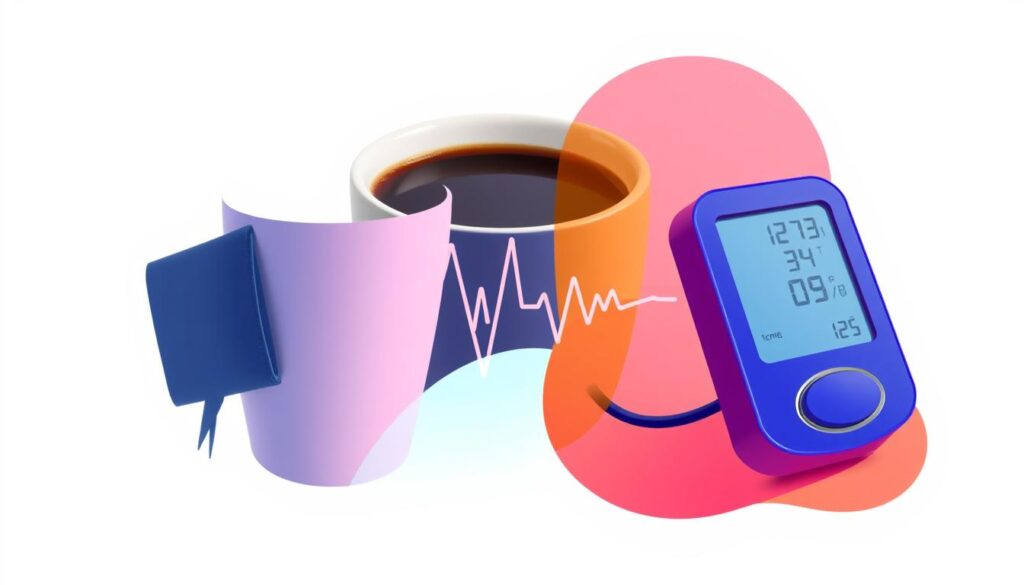
Your morning coffee might do more than wake you up. It could briefly affect your blood pressure1. Understanding how caffeine impacts hypertension is vital for your overall health2.
About 85 to 90% of US adults enjoy their daily coffee2. Caffeine can cause a short-term blood pressure spike. However, regular drinkers often develop a tolerance, reducing long-term cardiovascular risks3.
The FDA suggests limiting daily caffeine intake to 400 milligrams1. Your response to caffeine can vary. It’s crucial to know how it affects your cardiovascular system3.
Key Takeaways
- Caffeine can cause temporary blood pressure increases
- Moderate coffee consumption may have neutral cardiovascular effects
- Individual tolerance to caffeine varies widely
- Regular coffee drinkers often develop caffeine tolerance
- Consultation with healthcare professionals is recommended for those with hypertension
Understanding Caffeine and Blood Pressure: The Basic Connection
Caffeine affects blood pressure regulation in complex ways. It impacts your cardiovascular system subtly yet significantly. The connection between dietary intake and caffeine consumption varies among individuals.
How Caffeine Impacts Your Cardiovascular System
Caffeine in energy drinks or coffee stimulates your central nervous system. This creates immediate physical responses. Global coffee consumption reaches an impressive 19 billion pounds yearly4.
Your body experiences a brief increase in blood pressure after consuming caffeine. This effect can last up to three hours5.
Short-term vs Long-term Blood Pressure Effects
Research reveals fascinating insights into caffeine’s impact:
- 200–300 mg of caffeine can increase systolic blood pressure by 8 mm Hg and diastolic by 6 mm Hg4
- Regular coffee drinkers develop caffeine tolerance, reducing long-term blood pressure changes5
- Moderate coffee consumption (3-5 cups daily) may actually lower heart disease risk by 15%4
Individual Sensitivity and Tolerance Levels
Your personal response to caffeine can vary greatly. Some might see a 5-10 point blood pressure increase after drinking caffeinated beverages5.
The U.S. Food and Drug Administration suggests a safe daily caffeine intake of 400 milligrams. This recommendation applies to most adults5.
Understanding your body’s unique caffeine response is key to maintaining cardiovascular health.
Potential side effects of excess caffeine include:
- Insomnia
- Heartburn
- Palpitations
- Anxiety
To minimize risks, experts suggest gradually reducing caffeine intake. They also recommend monitoring your blood pressure before and after consumption5.
Safety Guidelines for Coffee Consumption with Hypertension
Caffeine intake needs careful thought if you have high blood pressure. It’s vital to know how coffee affects your heart rate and stress response. This knowledge helps you make smart choices about your daily drinks.
If you have high blood pressure, drink coffee in moderation. Be aware of how it affects you. An 8-ounce cup of coffee typically contains 80 to 100 milligrams of caffeine.
This amount can impact your heart health. Listen to your body and adjust your intake as needed67.
“Moderation is the key to enjoying coffee while maintaining heart health”
Here are some essential guidelines for safe coffee consumption:
- Monitor your blood pressure before and after drinking coffee
- Limit intake to 2-3 cups daily
- Consider switching to decaffeinated options
- Pay attention to your individual sensitivity
Those with severe hypertension (160/100 mmHg or higher) should be extra careful. Research shows a potential risk with high coffee intake. Two or more cups daily might double the risk of heart problems6.
| Beverage | Caffeine Content | Cardiovascular Impact |
|---|---|---|
| Drip Coffee | 85-124 mg per 12 oz | Moderate risk |
| Green Tea | 30-50 mg per 8 oz | Low risk |
| Decaf Coffee | 3 mg per 8 oz | Minimal risk |
Keep in mind that caffeine affects everyone differently. Your body’s response is unique. Talk to your doctor about managing your heart health and coffee intake7.
Conclusion
Caffeine affects blood pressure differently for each person. Moderate coffee drinking might benefit heart health. Some people who drink 4-7 cups daily may lower their diabetes risk8.
Listen to your body when managing caffeine intake. Some experience minor blood pressure changes, while others are more sensitive. Typically, 5 cups of coffee can raise blood pressure by 2/1 mmHg8.
Consult healthcare professionals for personalized advice on caffeine consumption. They can help you understand how it affects your health. This is especially important if you have high blood pressure.
Balance your coffee intake with a nutrient-rich diet. Stay active to support your heart health. These habits will contribute to your overall cardiovascular wellness.
FAQ
How does caffeine affect blood pressure?
Caffeine can cause a short-term increase in blood pressure. This effect is more noticeable in people who don’t consume it regularly. The exact process isn’t clear, but it might involve blocking artery-widening hormones or boosting adrenaline release.
Regular caffeine drinkers often develop a tolerance. This can lessen long-term effects on blood pressure.
Is it safe to drink coffee if I have hypertension?
Most people with hypertension can safely drink 2-5 cups of coffee daily. But if your blood pressure is very high (160/100 mmHg or more), be careful. Talk to your doctor about your coffee habits.
It’s a good idea to check your blood pressure before and after drinking coffee. This will help you understand how your body reacts.
How much caffeine is considered safe daily?
The FDA says 400mg of caffeine per day is safe for most adults. This equals about 4-6 cups of coffee. However, everyone’s tolerance is different.
Some people may be more sensitive to caffeine’s effects. Pay attention to how your body responds.
Can caffeine increase my risk of heart problems?
The link between caffeine and heart health is not straightforward. Moderate coffee drinking may actually benefit heart health. It might lower risks of heart failure and stroke.
But for those with severe high blood pressure, two or more cups daily could be risky. It may double the risk of death from heart issues.
Are there alternatives for coffee lovers with high blood pressure?
Yes, decaf coffee and green tea are good options. Green tea doesn’t seem to increase risks like coffee does. This might be due to its polyphenol content.
If caffeine affects you strongly, try switching to decaf. You can also cut back on your overall intake.
What side effects should I watch for when consuming caffeine?
Watch out for trouble sleeping, heartburn, anxiety, and feeling jittery. You might also notice your heart rate going up. Some people process caffeine more slowly, which can make these effects worse.
If you feel very uncomfortable, consider reducing how much caffeine you consume.
Does caffeine interact with blood pressure medications?
There are no known issues between caffeine and common heart medications for conditions like high blood pressure. However, it’s always best to check with your doctor about your specific situation.
They can advise you on potential interactions and help you make the best choices for your health.
Source Links
- Is Your Daily Cup of Coffee Raising Your Blood Pressure? – https://www.health.com/does-coffee-raise-blood-pressure-8697140
- Does caffeine raise blood pressure? What every coffee drinker needs to know – https://www.bswhealth.com/blog/does-caffeine-raise-blood-pressure-what-every-coffee-drinker-needs-to-know
- Hypertension: 3 Cups of Coffee a Day May Lower Blood Pressure – https://www.healthline.com/health-news/hypertension-3-cups-of-coffee-a-day-may-lower-blood-pressure
- Caffeine in Coffee: How Does It Affect Your Blood Pressure? – https://www.healthline.com/nutrition/coffee-and-blood-pressure
- What caffeine does to blood pressure – https://www.mayoclinic.org/diseases-conditions/high-blood-pressure/expert-answers/blood-pressure/faq-20058543
- People with very high blood pressure may want to go easy on the coffee – https://www.heart.org/en/news/2022/12/21/people-with-very-high-blood-pressure-may-want-to-go-easy-on-the-coffee
- The Safety of Caffeine Consumption – https://www.aafp.org/pubs/afp/issues/2007/1101/p1282a.html
- Habitual coffee consumption and blood pressure: An epidemiological perspective – https://pmc.ncbi.nlm.nih.gov/articles/PMC2605331/

