
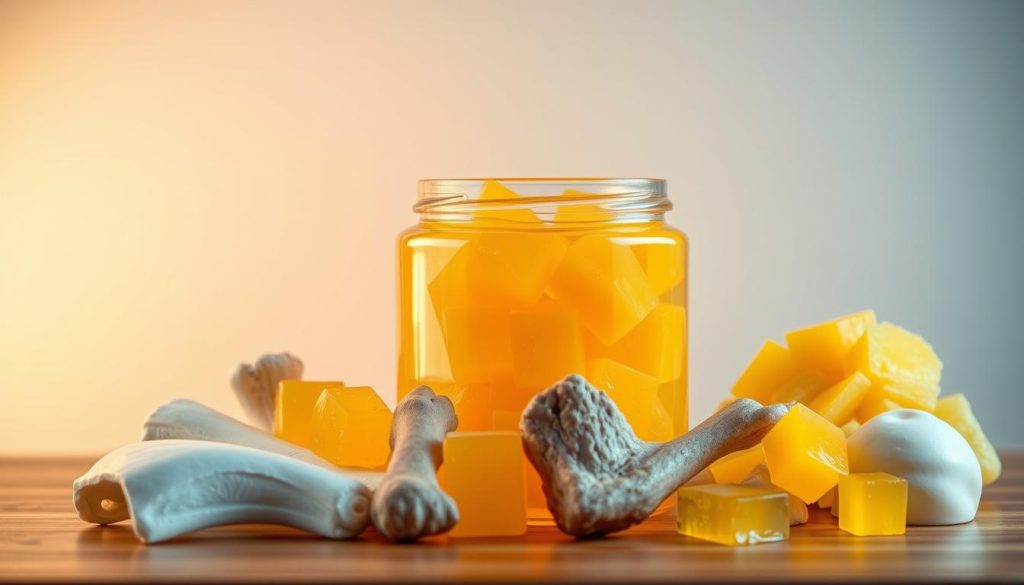
Gelatin, a complex protein, intrigues consumers with dietary restrictions. It’s typically made from animal bones, skin, and connective tissues. Sources include beef, pork, and fish1.
Food labels often lack clarity about gelatin’s origin. This confusion affects many popular products. Gelatin is used in foods, medicines, and cosmetics1.
Muslims pay close attention to gelatin sources due to dietary rules. These guidelines greatly influence food choices2. Scholars debate gelatin’s permissibility based on its production and source3.
Key Takeaways
- Gelatin comes from various animal sources, including beef, pork, and fish
- Food labels often lack clear information about gelatin origins
- Religious dietary guidelines impact gelatin consumption choices
- Different interpretations exist regarding gelatin’s permissibility
- Consumers should research gelatin sources carefully
Understanding Gelatin Sources and Production Methods
Gelatin is a protein from animal collagen used in food and industrial applications. It comes from pork, beef, or fish, each with unique traits4.
Gelatin comes from animal tissues through special processes. Pork gelatin is made from pigskin, while beef gelatin comes from cattle hide and bones5.
Gelatin Production Techniques
Gelatin extraction turns animal collagen into a versatile protein ingredient. Two main techniques are used in production:
- Type A Gelatin (Acid Process): Used for pork gelatin, involving acid treatment at pH 1-4 for 8-30 hours5
- Type B Gelatin (Alkaline Process): Typically used for bovine sources, requiring lime treatment for 5-20 weeks5
Common Food Products Containing Gelatin
Gelatin is found in many food products. Some common items include:
- Marshmallows
- Gummy candies
- Yogurt
- Jellies
- Pharmaceutical capsules
Vegetarian and Kosher Alternatives
Plant-based options exist for those seeking vegetarian or kosher alternatives. Agar-agar and carrageenan are popular substitutes that mimic gelatin’s gelling properties4.
| Gelatin Type | Source | Processing Method |
|---|---|---|
| Pork Gelatin | Pigskin | Acid Treatment |
| Beef Gelatin | Cattle Hide | Alkaline/Acid Treatment |
| Fish Gelatin | Fish Skin | Mild Acid Treatment |
Knowing gelatin’s sources and production methods helps consumers make smart choices. This knowledge empowers people to choose products that align with their preferences.
Gelatin and Halal Concerns
Halal certification for gelatin products is vital for Muslims following dietary rules. With 1.6 billion Muslims worldwide, transparent ingredient sourcing is crucial for ethical food production. This growing demand affects the global food industry significantly.
Islamic scholars have varied views on gelatin consumption. The main issue is determining if gelatin sources are allowed. Pork-based gelatin is strictly forbidden for Muslim consumers6. Beef gelatin can be halal if the animal is slaughtered following Islamic guidelines5.
Religious dietary rules require careful checking of product origins. The Islamic Food and Nutrition Council of America (IFANCA) ensures gelatin meets Islamic standards5. Consumers can look for certified halal products from manufacturers like Nabeel Industries and Kerala Chemicals5.
Plant-based alternatives offer solutions for those worried about gelatin sources. Agar-agar, pectin, and carrageenan are excellent substitutes that follow halal dietary rules. The global market is adapting to meet Muslim consumers’ needs for ethical and religiously approved food options.
FAQ
What exactly is gelatin?
Gelatin is a protein from collagen, extracted from animal parts. It’s used in food, medicine, and cosmetics as a thickener. Gelatin acts as a gelling agent and stabilizer in various products.
How can I tell if gelatin is pork or beef-based?
Product labels rarely specify the animal source. Look for halal or kosher-certified items for strict sourcing. The most reliable way is to contact the manufacturer directly.
What common food products contain gelatin?
Gelatin is in many foods like marshmallows, gummy candies, and jellies. It’s also in some yogurts, ice creams, and vitamin capsules. Desserts like panna cotta and jello use gelatin too.
Is there a vegetarian alternative to gelatin?
Yes! Plant-based options include agar-agar from seaweed and carrageenan. Pectin and vegetable gums are also good substitutes. These alternatives provide similar gelling properties for various dietary needs.
What makes gelatin halal or non-halal?
The animal source is key. Pork gelatin is non-halal. Beef gelatin can be halal if properly slaughtered. Most Islamic scholars consider fish-based gelatin halal.
How can I identify halal-certified gelatin?
Look for official halal symbols from recognized Islamic groups. These show the product meets Islamic dietary laws. Trusted certifiers include IFANCA, ISNA, and local Islamic centers.
Are there kosher gelatin options?
Kosher gelatin comes from kosher-slaughtered cattle or fish. Some certifications allow plant-based alternatives. Always check the specific kosher certification for exact sourcing.
Why is ingredient transparency important for gelatin?
Transparency matters for religious, ethical, and dietary reasons. Knowing gelatin’s source helps people make informed food choices. It respects religious, cultural, and personal dietary needs.
Source Links
- How To Use Gelatin – https://www.davidlebovitz.com/how-to-use-gelatin/
- What Is halal? – https://www.webmd.com/food-recipes/what-is-halal
- Question- What is the Ruling on Gelatin Whether Derived from Cows or Pigs? – https://www.virtualmosque.com/islam-studies/question-what-is-the-ruling-on-gelatin-whether-derived-from-cows-or-pigs-answered-by-abu-majeed/
- A Review of Gelatin Source Authentication Methods – https://pmc.ncbi.nlm.nih.gov/articles/PMC6072727/
- Gelatin: Manufacturing, Uses, Health Affects, and Issues of Halal/Haram – IFANCA – https://ifanca.org/resources/gelatin-manufacturing-uses-health-affects-and-issues-of-halal-haram/
- Meeting the requirements of halal gelatin: A mini review – https://medcraveonline.com/MOJFPT/meeting-the-requirements-of-halal-gelatin-a-mini-review.html

