
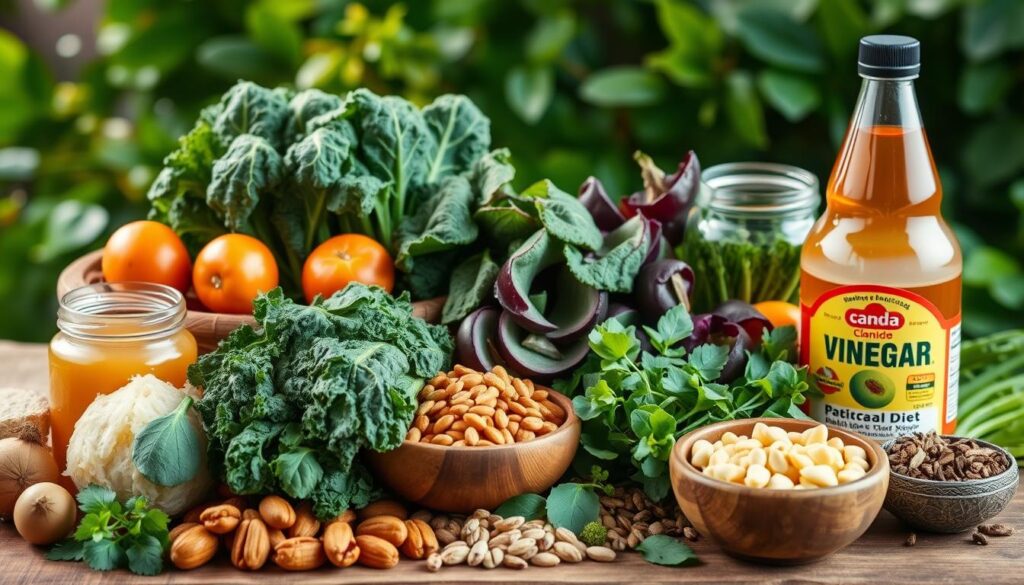
The Candida Cleanse Diet could be your answer to mysterious health issues. It tackles a widespread problem affecting millions globally1. Candida overgrowth can impact your gut health and overall well-being2.
This diet isn’t just a quick fix. It’s a thorough plan to balance your body’s internal ecosystem. It focuses on eliminating foods that may fuel yeast growth1.
The diet’s core principle is simple. It removes foods that support Candida overgrowth, like sugar and white flour1. These changes can potentially reduce Candida’s impact and boost your health2.
Key Takeaways
- Candida Cleanse Diet targets yeast overgrowth in the body
- Eliminates foods that potentially support Candida growth
- Helps improve gut health and overall well-being
- Addresses various symptoms of Candida overgrowth
- Requires a comprehensive approach to diet and lifestyle
Understanding Candida Overgrowth and Its Impact on Health
Candida is a tiny organism that affects human health. It’s naturally present in our bodies. However, when imbalanced, it can cause health issues3.
Candida’s world is complex and fascinating. It influences our gut microbiome balance. Let’s explore its features and potential effects on our health.
What is Candida Albicans?
Candida is a group of over 100 yeast species. It lives in various parts of our body. These include the skin, mouth, throat, and gut3.
Usually, Candida is harmless. But certain conditions can cause it to grow too much. This overgrowth can lead to health problems.
Common Symptoms of Candida Overgrowth
Candida overgrowth can show up in many ways. It affects different parts of the body.
- White patches in the mouth
- Inflammation and throat pain
- Persistent fatigue
- Recurring urinary tract infections
- Skin irritations
- Digestive discomfort
These symptoms can greatly affect your daily life. They can impact your overall well-being3.
Risk Factors and Triggers
Several things can cause Candida overgrowth. These factors can upset your gut balance:
| Risk Factor | Potential Impact |
|---|---|
| Antibiotic Use | Disrupts natural bacterial balance |
| High Sugar Diet | Promotes yeast growth |
| Weakened Immune System | Reduces natural defense mechanisms |
| Stress | Alters metabolic processes |
An antifungal diet can help manage Candidiasis. Probiotic foods also restore microbial balance4.
Balancing your internal ecosystem is key to preventing Candida overgrowth and maintaining optimal health.
The Essential Guide to Candida Cleanse Diet
The Candida cleanse diet aims to rebalance your body’s internal ecosystem. It’s a low-sugar diet that fights harmful yeast. This approach introduces probiotic foods to support gut health56.
An effective antifungal diet requires knowing what to eat and avoid. Let’s explore key dietary guidelines.
Foods to Embrace
- Non-starchy vegetables
- Gluten-free grains like quinoa
- High-quality proteins
- Healthy fats
- Probiotic-rich foods5
Foods to Avoid
- High-sugar fruits
- Gluten-containing grains
- Refined oils
- Artificial sweeteners
- Alcohol7
A typical meal plan includes eggs with veggies for breakfast. Lunch could be a protein-packed salad. Dinner might feature a quinoa stir-fry5.
Probiotic supplements can boost your dietary efforts6.
Remember, the Candida diet is typically a short-term approach to restore balance to your body’s microbiome5.
Scientific evidence for long-term effectiveness is limited7. However, many people report improved energy and digestive health6.
Conclusion
The Candida Cleanse Diet offers a complex approach to gut health management. Many report positive experiences, despite limited scientific evidence. About 75% of women face yeast infections, making dietary interventions potentially relevant8.
Implementing this diet requires careful thought. Experts warn against drastic changes without professional guidance. The diet’s impact on overall gut health remains uncertain. Some clinicians stress the need for personalized medical diagnosis8.
Focus on sustainable lifestyle changes, not strict short-term rules. Nutrition is key in managing potential Candida overgrowth. Studies show certain foods like coconut oil may reduce Candida colonization9.
Aim for a balanced diet that supports natural healing. Maintain a healthy gut microbiome. The Candida Cleanse Diet isn’t a universal solution.
Your health needs and medical advice should guide your food choices. Stay informed and work with healthcare professionals. Approach your gut health journey with patience and understanding.
FAQ
What exactly is the Candida Cleanse Diet?
The Candida Cleanse Diet targets candida overgrowth by cutting out foods that fuel yeast growth. It limits sugar, gluten, and some dairy. The diet focuses on whole foods that boost gut health and immunity.
How long should I follow the Candida Cleanse Diet?
The length varies for each person. Some see changes in weeks, others in months. Work with a doctor to set the right timeline for you.
They’ll make sure you’re getting proper nutrition throughout the diet.
What are the main foods I should avoid on this diet?
Skip high-sugar fruits, gluten grains, refined oils, and sugary condiments. Also avoid some dairy, artificial sweeteners, and certain meats. These foods can feed candida and hurt gut health.
What foods are recommended on the Candida Cleanse Diet?
Eat low-sugar fruits, non-starchy veggies, and gluten-free grains. Choose high-quality proteins, healthy fats, and probiotic-rich foods. These support your immune system and balance gut bacteria.
What are the common symptoms of candida overgrowth?
Look for digestive issues, chronic fatigue, and skin problems. Recurring urinary tract infections and mood swings are also signs. These may point to an unbalanced gut that the diet aims to fix.
Are there any supplements recommended during the diet?
Probiotics often help boost the diet’s effects. They restore good bacteria in your gut and aid digestion. Always check with a doctor before starting new supplements.
Is the Candida Cleanse Diet scientifically proven?
Science hasn’t fully backed this diet, but many report feeling better. It mainly promotes healthier eating by cutting processed foods. View it as a short-term plan guided by a pro.
What are the risk factors for candida overgrowth?
Key risks include high-sugar diets, heavy drinking, and chronic stress. Gut imbalance, diabetes, and weak immunity also play a role. Tackling these issues helps manage candida long-term.
Can I completely cure candida overgrowth with this diet?
The diet isn’t a guaranteed cure but can help manage candida overgrowth. Lasting health improvements come from sustainable diet changes and stress management. Addressing underlying health issues is also key.
Is the Candida Cleanse Diet safe for everyone?
Not always. Talk to a doctor before starting, especially if you’re pregnant or have health conditions. They can tailor the diet to your specific needs.
Source Links
- What to Know About Candida Cleanse – https://www.webmd.com/diet/what-to-know-about-candida-cleanse
- The Ultimate Candida Diet Program – https://globalhealing.com/blogs/education/ultimate-candida-diet-program?srsltid=AfmBOoq1lwMMs592-BWwagJChGLWJ1jWm5CyPaM-_GVPHVT96507W5hd
- Candida diet: How it works, research, and food lists – https://www.medicalnewstoday.com/articles/326795
- Understanding Candida Die-Off: Causes, Diagnosis, Treatment & More – https://www.healthline.com/health/infection/candida-die-off
- The Candida Diet: Beginner’s Guide and Meal Plan – https://www.healthline.com/nutrition/candida-diet
- Candida Cleanse: Diet & Supplements To Treat Candida – https://www.thecandidadiet.com/candida-cleanse/
- Why try the candida cleanse? – https://www.mayoclinic.org/healthy-lifestyle/consumer-health/expert-answers/candida-cleanse/faq-20058174
- Candida Cleanse Diet: Does This Work — and Is It Safe? – https://www.yahoo.com/news/candida-cleanse-diet-does-safe-133944891.html
- Manipulation of Host Diet To Reduce Gastrointestinal Colonization by the Opportunistic Pathogen Candida albicans – https://pmc.ncbi.nlm.nih.gov/articles/PMC4863630/

