
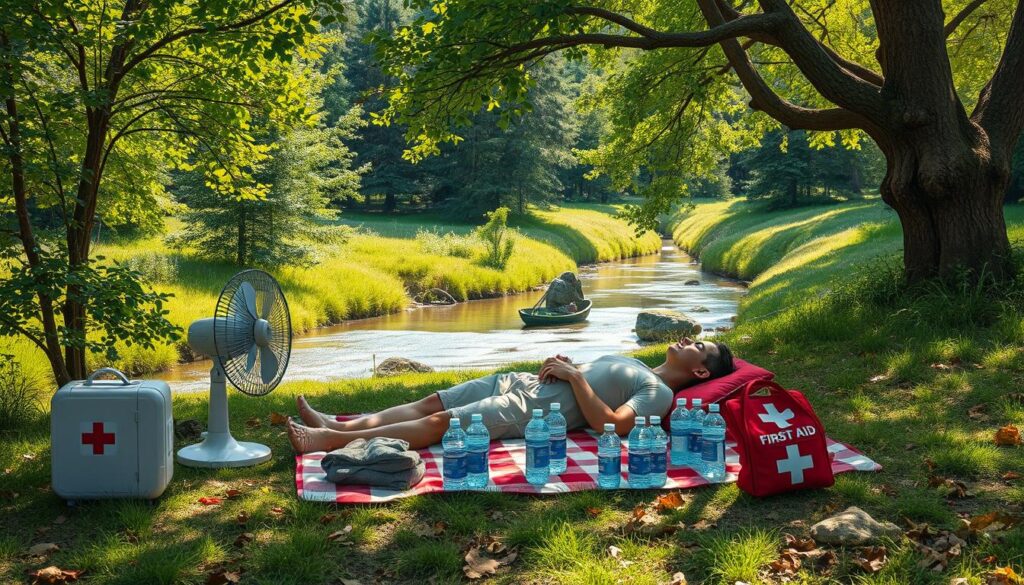
Heat exhaustion is a serious health risk during hot summer days. It can affect anyone, especially athletes and outdoor workers. Knowing the signs and treatment could save lives and prevent complications.
Heat exhaustion occurs when your body overheats and can’t cool down. Adults over 65, young children, and those not used to heat are at higher risk. Women and people from cooler climates may struggle more in hot, humid conditions.
Temperatures above 100°F greatly increase the chances of heat-related illnesses. Even lower temperatures can cause problems during intense physical activity. Poor hydration, heavy clothing, and certain health conditions raise the risk.
Key Takeaways
- Heat exhaustion can affect anyone exposed to high temperatures
- Certain groups are more vulnerable to heat-related illnesses
- Recognizing early symptoms is crucial for prevention
- Hydration and proper clothing are essential protective strategies
- Immediate action can prevent serious health complications
Recognizing Heat Exhaustion Symptoms
Heat exhaustion signs are vital to know during hot weather. They can seriously affect your health, especially in intense summer heat. Your body signals distress in specific ways when it’s too hot.
Common Physical Signs
Heat exhaustion shows through various physical signs. You might notice these symptoms:
- Heavy sweating
- Cool, moist skin with goose bumps
- Faintness and dizziness
- Weak, rapid pulse
- Fatigue and muscle cramps
Your body temperature may rise above 100°F. You might experience blurred vision and swollen extremities3. Cities can make these risks worse due to heat island effects3.
Additional Warning Signs
Watch out for these critical heat exhaustion symptoms:
- Nausea or vomiting
- Headache
- Extreme thirst
- Mild confusion
- Decreased urine output
Some groups face higher risks of heat exhaustion. Adults over 65 and kids under 4 can’t regulate temperature as well4. Obesity, certain medicines, and sudden temperature changes can increase your risk4.
Remember, untreated heat exhaustion can progress to potentially fatal heatstroke3.
Staying safe is crucial. Drink plenty of water and wear cool clothes. Avoid long periods in high temperatures3.
Heat Exhaustion Treatment: Immediate Action Steps
Quick action is vital when treating heat exhaustion. The main goal is to cool the body down fast. This prevents the condition from becoming more serious5.
Knowing how to treat heat exhaustion can speed up recovery6. Here are key steps to take right away:
- Move the person to a cool, shaded area or air-conditioned space
- Help them lie down and slightly elevate their legs
- Remove tight or heavy clothing to aid cooling
- Provide cool fluids like water or electrolyte drinks
Cooling techniques are crucial for recovery. Gently cool the skin by:
- Spraying or sponging with cool water
- Using a fan to promote evaporation
- Applying cold packs wrapped in cloth to armpits, neck, and groin
Watch the person closely. If symptoms don’t improve within 30 minutes or get worse, seek medical help6. Some groups need extra care.
Children, older adults, and those with chronic health issues are at higher risk6. They may need more careful treatment.
Remember: Quick action can prevent heat exhaustion from becoming a life-threatening emergency.
Severe cases might need professional medical care. Doctors may use advanced cooling methods to lower body temperature. These can include cold water immersion or special cooling blankets according to medical experts5.
Conclusion
Heat stress management is key to preventing heat-related illnesses. Know your risk factors, especially if you work outdoors or have chronic health conditions78. Children, older adults, and those with specific medical backgrounds are more vulnerable8.
Stay hydrated and wear light clothing to prevent heat exhaustion. Avoid intense physical activity during hot hours. Athletes and outdoor workers should monitor fluid intake and body responses carefully8.
Recognize early warning signs to prevent serious complications like organ damage7. Your environment affects heat-related risks. Poor housing and lack of air conditioning can increase vulnerability8.
Create a heat emergency plan with access to cool spaces. Understand how medications might affect your heat tolerance8. Put your health first and seek medical help if symptoms worsen.
Learn more about heat-related conditions at medical resources on heat exhaustion. Quick action is your best defense against heat-related health risks7.
FAQ
What is heat exhaustion?
Heat exhaustion happens when your body loses too much water or salt. It’s usually caused by heavy sweating or dehydration. This condition can develop quickly or slowly after being in hot conditions.
What are the main symptoms of heat exhaustion?
Key signs include cool, moist skin and heavy sweating. You might feel dizzy, tired, and have a weak, rapid pulse. Other symptoms are low blood pressure, muscle cramps, and nausea.
Headaches and decreased urine output are also common. Children may become more irritable than usual.
How quickly can heat exhaustion become dangerous?
Untreated heat exhaustion can quickly turn into heatstroke. This life-threatening condition raises body temperature to 104°F (40°C) or higher. It can cause confusion, seizures, and loss of consciousness.
What should I do if someone is experiencing heat exhaustion?
Move the person to a cool, shady spot right away. Have them lie down with their legs slightly raised. Remove tight clothes and give them cool drinks.
Cool their skin with water and fans. Apply cold packs to armpits, neck, and groin. Watch them closely and get medical help if symptoms don’t improve within 30 minutes.
Who is most at risk for heat exhaustion?
Children, older adults, and those with chronic health issues are at higher risk. People working or exercising in hot places are also more likely to get heat exhaustion.
Those wearing heavy clothes or not used to high temperatures are at risk too.
How can I prevent heat exhaustion?
Stay hydrated and wear light, loose clothes. Avoid sun exposure from 11 am to 3 pm. Limit alcohol and avoid intense exercise in hot weather.
Indoors, use curtains and close windows when it’s hot outside. Minimize the use of heat-generating electrical equipment.
When should I seek emergency medical help?
Get immediate medical care if symptoms get worse or don’t improve with first aid. Seek help if the person becomes confused or passes out.
If body temperature rises to 104°F (40°C) or higher, it may be heatstroke. This is a medical emergency.
What’s the difference between heat exhaustion and heatstroke?
Heat exhaustion is milder, with heavy sweating and cool, clammy skin. Heatstroke is more serious, causing high body temperature and hot, dry skin.
Heatstroke can also lead to rapid breathing and neurological symptoms like confusion or loss of consciousness.
Source Links
- Exercise-Related Heat Exhaustion – https://www.hopkinsmedicine.org/health/conditions-and-diseases/exerciserelated-heat-exhaustion
- Heat Stroke: Symptoms, Causes and Treatment | Red Cross – https://www.redcross.org/take-a-class/resources/learn-first-aid/heat-stroke?srsltid=AfmBOorJFvWmrlzbQxunCZz7J74bOGfOX6v7MzeeN7G5QvbT1Zv7vscU
- Heat Exhaustion: Symptoms and Treatment – https://www.webmd.com/fitness-exercise/heat-exhaustion
- Heat exhaustion – Symptoms and causes – https://www.mayoclinic.org/diseases-conditions/heat-exhaustion/symptoms-causes/syc-20373250
- Heat exhaustion: First aid – https://www.mayoclinic.org/first-aid/first-aid-heat-exhaustion/basics/art-20056651
- Heat exhaustion and heatstroke – https://www.nhs.uk/conditions/heat-exhaustion-heatstroke/
- Do You Know the Symptoms of Heat Stroke? – https://my.clevelandclinic.org/health/diseases/21812-heatstroke
- Practical strategies for prevention and treatment of heat-induced illness – https://pmc.ncbi.nlm.nih.gov/articles/PMC4131963/

