
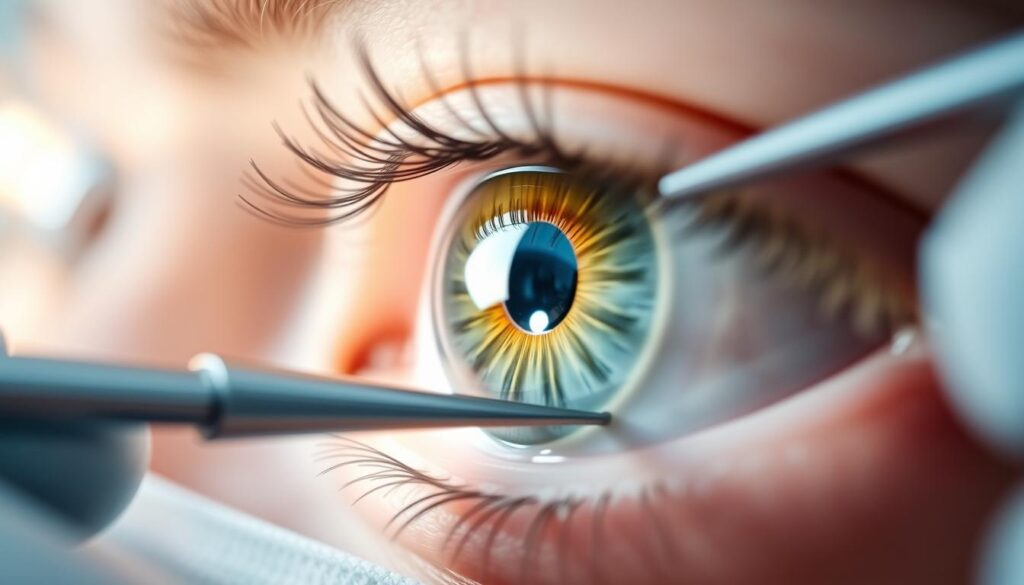
Vision health greatly impacts your quality of life. Cataract surgery offers a game-changing fix for cloudy vision. It paves the way for better eyesight and easier daily tasks12.
Millions worldwide regain clarity and independence through this eye procedure each year1. It’s safe, quick, and highly effective. The surgery removes cloudy lenses and puts in artificial ones.
The process usually takes just 15 minutes. It’s one of the most common surgeries globally12. In the U.S. alone, doctors perform about 3 million surgeries annually12.
As you get older, you’re more likely to need this eye fix. Almost half of people in their 90s may need it1. The good news? About 90% of patients get their full vision back after surgery2.
Key Takeaways
- Cataract surgery is a quick and effective vision restoration procedure
- Over 3 million surgeries are performed annually in the U.S.
- 90% of patients experience fully restored vision
- The surgery takes approximately 15 minutes
- Advanced techniques offer precise and safe treatment
Understanding Cataracts and Their Impact on Your Vision
Cataracts are a common eye disorder that can affect your quality of life. They often develop as you age. Learning about cataracts is key to maintaining good eye health and exploring vision correction options.
What Are Cataracts?
Cataracts cloud the natural lens of your eye, blocking light from passing through clearly3. They form when lens proteins break down, usually starting around age 403. This condition slowly impacts your vision, making daily tasks harder.
Common Symptoms of Cataracts
Spotting cataract symptoms early can help you seek treatment sooner. Look out for these signs:
- Clouded or blurred vision
- Difficulty seeing at night
- Sensitivity to light and glare
- Seeing “halos” around lights
- Frequent prescription changes
How Cataracts Develop
Cataracts progress through several stages and can affect different parts of the eye lens. Nuclear sclerotic cataracts form in the lens center. Cortical cataracts impact the lens edges3.
Risk factors for cataracts include:
- Increasing age
- Diabetes
- Excessive sunlight exposure
- Smoking
- Family history
“Understanding cataracts is the first step toward maintaining clear vision and eye health.”
| Cataract Type | Location | Primary Impact |
|---|---|---|
| Nuclear | Lens Center | Central Vision |
| Cortical | Lens Edges | Peripheral Vision |
| Posterior Subcapsular | Back of Lens | Reading Vision |
Cataracts affect about 17% of people worldwide. Nearly 1 in 5 people aged 65-74 experience vision changes3. Knowing these facts can help you take steps to protect your eye health.
The Cataract Surgery Process Explained
Cataract surgery requires careful planning and understanding. It starts with a thorough eye exam and consultation with a Refractive Surgery specialist. Your vision restoration journey begins here.
Pre-Surgery Preparations
Before your Laser Eye Surgery, your ophthalmologist will take several important steps. These include comprehensive eye measurements and selecting the right Intraocular Lens Implant. They’ll also discuss lens options and review your medications and health history.
- Comprehensive eye measurements
- Selection of appropriate Intraocular Lens Implant
- Discussion of potential lens options
- Medication and health history review
The Surgical Procedure
Cataract surgery is a precise medical procedure lasting 10 to 20 minutes4. The common technique, phacoemulsification, uses ultrasound waves to break up the cloudy lens5.
Your surgeon makes a tiny cut and removes the damaged lens. They then replace it with a new artificial lens6.
“Precision and expertise are key to successful cataract surgery.”
Post-Surgery Care
Recovery from cataract surgery is usually quick6. You can expect some mild discomfort for a few days. Your doctor will prescribe eye drops to prevent infection.
- Mild discomfort for a few days
- Prescribed eye drops to prevent infection
- Protective eyewear during initial healing
- Follow-up appointments to monitor progress4
Most patients see better within days and heal fully in eight weeks5. You might need glasses for a while, but results are usually excellent.
Knowing each step of cataract surgery helps you approach it with confidence. You’ll be on your way to clearer vision in no time.
Benefits of Cataract Surgery
Cataract surgery has transformed vision health for millions worldwide. This procedure offers remarkable advantages beyond simple vision correction. It’s a life-changing solution for many.
Patients can expect significant improvements in their daily visual experience. This advanced eye care technique offers key benefits worth exploring.
Improved Quality of Life
Cataract surgery enhances your overall visual experience. Many patients report more vibrant colors and clearer vision after the procedure7.
The surgery allows you to resume daily activities with improved visual acuity. You can reduce dependence on glasses or contact lenses. Enjoy sharper, more detailed vision.
- Resume daily activities with improved visual acuity
- Reduce dependence on glasses or contact lenses
- Enjoy sharper, more detailed vision
Enhanced Vision and Safety
Vision correction through cataract surgery provides multiple safety benefits. Patients often experience improved night vision and reduced glare from bright lights.
The procedure also enhances depth perception. It boasts an impressive 98% complication-free rate8, making it incredibly safe.
- Improved night vision
- Reduced glare from bright lights
- Enhanced depth perception
Quick Recovery Time
Cataract surgery offers swift recovery, a key appeal. The procedure typically takes about fifteen minutes7.
Most patients can return to normal activities within a few days to a week7. This quick recovery makes it convenient for many.
“Cataract surgery offers a new lease on visual life, providing clarity and confidence in your everyday experiences.”
Choosing the Right Surgeon for Your Cataract Surgery
Finding the best eye doctor for your vision needs takes careful thought and research. A skilled cataract surgeon can greatly improve your surgery results. Personal recommendations and online reviews help identify top eye specialists.
When looking at surgeons, focus on those with American Board of Ophthalmology (ABO) certification. This shows they have high-level expertise. Seek professionals who use advanced tech like special lenses and laser surgery.
Many eye clinics offer free visits. This lets you check out the surgeon’s methods and facility. Your doctor’s skills and tools are key to good eye health.
Look for surgeons who know the latest vision correction methods. They should understand what patients over 45 need. Costs can change based on where you live and what tech is used.
Talk about insurance and possible extra costs during your first visit. This helps you plan for your cataract surgery expenses9.
FAQ
Am I a good candidate for cataract surgery?
Cataract surgery might be right for you if you have vision problems due to cloudy lenses. Your ophthalmologist will evaluate your eye health and overall medical condition. They’ll consider your specific vision needs to determine if the surgery is suitable.
How long does the actual cataract surgery take?
The surgical procedure is surprisingly quick, typically lasting only 10-15 minutes per eye. Most patients are amazed by how fast and efficient the process is. You’ll be able to go home the same day as your surgery.
Is cataract surgery painful?
Most patients experience little to no pain during and after the procedure. Your surgeon will use local anesthesia to numb the eye. You might feel slight pressure or mild discomfort, but significant pain is extremely rare.
What is the recovery time for cataract surgery?
Most patients can resume normal activities within a few days. Full recovery typically takes about four weeks. You’ll need to use prescribed eye drops and avoid rubbing your eyes.
Protect your eyes from water and direct sunlight during the initial healing period.
How long do intraocular lenses (IOLs) last?
Intraocular lenses are designed to be permanent and typically last a lifetime. Once implanted, they do not wear out or need replacement. IOLs provide a long-term solution for vision correction after cataract surgery.
Will I need glasses after cataract surgery?
Many patients experience reduced dependence on glasses, especially with advanced multifocal or premium IOLs. However, you might still need glasses for certain activities like reading or detailed close-up work. The type of lens you choose affects this outcome.
What are the risks of cataract surgery?
Cataract surgery has a high success rate of about 98%. Potential risks include infection, bleeding, swelling, and rare complications like retinal detachment. Your ophthalmologist will discuss these risks in detail with you.
How soon can I drive after cataract surgery?
Most patients can resume driving within a few days to a week after surgery. This depends on your vision stabilizing and feeling comfortable. Your surgeon will provide specific guidance based on your individual healing process.
Can cataracts come back after surgery?
Cataracts cannot return because the natural lens is completely removed and replaced. However, some patients may experience posterior capsule opacification (PCO). PCO can be easily treated with a quick laser procedure.
What types of intraocular lenses are available?
Several types of IOLs are available, including standard monofocal lenses and multifocal lenses. Toric lenses for astigmatism and advanced premium lenses are also options. Your surgeon will help you choose based on your vision needs, lifestyle, and budget.
Source Links
- Cataract Surgery: How it works and what to expect for recovery – https://my.clevelandclinic.org/health/treatments/21472-cataract-surgery
- 10 Ways Cataract Surgery Will Change Your Life and Vision – Memorial Eye Institute – https://memorialeye.com/10-ways-cataract-surgery-will-change-your-life-and-vision/
- Cataracts: Signs, Symptoms & Treatment – https://my.clevelandclinic.org/health/diseases/8589-cataracts-age-related
- Cataract Surgery – https://www.hopkinsmedicine.org/health/treatment-tests-and-therapies/cataract-surgery
- Cataract surgery – Mayo Clinic – https://www.mayoclinic.org/tests-procedures/cataract-surgery/about/pac-20384765
- Understanding Cataract Surgery | Alcon – https://www.myalcon.com/cataracts/about-cataract-surgery/
- Pros and Cons of Cataract Surgery | Discover Vision – https://www.discovervision.com/blog/pros-and-cons-of-cataract-surgery/
- What are the disadvantages of cataract surgery? Risks and wins – https://practiceplusgroup.com/knowledge-hub/risks-benefits-cataract-surgery/
- Choosing a Cataract Surgeon – 7 Considerations to Help Find the Best – https://www.bettervisionguide.com/choosing-cataract-surgery/

