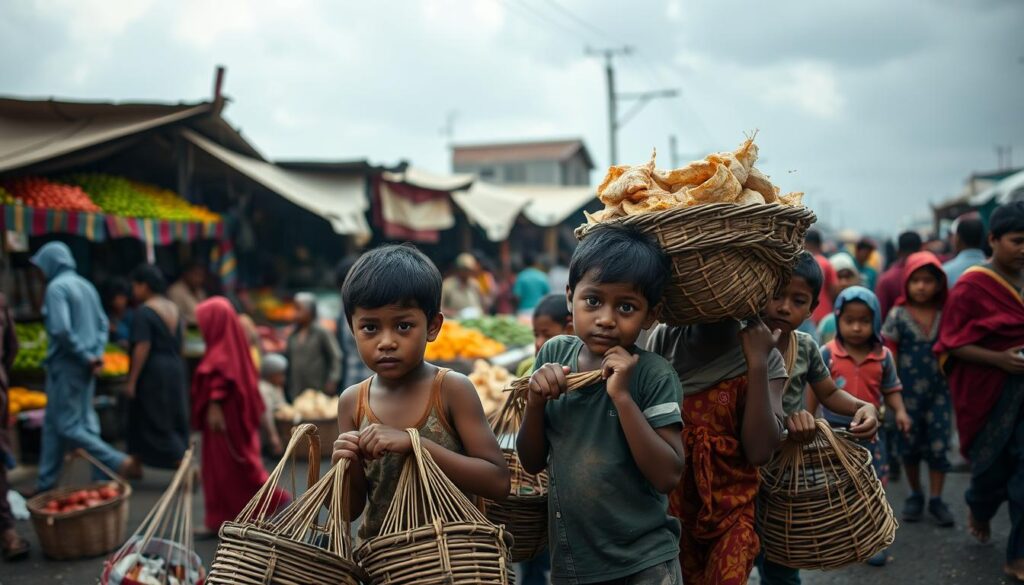
Child labor is a big problem worldwide, with 160 million kids caught up in it by 2020. This is a 6.5 million jump from 20161. It’s a clear break of child rights and we must tackle it to stop child exploitation. The agriculture sector is hit the hardest, with 70% of child labor happening there1.
This issue is huge and we need to know why it happens to fight it well.
Child labor isn’t just about rights; it’s about keeping kids safe and healthy. Almost half of these kids do hazardous work1. This can harm their health and future a lot. We must spread the word about protecting kids from exploitation and giving them education and safe jobs.
Key Takeaways
- Child labor is a significant issue that affects millions of children worldwide.
- The agriculture sector is the most affected by child labor.
- Child labor is a violation of child rights and can have severe consequences for children’s health and future.
- Raising awareness and ensuring access to education and safe working conditions are key in fighting child labor.
- Government policies, non-governmental organizations, and community efforts are vital in tackling child labor.
- Consumer concerns and social media can push companies to improve working conditions in their supply chains1.
Understanding the Scope of Child Labor
Child labor is a big problem worldwide. It takes away kids’ rights and stops them from growing up right.
Definition of Child Labor
Child labor means work that takes away a child’s chance to be a kid. It can be bad for their mind, body, or spirit.
Global Statistics and Trends
Recent child labor statistics show that 1 in 10 kids work. Most of these kids are in Sub-Saharan Africa, with 86.6 million2. Central and Southern Asia also have a lot, with 26.3 million2.
The International Labor Organization found 211 million child laborers worldwide. Sadly, 73 million are under 103.
Asia has the most child workers, at 61%. India is a big problem, with over 4 million kids working long hours3.
Key Industries Involved
- Agriculture
- Manufacturing
- Domestic Services
- Hospitality
Child labor is common in agriculture, manufacturing, and domestic services23. In the U.S., restaurants and factories are big offenders4.
Child Labor Consequences
Child labor causes serious harm, like physical and mental problems. It also stops kids from going to school and keeps families poor23. It’s a big loss for society and the economy.
| Region | Number of Child Laborers | Main Industries |
|---|---|---|
| Sub-Saharan Africa | 86.6 million | Agriculture, Manufacturing |
| Central and Southern Asia | 26.3 million | Agriculture, Industry |
| India | 4 million (5-14 years) | Agriculture, Industry |
| Global Total | 211 million | Various |
Root Causes of Child Labor
Poverty is the main reason for child labor. Families send their kids to work for food and healthcare5. In rural areas, economic struggles mean work is a must, not a choice5.
Economic Factors Contributing to Child Labor
Children work because of money troubles, mostly in farming6. About 70% of them are in agriculture6. Natural disasters and climate change make things worse, destroying crops and forcing kids to work more56.
Cultural and Social Influences
In some places, people think child labor builds character and skills. This view keeps the cycle going, as families see work as good for kids5.
Impact of Education Access
Good education is key to stopping child labor. Without it, kids stay in hard work, missing out on education to break the cycle of poverty5.
| Root Cause | Description | Impact |
|---|---|---|
| Economic Instability | Families unable to meet basic needs | Children enter the workforce |
| Cultural Norms | Work seen as beneficial for children | Perpetuates child labor practices |
| Education Access | Lack of affordable schooling | Traps children in labor cycles |
Strategies for Combating Child Labor
Stopping child labor needs everyone’s help. We must work together to make a difference. By using the right strategies, we can lower child labor worldwide.
Role of Government Policies and Regulations
Governments are key in making and enforcing child labor laws. These laws protect kids from being used unfairly7. For example, the ILO says kids should be 15 or older to work, with special rules for dangerous jobs7.
Stronger laws and penalties can stop employers from breaking these rules8.
Importance of Non-Governmental Organizations (NGOs)
NGOs like World Vision are vital in stopping child labor. They teach kids about their rights and help them get an education7. They also help families financially, so kids don’t have to work9.
NGOs push for better laws, filling in gaps that governments might overlook.
Community Engagement and Awareness Programs
Getting communities involved is key for lasting change. Programs raise awareness about child labor’s dangers9. When people know how important education is, they support keeping kids in school8.
Community efforts create a safe space for stopping child labor.
Corporate Responsibility and Ethical Practices
Companies must act ethically to remove child labor from their supply chains. They should check their suppliers regularly to make sure they follow the laws8. Being open and accountable builds trust and ensures products are made without exploitation7.
Being responsible not only helps kids but also improves a company’s image.
FAQ
What is child labor?
Child labor is when kids work in jobs that take away their childhood. It limits their growth and is bad for their health and mind. These jobs are often dangerous and harmful.
How prevalent is child labor globally?
Over 160 million kids work in child labor worldwide. This shows we need to act fast, as it affects almost 1 in 10 kids.
Which industries are most affected by child labor?
Child labor is common in agriculture, manufacturing, mining, and the informal economy. These places often use kids because they are cheap and flexible.
What are the main causes of child labor?
Poverty, cultural norms, and lack of education cause child labor. Families need their kids’ income to survive.
How does child labor impact a child’s education and future?
Child labor stops kids from going to school. This keeps them poor and limits their future. Without education, they can’t get good jobs.
What are the long-term consequences of child labor on society?
Child labor hurts society. It makes the workforce less educated, slows down the economy, and keeps people poor and unequal.
What laws exist to prevent child labor?
Laws in many countries set age limits and control what work kids can do. The International Labour Organization (ILO) also fights child labor worldwide.
How do NGOs contribute to the fight against child labor?
NGOs fight child labor by pushing for policy changes and supporting kids. They also raise awareness. World Vision helps families and offers education instead of work.
What strategies are effective in preventing child labor?
To stop child labor, we need strong laws, better education, and help for poor families. We also need to change cultural views on child work.
How can businesses ensure ethical practices to prevent child labor?
Companies should check their supply chains and follow strict labor rules. They should also work with groups to make sure no child labor is used.
What impact has the COVID-19 pandemic had on child labor?
The pandemic has made child labor worse. It has caused economic problems, closed schools, and made it hard for families to get help. More kids are working because of it.
Source Links
- Combating Child Labor Within and Beyond Our Borders – http://blog.dol.gov/2023/06/07/combating-child-labor-within-and-beyond-our-borders
- Child Labor – https://www.dol.gov/agencies/whd/child-labor
- Challenges and perspectives of child labor – https://pmc.ncbi.nlm.nih.gov/articles/PMC6198592/
- No title found – https://research.luc.edu/law/stories/our-stories/understanding-child-trafficking/
- Why does child labour happen? Here are some of the root causes – https://www.eclt.org/en/news/child-labour-causes
- Child Labor: Forms, Causes, And How To Combat It | Bonyan – https://bonyan.ngo/child-protection/child-labor/
- Nine Ways to Mitigate Risk of Child Labor Across the Supply Chain | Blog | Sustainable Business Network and Consultancy | BSR – https://www.bsr.org/en/blog/nine-ways-to-mitigate-risk-of-child-labor-across-the-supply-chain
- Policies for states and localities to fight oppressive child labor – https://www.epi.org/publication/fight-oppressive-child-labor/
- What is child labor and how can we end it? – https://www.developmentaid.org/news-stream/post/156014/what-is-child-labor-and-how-can-we-end-it