
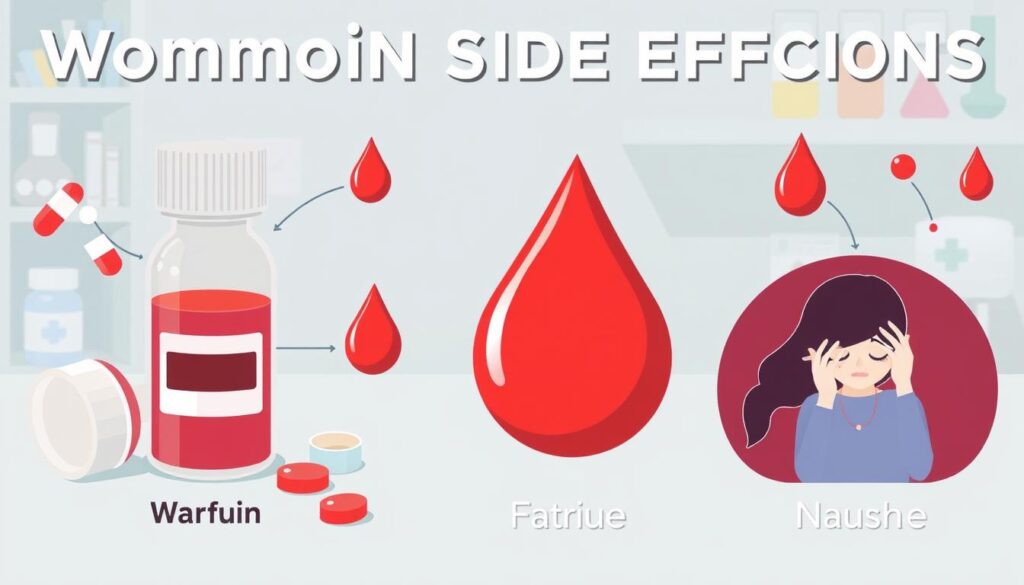
Warfarin prevents dangerous blood clots as a powerful anticoagulant. Knowing its possible side effects is vital for your well-being. This medication demands careful attention and awareness1.
Bleeding risk is highest when starting warfarin treatment. Older adults and those with certain genes may bleed more easily1.
Warfarin interacts with many substances. Medications, herbs, and some foods can change how well it works. Your doctor will guide you through these complex interactions1.
Stay alert while taking this blood thinner. Look out for odd bruising, long-lasting bleeding, or changes in your body. Seek medical help right away if you have severe side effects1.
Key Takeaways
- Warfarin requires careful monitoring and awareness of potential side effects
- Bleeding risk is highest during the first three months of treatment
- Multiple medications and foods can interact with warfarin
- Genetic factors can influence individual bleeding risks
- Regular medical check-ups are essential for safe anticoagulant therapy
Understanding Warfarin and Its Purpose
Warfarin is a powerful medication that prevents dangerous blood clots. This anticoagulant has been crucial in treating various cardiovascular conditions for decades2.
Doctors prescribe warfarin for specific heart and circulatory challenges. About 60% of patients taking it manage atrial fibrillation, which increases stroke risk2.
How Warfarin Functions in Your Body
Warfarin interferes with your body’s blood clotting process. It targets vitamin K-dependent clotting factors, reducing dangerous blood clot formation.
The medication helps prevent strokes and other life-threatening circulatory complications. It’s a vital tool in managing various cardiovascular risks.
When Doctors Recommend Warfarin
- Atrial fibrillation management
- Deep vein thrombosis prevention
- Pulmonary embolism treatment
- Protection for patients with artificial heart valves
Critical Blood Tests and Monitoring
Monitoring is essential when taking warfarin. Patients undergo regular INR testing to ensure the medication’s effectiveness and safety3.
| Test Type | Purpose | Frequency |
|---|---|---|
| Prothrombin Time (PT) | Measure Clotting Function | Every 4-5 Weeks |
| INR Test | Adjust Medication Dosage | Every 4-5 Weeks |
The typical INR target range is between 2 and 3. Your healthcare provider will adjust your dosage to balance stroke prevention and bleeding risks3.
Remember: Consistent vitamin K intake and open communication with your doctor are key to successful warfarin therapy.
Patients should know that serious bleeding risk on warfarin is about 1-2% yearly. This risk decreases with stable dosing23.
Common Warfarin Side Effects
Warfarin users must be aware of potential side effects. Bleeding complications are the main concern for patients. These risks range from minor bruising to serious internal bleeding45.
Knowing side effects helps manage treatment effectively. Here are key areas to watch:
- Bleeding complications, including prolonged bleeding from cuts
- Easy bruising and unexplained skin discoloration
- Potential drug interactions with other medications
- Dietary restrictions that may affect warfarin’s effectiveness
“Awareness and careful monitoring are crucial when using warfarin,” says medical experts.
| Side Effect Type | Warning Signs | Action Required |
|---|---|---|
| Bleeding Risks | Blood in urine or stool | Immediate medical consultation |
| Drug Interactions | Changes in medication effectiveness | Consult healthcare provider |
| Dietary Concerns | Vitamin K intake fluctuations | Maintain consistent diet |
Your healthcare provider will guide you through side effect management. Regular blood tests monitor warfarin’s impact on your body4. Always report new symptoms or health changes to your doctor5.
Follow these precautions to minimize risks:
- Avoid high-impact activities that could cause injury
- Use soft-bristled toothbrushes
- Opt for electric razors
- Wear a medical ID bracelet
Remember, careful management and open communication with your healthcare provider are key to safely using warfarin.
Conclusion
Warfarin management requires careful attention and patient education. Your anticoagulant therapy journey demands active involvement and understanding. Stay informed about potential risks and necessary precautions6. Bleeding risks are higher for those over 65 and during the first treatment month6.
Knowing your genetic response to warfarin is vital. Some patients metabolize the drug differently, affecting dosage and effectiveness6. Medical guidance from reliable sources can help minimize complications. The FDA reports many side effect cases, highlighting the need for vigilant monitoring7.
Your safety depends on regular communication with healthcare providers. Consistent blood tests and stable vitamin K intake are crucial. Understanding potential drug interactions is also key to successful warfarin management.
Never change your dosage without consulting a professional. By staying informed and proactive, you can effectively manage anticoagulant therapy. This approach will help protect your health and well-being.
FAQ
What is warfarin and why is it prescribed?
Warfarin prevents blood clots in various conditions. It’s an anticoagulant that interferes with blood clotting. Warfarin works by inhibiting vitamin K-dependent clotting factors.
What are the most common side effects of warfarin?
The main side effect is increased bleeding risk. This can include prolonged bleeding from cuts and nosebleeds. Easy bruising and internal bleeding are also possible.
Watch for signs like blood in urine or stool. Severe headaches or unexplained bruising are also concerning symptoms.
How often do I need blood tests while taking warfarin?
Regular PT and INR tests monitor warfarin’s effectiveness. Test frequency ranges from weekly to monthly. Your healthcare provider will determine the best schedule based on your INR results.
Can my diet affect warfarin’s effectiveness?
Foods high in vitamin K can impact warfarin’s action. Maintain consistent vitamin K intake for best results. Consult your healthcare provider about dietary considerations while taking warfarin.
What medications should I be cautious about while taking warfarin?
Warfarin interacts with many medications, including over-the-counter drugs. Antibiotics and herbal supplements can also affect warfarin’s effectiveness. Always inform your healthcare providers about all medications you’re taking.
How can I reduce my bleeding risk while on warfarin?
Avoid high-injury activities to minimize bleeding risk. Use a soft-bristled toothbrush and electric razors. Wear a medical ID bracelet to alert others about your warfarin use.
Inform all healthcare providers about your warfarin use. Never adjust or stop your medication without consulting your doctor.
Are there any warning signs I should watch for?
Watch for signs of excessive bleeding. These include prolonged bleeding from cuts and unexpected bruising. Blood in urine or stool, severe headaches, or unusual gum bleeding are also concerning.
Contact your healthcare provider immediately if you experience these symptoms.
Can I drink alcohol while taking warfarin?
Limit alcohol consumption while on warfarin. Excessive alcohol can increase bleeding risk and interact with the medication. Always discuss alcohol use with your healthcare provider.
Source Links
- Warfarin side effects: Watch for interactions – https://www.mayoclinic.org/diseases-conditions/deep-vein-thrombosis/in-depth/warfarin-side-effects/art-20047592
- What is warfarin and what does it do in your body? – https://www.bhf.org.uk/informationsupport/heart-matters-magazine/medical/drug-cabinet/warfarin
- Patient education: Warfarin (Beyond the Basics) – https://www.uptodate.com/contents/warfarin-beyond-the-basics/print
- Taking Warfarin for the War on Blood Clots? – https://my.clevelandclinic.org/health/treatments/16182-warfarin-a-blood-thinning-drug-what-you-need-to-know-
- Warfarin (oral route) – https://www.mayoclinic.org/drugs-supplements/warfarin-oral-route/description/drg-20070945
- Warfarin: MedlinePlus Drug Information – https://medlineplus.gov/druginfo/meds/a682277.html
- Warfarin Side Effects | Bleeding, Gangrene & Health Risks – https://www.drugwatch.com/warfarin/side-effects/

