
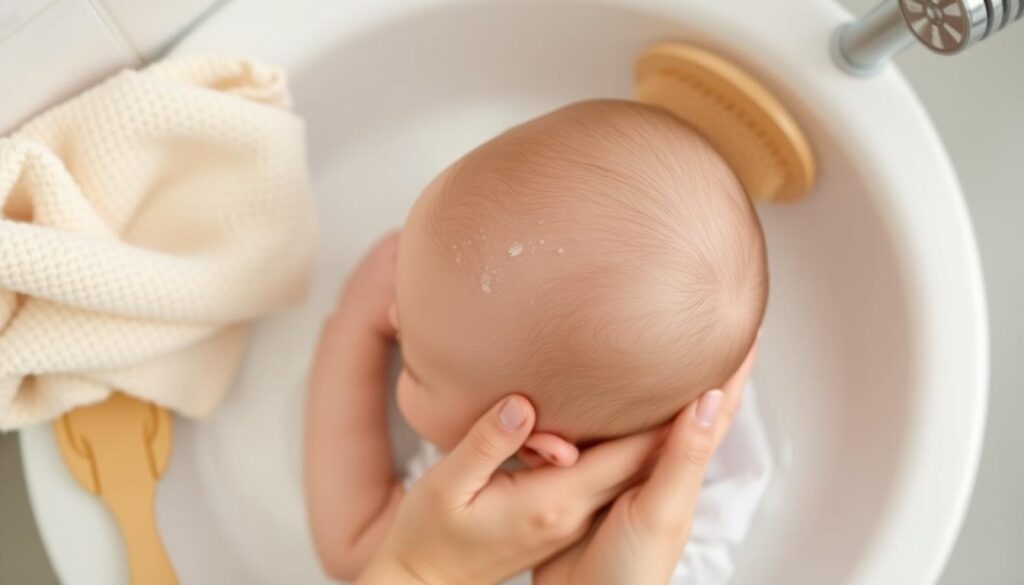
New parents might worry when they see flakes on their baby’s scalp. Cradle cap is a harmless skin issue that affects many infants1. It causes yellow scales and patches on the baby’s delicate head.
About 10 percent of babies develop cradle cap2. It usually shows up in the first 2 to 6 weeks after birth. This condition can last until the child becomes a toddler.
Don’t fret! Baby dandruff often clears up on its own by the first birthday2. Hormones from mom to baby before birth may cause overactive oil glands1. This can lead to cradle cap.
Key Takeaways
- Cradle cap is a common, non-threatening skin condition in infants
- It affects approximately 10% of babies
- The condition typically resolves within the first year
- Hormonal changes contribute to its development
- Gentle care and patience are key to managing cradle cap
Understanding Cradle Cap and Its Causes
Cradle cap is a common scalp condition in babies. It might look alarming, but it’s usually harmless. Learning about it can help you manage it better.
Cradle cap, or seborrheic dermatitis, affects many newborns. It’s most common in babies 2 weeks to 12 months old. The condition shows up as red, scaly, or crusty yellow patches on the scalp3.
What Exactly is Cradle Cap?
Cradle cap looks like thick, greasy scales on your baby’s scalp. It’s normal and not dangerous. The condition can spread to other areas too.
- Forehead
- Face
- Behind ears
- Diaper area
- Skin folds
Common Symptoms to Watch For
Spotting cradle cap early helps you address it quickly. Look for these signs:
- Yellow or brownish scaly patches
- Slightly raised, crusty areas
- Mild redness around affected regions
- Greasy or oily scalp appearance
Factors Contributing to Cradle Cap
| Potential Cause | Description |
|---|---|
| Overactive Sebaceous Glands | Excess oil production can lead to skin cell buildup |
| Yeast Presence | Malassezia fungus might contribute to skin inflammation |
| Genetic Predisposition | Family history of skin conditions can increase risk |
Important note: Cradle cap isn’t contagious or caused by poor hygiene4. Most cases clear up on their own within the first year4.
“Understanding your baby’s skin condition can help reduce unnecessary worry and promote effective care.”
Effective Treatments for Cradle Cap
Cradle cap can be tough for parents to handle. Knowing the right treatments can help manage this common infant skin condition. Most cases clear up on their own within a few months56.
Gentle Cleansing Techniques
Gentle cleansing is crucial when dealing with cradle cap. Here are some effective remedies to try:
- Use a mild baby shampoo for regular washing
- Gently massage the scalp with your fingers
- Apply soft, circular motions while cradle cap brushing
Natural Remedy Approaches
Natural treatments can work wonders for cradle cap. Coconut oil and mineral oil can help loosen stubborn scales5. Try these strategies:
- Apply petroleum jelly before shampooing
- Use a soft washcloth to gently remove loose scales
- Try natural oil treatments recommended by pediatricians
Professional Medical Guidance
Some cradle cap cases need professional help6. Consult a pediatrician if:
| Condition | Action Recommended |
|---|---|
| Persistent cradle cap after 2 weeks | Medical consultation |
| Inflamed or weeping skin | Immediate medical assessment |
| Spreading rash | Professional evaluation |
Remember, patience and gentle care are your best allies in managing cradle cap.
Your doctor might suggest special shampoos or medicated options if home remedies don’t work5. Always follow professional advice for your baby’s unique needs.
Preventing Cradle Cap in Your Baby
Infant scalp care is vital for managing cradle cap. This common skin condition affects many babies. You can take steps to minimize its impact and support your baby’s scalp health.
Regular, gentle cleansing is key for cradle cap prevention. Use a mild, baby-specific shampoo every few days. This helps reduce scalp buildup7.
Use soft-bristled brushes made for infant scalps. These help remove loose scales without irritating delicate skin. Ensure your baby gets enough rest, as it may reduce cradle cap outbreaks8.
Choose products made for sensitive skin. Avoid harsh chemicals and opt for gentle, fragrance-free options. If cradle cap persists, talk to your pediatrician.
They might suggest mild treatments like over-the-counter dandruff shampoos. In some cases, prescription solutions may be needed8.
Keep an eye on your baby’s scalp condition. Watch for signs that need medical attention. These include inflammation, infection, or scaling that lasts beyond the first year9.
Cradle cap usually clears up on its own. A consistent, gentle scalp care routine can help manage it. This may also reduce how often it occurs7.
FAQ
What exactly is cradle cap?
Cradle cap is a harmless skin condition affecting infants. It causes yellow, greasy scales on a baby’s scalp. This condition typically appears in the first few months of life.
Also known as seborrheic dermatitis, it usually resolves before the baby’s first birthday.
Is cradle cap painful or contagious?
No, cradle cap isn’t painful or contagious. It doesn’t cause discomfort to your baby or spread to others. The condition is a temporary skin issue related to overactive oil glands.
What causes cradle cap?
The exact cause is unknown, but several factors may contribute. These include overactive sebaceous glands and the presence of yeast on the skin. A family history of seborrheic dermatitis might also play a role.
Hormonal changes from the mother during pregnancy can trigger the condition too.
How can I treat cradle cap at home?
You can manage cradle cap with gentle home care methods. Try massaging your baby’s scalp to loosen scales. Wash daily with mild baby shampoo.
Use a soft-bristled brush to remove loose flakes. Applying petroleum jelly or coconut oil before shampooing can soften stubborn scales.
When should I see a pediatrician about cradle cap?
Consult your pediatrician if home treatments aren’t helping. Seek advice if the scales spread beyond the scalp or show signs of infection. Also, check if cradle cap persists beyond your baby’s first year.
A professional can recommend medicated shampoos or treatments if needed.
Can cradle cap be prevented?
While you can’t always prevent cradle cap, you can manage it effectively. Maintain a consistent scalp care routine using mild, tear-free baby shampoo. Gently brush your baby’s scalp daily.
Choose products designed for sensitive infant skin. Avoid harsh chemicals or fragrances.
Are there any natural remedies for cradle cap?
Yes, natural remedies can be helpful. Coconut oil is popular for moisturizing the scalp and loosening scales. Gently massage a small amount of natural oil before washing.
Always use a minimal amount. Consult your pediatrician if you have concerns.
How long does cradle cap typically last?
Most cases of cradle cap resolve within a few months. It typically clears up before the baby’s first birthday. Consistent, gentle care can help manage the condition.
If it persists or worsens, always check with your healthcare provider.
Source Links
- Cradle Cap – https://www.seattlechildrens.org/conditions/a-z/cradle-cap/
- Parent’s Guide: How to Remove Cradle Cap in Infants – Tips and Techniques | Worldwide Pediatrics Group – https://www.toplinemd.com/worldwide-pediatrics/parents-guide-how-to-remove-cradle-cap-in-infants-tips-and-techniques/
- Cradle Cap (Seborrheic Dermatitis) in Infants (for Parents) – https://kidshealth.org/en/parents/cradle-cap.html
- Seborrheic Dermatitis (Cradle Cap) – https://www.hopkinsmedicine.org/health/conditions-and-diseases/seborrheic-dermatitis-cradle-cap
- Seborrheic Dermatitis (Cradle Cap): Symptoms, Causes and Treatment – https://www.nationwidechildrens.org/conditions/cradle-cap
- Cradle cap – https://raisingchildren.net.au/newborns/health-daily-care/health-concerns/cradle-cap
- Cradle cap – Symptoms and causes – https://www.mayoclinic.org/diseases-conditions/cradle-cap/symptoms-causes/syc-20350396
- How to Prevent Cradle Cap – https://www.healthline.com/health/how-to-prevent-cradle-cap
- Cradle Cap: Causes, Symptoms & Prevention – https://www.johnsonsbaby.com/baby-tips/what-is-cradle-cap

