
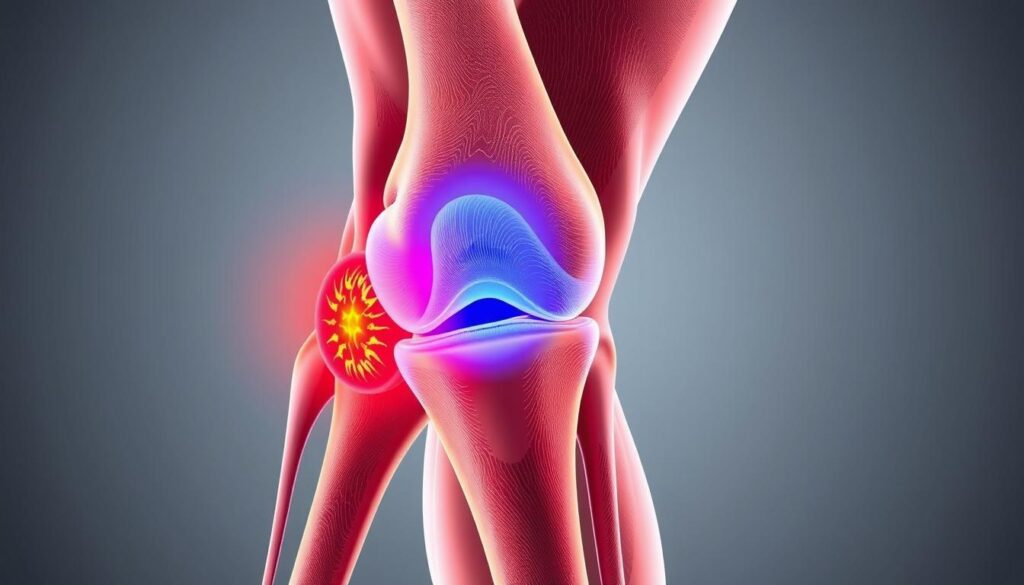
Knee bursitis can greatly affect your daily life and mobility. It happens when small fluid-filled sacs called bursae become inflamed. This causes pain around your knee joint1.
The condition typically affects people aged 40 to 60. About 1 in 10,000 people develop knee bursitis each year1. Some jobs put you at higher risk for this painful issue.
Carpenters, tile installers, roofers, and gardeners often face knee bursitis. Their work involves repeated knee stress and pressure1. This can limit movement and make simple tasks hard2.
Knowing about knee bursitis helps manage it well. Too much pressure on bursae sacs leads to swelling1. Though painful, many treatment options exist to bring relief and restore knee function.
Key Takeaways
- Knee bursitis primarily affects adults between 40-60 years old
- Certain occupations increase the risk of developing the condition
- Conservative treatments can effectively manage symptoms
- Early intervention helps prevent long-term complications
- Physical therapy can support recovery and prevention
Understanding Knee Bursitis and Its Impact on Joint Health
Knee bursitis affects joint function and movement. Bursae are small fluid-filled sacs that reduce friction in joints. These tiny cushions ensure smooth movement and protect bones, tendons, and muscles.
What Are Bursae and Their Function
Bursae act like tiny shock absorbers in your body. They’re found near joints where tissues might rub together. In the knee, bursae help minimize friction during movement.
This allows you to walk, run, and bend more easily3.
Types of Knee Bursitis
Different types of knee bursitis can develop based on where inflammation occurs. Here are the most common forms:
- Prepatellar bursitis: Inflammation over the kneecap, often seen in jobs requiring frequent kneeling4
- Suprapatellar bursitis: Occurs above the kneecap
- Pes anserine bursitis: Develops on the inner side of the knee below the joint3
Common Risk Factors and Causes
Knee bursitis can develop through joint fluid buildup and bursa sac inflammation. Key risk factors include:
- Repetitive knee pressure from jobs like carpet laying or plumbing3
- Participation in high-impact sports such as wrestling, football, and basketball4
- Obesity and underlying conditions like osteoarthritis3
- Direct trauma or overuse injury to the knee joint
“Understanding the causes of knee bursitis is the first step towards effective prevention and management.”
Knowing these risk factors helps you protect your knee joints. You can take steps to reduce the chance of developing this painful condition4.
Identifying Symptoms and Diagnosis Methods
Knee bursitis can impact your daily mobility and comfort. Recognizing early symptoms is crucial for effective knee pain relief. You might experience several signs that indicate bursa swelling in your knee area5.
- Persistent pain around the knee joint
- Noticeable swelling and warmth in the affected area
- Tenderness when touching the knee
- Redness or skin discoloration
- Reduced range of motion
Doctors diagnose knee bursitis through a thorough evaluation. This includes reviewing your medical history and conducting a physical exam5. They compare both knees and check your range of motion for joint fluid buildup.
Imaging techniques play a key role in confirming knee bursitis. These methods help doctors see what’s happening inside your knee.
- X-rays to detect bone problems or arthritis6
- MRI scans using radio waves and magnetic fields to create detailed soft tissue images6
- Ultrasound to visualize swelling in the bursa6
“Early diagnosis is key to managing knee bursitis effectively,” says leading orthopedic specialists.
In rare cases, doctors might test bursa fluid for infection. This helps rule out other conditions6. Finding the cause helps create a targeted treatment plan for knee inflammation.
Bursitis can affect people of all ages5. Knowing these symptoms helps you seek medical help when needed. Quick action can lead to better outcomes.
Treatment Options for Knee Bursitis
Knee bursitis requires a thorough approach to knee pain relief. Proper treatment can manage symptoms and restore joint function. Your path to recovery starts with the right strategy7.
Conservative Treatment Approaches
Initial bursitis treatment aims to reduce inflammation and manage pain. The RICE method is key for early recovery:
- Rest the affected knee
- Apply ice for 15-20 minutes several times daily8
- Use compression bandages
- Elevate the knee to minimize swelling
Medical Interventions and Procedures
When basic methods fall short, doctors may suggest other treatments7:
| Intervention | Purpose |
|---|---|
| NSAIDs | Reduce pain and inflammation |
| Corticosteroid Injections | Provide targeted bursa swelling relief8 |
| Aspiration | Drain excess fluid from the knee8 |
Rehabilitation and Recovery Timeline
Recovery time for knee bursitis varies among patients. Most see big improvements within weeks7. Physical therapy is crucial for regaining strength and flexibility8.
Your dedication to treatment can speed up recovery and prevent future knee problems.
Severe cases might need surgery, but this is uncommon9. Always talk to a doctor about the best plan for your situation.
Conclusion
Knee bursitis is manageable and shouldn’t stop your active life. Learn about this joint issue to treat bursitis and relieve knee pain effectively10. Recognize causes like repetitive movements, sports injuries, and medical conditions to prevent it10.
Take care of your joints through smart management and prevention. Warm up properly, increase activity slowly, and listen to your body to reduce knee bursitis risk10. Seek medical help if pain persists or worsens, especially with intense discomfort or infection signs11.
Manage knee bursitis long-term with a complete approach. Use protective gear for high-impact activities and maintain a healthy weight10. Try cross-training to work different muscles. Quick diagnosis and proper treatment speed up healing11.
Your effort to understand knee bursitis is key to joint health. Stay informed and work with healthcare pros. Develop a personal strategy to support your physical well-being.
FAQ
What is knee bursitis?
Knee bursitis is inflammation of small fluid-filled sacs near your knee joint. These sacs reduce friction between moving parts. When inflamed, they cause pain, swelling, and limited movement.
It mainly affects people aged 40 to 60. The condition can impact different areas around the knee.
What are the main symptoms of knee bursitis?
Common symptoms include pain, swelling, warmth, and tenderness around the affected knee. You may also experience redness and reduced range of motion. Discomfort can occur when moving or at rest.
In cases of septic bursitis, you might develop fever and chills.
What causes knee bursitis?
Knee bursitis can result from frequent kneeling, overuse, or direct blows to the knee. Infections and conditions like osteoarthritis or rheumatoid arthritis can also cause it.
Jobs involving prolonged kneeling, such as carpet laying or plumbing, increase the risk. Some sports, like wrestling and basketball, can also contribute.
How is knee bursitis diagnosed?
Diagnosis involves a medical history review and physical examination. Your doctor will compare both knees and assess your range of motion.
They may recommend imaging tests like X-rays, MRI, or ultrasound. Sometimes, fluid aspiration is done to rule out infection.
What are the treatment options for knee bursitis?
Treatment often combines self-care techniques and medical interventions. Conservative approaches include the RICE method and over-the-counter pain relievers. Physical therapy can also help.
Medical treatments might involve corticosteroid injections or fluid aspiration. Antibiotics are used for infected bursae. Rarely, surgical removal of the affected bursa is necessary.
How long does knee bursitis take to heal?
Most cases resolve within a few weeks with proper care and treatment. Recovery time varies for each person.
Following your doctor’s advice and doing recommended exercises can speed up healing. Taking appropriate rest is also important for recovery.
Can knee bursitis be prevented?
You can lower your risk by using kneepads during activities that stress your knees. Take regular breaks and maintain a healthy weight.
Avoid repetitive knee movements. If your job or sport strains your knees, take steps to protect them.
When should I see a doctor about knee bursitis?
Seek medical help if your symptoms persist or worsen. This is especially important if you have fever or significant swelling.
Watch for signs of infection. Quick medical care can prevent complications and ensure proper treatment.
Source Links
- Knee Bursitis: Treatment, Causes, Symptoms, and Prevention – https://www.healthline.com/health/knee-bursitis
- A Guide to Treating Bursitis Knee | The Bone & Joint Center – https://www.bone-joint.com/a-comprehensive-guide-to-treating-bursitis-knee/
- Knee bursitis – Symptoms and causes – https://www.mayoclinic.org/diseases-conditions/knee-bursitis/symptoms-causes/syc-20355501
- Bursitis – https://www.hopkinsmedicine.org/health/conditions-and-diseases/bursitis
- Diagnosing Bursitis & Tendinitis – https://nyulangone.org/conditions/bursitis-tendinitis/diagnosis
- Knee bursitis – Diagnosis and treatment – https://www.mayoclinic.org/diseases-conditions/knee-bursitis/diagnosis-treatment/drc-20355506
- Bursitis of the Knee: What to Expect from Your Treatment: Sumit Dewanjee, MD: Orthopedic Surgery – https://www.fxrxinc.com/blog/bursitis-of-the-knee-what-to-expect-from-your-treatment
- Board Certified Pain Management Physicians – https://www.njpaindoc.com/blog/how-is-knee-bursitis-treated
- Knee Bursitis | Signs, Diagnosis, and Treatment | Beaumont – https://www.beaumont.org/conditions/bursitis-of-the-knee
- Understanding Knee Bursitis – https://www.trainerschoice.ca/injury-education/understanding-knee-bursitis
- Knee Tendon Bursitis – Orthopedic Centers of Colorado – https://occ-ortho.com/conditions/knee-tendon-bursitis/

