
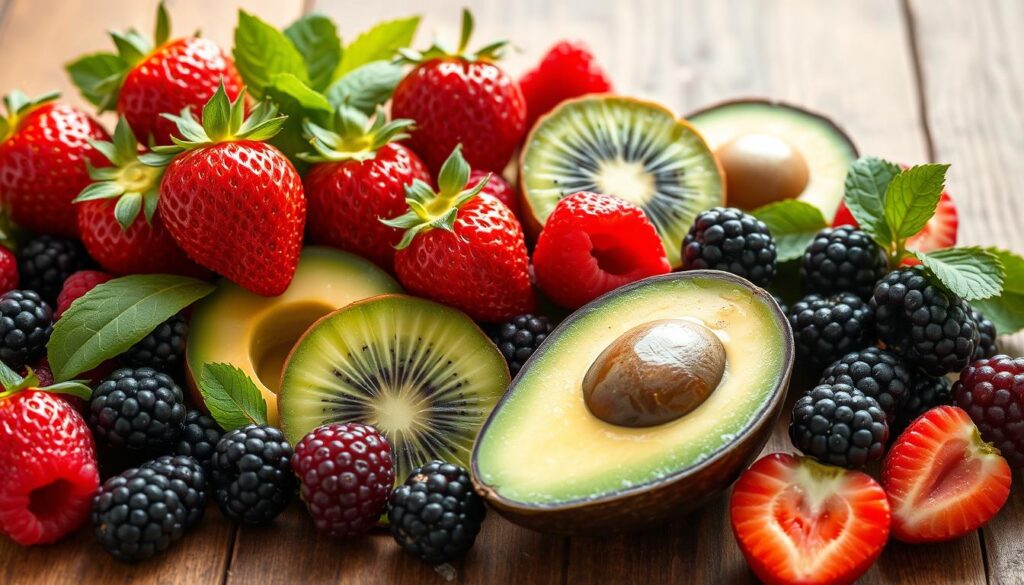
Craving sweetness without the sugar spike? Low-sugar fruits are your answer. They offer essential vitamins and great taste while keeping blood sugar in check12.
Berries are a top choice for sugar-conscious eaters. Raspberries, strawberries, and blackberries pack flavor with little sugar1. These tiny fruits are bursting with taste and nutrition2.
Lemons and limes are tangy, low-sugar options1. Avocados are another great pick. They contain less than 1 gram of sugar per cup12.
Key Takeaways
- Low-sugar fruits support balanced nutrition
- Berries provide maximum flavor with minimal sugar
- Citrus and avocados offer unique low-sugar options
- Choose fruits with low glycemic index
- Nutritious fruits can satisfy sweet cravings healthily
Understanding Natural Sugars in Fruits and Their Benefits
Fruit nutrition can be confusing, especially regarding sugar content. Fruits offer unique benefits that set them apart from processed sweets. Natural sugars in fruits differ from added sugars in processed foods.
Fruits contain essential nutrients and beneficial plant compounds. These support your overall health, even with higher sugar levels. This makes them a healthier choice than processed treats.
The Difference Between Natural and Added Sugars
Fruits come with built-in nutritional benefits. Added sugars are found in sugary drinks, desserts, and sweet snacks3. Natural fruit sugars are paired with fiber, minerals, vitamins, and antioxidants.
- Dietary fiber
- Vital minerals
- Essential vitamins
- Antioxidants
Health Benefits of Low-Sugar Fruits
Low-sugar fruits can help with weight management. Watermelon is a smart choice with only 9.42 grams of sugar per cup4. It’s a great option for a healthy snack.
| Fruit | Sugar Content | Nutritional Benefit |
|---|---|---|
| Watermelon | 9.42g per cup | Hydration, Low Calories |
| Berries | 5-7g per cup | High Antioxidants |
| Avocado | 1g per fruit | Healthy Fats |
Who Should Choose Low-Sugar Fruits
Some groups benefit more from low-sugar fruits. These include people with diabetes, those trying to lose weight, and health-conscious individuals. Anyone monitoring blood sugar levels can also benefit.
- People managing diabetes
- Those pursuing weight loss
- Individuals monitoring blood sugar levels
- Health-conscious individuals
The American Heart Association suggests limiting added sugars for better health3. Whole fruits are a nutritious choice that supports your overall wellness. They’re a smart way to satisfy your sweet tooth.
Best Low-Sugar Fruits
Low-sugar fruits offer natural sweetness while helping manage sugar intake. Let’s look at some tasty options that are also nutritious5.
Berries are top picks for low-sugar fruits. Raspberries have just 5 grams of sugar per cup6. Strawberries and blackberries follow close, with 7 grams per cup6.
These small fruits pack a punch. They’re full of antioxidants and fiber, making them nutritional powerhouses.
- Raspberries: 5g sugar per cup
- Strawberries: 7g sugar per cup
- Blackberries: 7g sugar per cup
Citrus fruits are another great low-sugar choice. Lemons and limes shine here, with very little sugar5. Lemons have 2.1 grams per fruit, while limes contain only 1 gram6.
| Fruit | Sugar Content | Additional Benefits |
|---|---|---|
| Avocados | Less than 1g per fruit | High in fiber, healthy fats |
| Kiwi | 7g per fruit | Rich in vitamin C |
| Grapefruit | 8.5g per half fruit | Low-calorie, nutrient-dense |
Pro tip: Avocados are a nutritional superstar, containing less than half a gram of sugar and 9 grams of fiber per whole fruit6.
Choose fruits with lower sugar content. The U.S. Dietary Guidelines suggest eating two cups of fruit daily6. Picking these low-sugar options helps maintain a balanced diet.
Creative Ways to Enjoy Low-Sugar Fruits
Eating healthy doesn’t have to be dull. You can make exciting meals with low-sugar fruits. Healthy snack options are easy to create and tasty too.
Refreshing Fruit Combinations
Try these fun mix-and-match ideas for weight management:
- Blend strawberries with Greek yogurt for a protein-rich treat7
- Create infused water with lemon and cucumber slices8
- Freeze grapes for a cool, sweet snack
Healthy Snack Pairings
Make simple fruits more filling by pairing them smartly:
- Spread avocado on whole grain toast for a balanced breakfast7
- Top salads with sliced strawberries for a tangy twist7
- Mix blackberries with nuts for added protein7
Meal Integration Ideas
Add low-sugar fruits to your daily meals with these clever tricks:
- Add citrus fruits to grilled fish for enhanced flavor
- Blend low-sugar fruits with leafy greens in smoothies
- Use grapefruit segments in savory salad dressings7
Pro tip: Aim to consume 1.5 to 2 cup-equivalents of fruit daily for optimal health7.
Get creative with your fruit choices. You’ll enjoy tasty healthy snack options that boost your wellness. Your taste buds and body will thank you!
Conclusion
Low-sugar fruits can revolutionize your healthy eating habits. They offer natural sweetness without compromising your health goals. Diabetic-friendly options allow you to enjoy fruits while managing blood sugar levels9.
The glycemic index helps you make smart fruit choices. You can confidently add these nutritious options to your diet. Low glycemic index fruits are both tasty and beneficial9.
Strawberries contain only 5-7g of sugar per cup10. Avocados have a mere 1g of sugar per fruit11. These fruits satisfy cravings while providing essential nutrients and fiber9.
Mindful fruit selection is key to healthier eating. Portion control and pairing fruits with proteins help manage blood sugar. Whole fruits are better than juices, offering more nutritional benefits9.
Your health journey is unique. Consult a healthcare professional for personalized guidance on low-sugar fruits. They can help you make the most of these nutritional powerhouses.
FAQ
What are low-sugar fruits?
Low-sugar fruits contain minimal natural sugars. They don’t significantly affect blood sugar levels. Examples include lemons, limes, raspberries, strawberries, blackberries, grapefruits, kiwis, and avocados.
These fruits are rich in nutrients, fiber, and antioxidants. They help keep sugar intake low while providing essential health benefits.
Are low-sugar fruits good for people with diabetes?
Low-sugar fruits are great for people with diabetes. They help manage blood sugar levels effectively. These fruits provide essential nutrients and satisfy sweet cravings without causing significant blood sugar spikes.
Berries and citrus fruits are particularly beneficial. They have a low glycemic index and high nutritional value.
How much sugar do low-sugar fruits typically contain?
Sugar content varies among low-sugar fruits. Lemons contain about 1.13 grams of sugar per fruit. Limes have 2.1 grams, while raspberries contain around 5 grams per cup.
Strawberries and blackberries have about 7 grams of sugar per cup. These options are excellent for maintaining low sugar intake.
Can low-sugar fruits help with weight management?
Low-sugar fruits are excellent for weight management. They provide essential nutrients and fiber while keeping calorie intake low. These fruits help you feel full and provide natural sweetness.
They support a healthy diet without causing significant blood sugar changes. This makes them ideal for maintaining a healthy weight.
What are some creative ways to incorporate low-sugar fruits into my diet?
There are many delicious ways to enjoy low-sugar fruits. Mix berries with Greek yogurt or add strawberries to salads. Create fruit-infused water with lemon and cucumber.
Pair avocado with whole grain toast for a nutritious snack. Freeze grapes for a cool treat. Blend low-sugar fruits into smoothies with leafy greens.
Are fruit juices as beneficial as whole low-sugar fruits?
Whole fruits are much better than fruit juices. They retain fiber content, which aids digestion and promotes fullness. Fiber also slows sugar absorption, making whole fruits healthier.
Fruit juices often lack fiber and concentrate sugars. This makes them less healthy compared to eating whole fruits.
What makes low-sugar fruits nutritionally valuable?
Low-sugar fruits are packed with essential vitamins, minerals, and antioxidants. They also contain fiber, which is crucial for digestive health. These fruits offer numerous health benefits.
They can improve heart health and aid in weight management. Low-sugar fruits may also reduce the risk of chronic diseases.
Source Links
- 15 Low-Sugar Fruits You Should Try – MYPROTEIN™ – https://us.myprotein.com/thezone/nutrition/top-10-low-sugar-fruits/
- 10 Low-Sugar Fruits You Should Be Eating – https://www.goodhousekeeping.com/health/diet-nutrition/a20705822/healthiest-low-sugar-fruits/
- Sugar 101 – https://www.heart.org/en/healthy-living/healthy-eating/eat-smart/sugar/sugar-101
- Which Fruits Have the Most Sugar? – https://health.clevelandclinic.org/fruits-high-in-sugar
- 12 Low-Sugar Fruits You Should Be Eating, Recommended by Dietitians – https://www.eatingwell.com/low-sugar-fruits-8627840
- Are You Watching Your Sugar Intake? 11 Low-Sugar Fruits to Try – https://www.health.com/low-sugar-fruits-7561598
- Low-sugar fruits: 8 best fruits for health – https://www.medicalnewstoday.com/articles/320078
- Low Sugar Fruits for Smoothies – https://simplegreensmoothies.com/low-sugar-fruits/
- Fruits for Diabetics Patients: Managing Blood Sugar Levels – https://www.nixhealthcare.org/low-sugar-fruits-for-diabetics-patients-a-guide-to-managing-blood-sugar-levels/
- Low-Sugar Fruits: 10 Delicious Options for Health-Conscious Eaters – https://blog.myfitness.in/low-sugar-fruits-tasty-options
- Best Low-Sugar Fruits for Snacking – By Dietician Avni Kaul – NUTRI ACTIVANIA – https://nutriactivania.com/best-low-sugar-fruits-dietician-avnikaul/

