
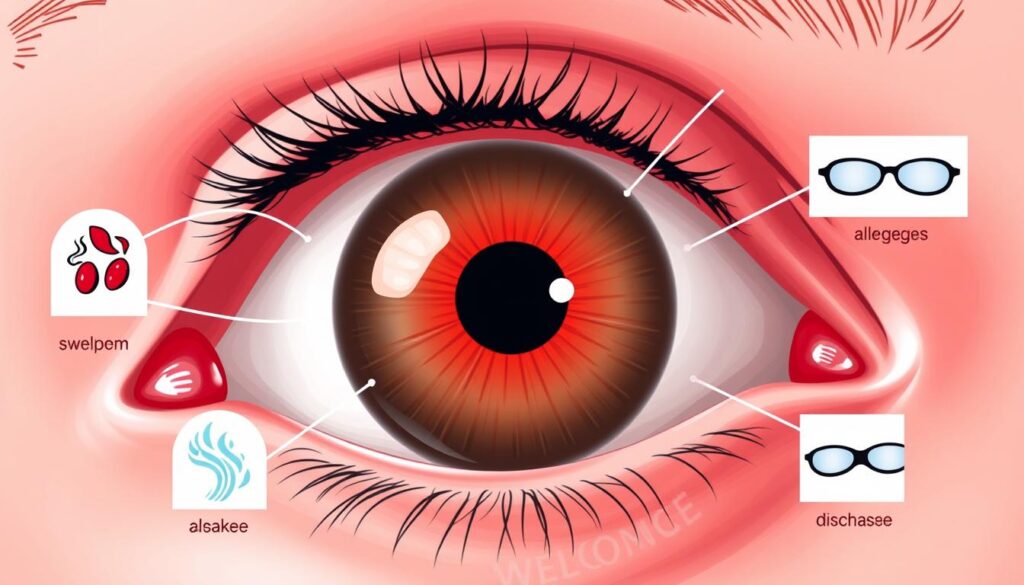
Eye redness happens when blood vessels in your eye swell or expand. This can point to health issues beyond just a minor annoyance. Various factors can trigger red eye, from everyday irritants to serious medical conditions1.
Your eyes react fast to things that bother them. Dust, sun, allergies, and germs can all make your eyes red and irritated1. It’s key to find out what’s causing the problem.
Some red eye cases need quick medical help. Watch out for eye pain, vision changes, or discharge1. Not all red eyes are serious, but knowing the warning signs is crucial.
Key Takeaways
- Red eye occurs when blood vessels become swollen or dilated
- Multiple factors can cause eye redness, from environmental irritants to infections
- Some red eye symptoms require professional medical evaluation
- Eye fatigue and irritation can be early indicators of underlying conditions
- Proper eye care and quick response to symptoms are essential
Understanding Common Red Eye Symptoms and Triggers
Red eyes often signal underlying health issues. Understanding the causes of eye redness is crucial for maintaining good eye health. Your eyes need attention to stay healthy and comfortable.
Many conditions can cause eye redness. Common triggers include allergies, dry eyes, and environmental factors23. If left untreated, these issues can lead to discomfort and potential vision problems.
Identifying Eye Redness Patterns
Recognizing eye redness patterns helps determine causes and treatments. Key symptoms to watch for include:
- Itching and burning sensations
- Excessive tear production
- Light sensitivity
- Eye fatigue
Primary Causes of Eye Irritation
Several factors contribute to red eyes, including:
- Dry Eyes: Inadequate tear production can cause significant eye redness2
- Prolonged screen exposure leading to eye dehydration2
- Airborne bacteria and environmental irritants3
- In-flight hydration challenges
“Your eyes are delicate organs that require careful attention and protection from various environmental stressors.”
Specific conditions like conjunctivitis, blepharitis, and allergies can trigger eye redness2. Knowing these triggers helps you take steps to maintain healthy eyes.
| Condition | Symptoms | Potential Causes |
|---|---|---|
| Conjunctivitis | Pink appearance, no vision loss | Viral/bacterial infections |
| Dry Eye Syndrome | Redness, irritation | Poor tear quality |
| Screen-Related Fatigue | Eye strain, redness | Prolonged digital device use |
Prevention involves maintaining proper eye hygiene and minimizing screen time. Staying hydrated is also important for eye health. If symptoms persist, consult an eye care professional3.
Red Eye: Medical Conditions and Serious Concerns
Late night flights can bring more than just travel discomfort. Some red eye symptoms may signal serious medical conditions. These issues can go beyond typical jet lag and puffy eyes.
- Acute Glaucoma: A sudden increase in eye pressure that demands urgent medical intervention4
- Corneal Ulcers: Serious bacterial or viral infections affecting the eye’s surface5
- Uveitis: Inflammation of the eye’s middle layer potentially linked to autoimmune disorders4
Red flags that suggest you should seek immediate medical attention include:
- Persistent eye pain
- Vision changes
- Colored discharge from eyes
- Extreme light sensitivity6
“Most patients with red eye have a benign condition, but some symptoms require professional evaluation”
Prolonged eye redness during or after travel needs attention. Don’t ignore potential warning signs. Your vision is too important to risk.
Consult an eye care professional if you have concerns. They can help with travel-related eye strain and other issues.
| Condition | Key Symptoms | Urgency Level |
|---|---|---|
| Conjunctivitis | Redness, Discharge | Moderate |
| Acute Glaucoma | Severe Pain, Vision Loss | High |
| Corneal Ulcer | Intense Discomfort | High |
Remember, early detection and professional medical advice can prevent potential long-term eye complications.
Conclusion
Proactive eye care is key to preventing redness. Understanding causes and using targeted tips can reduce irritation risks7. Regular screen breaks, good hygiene, and lubricating drops help minimize strain and inflammation8.
Quick action is vital for persistent red eye symptoms. Medical research stresses monitoring symptoms lasting beyond a few days7. Redness for over a week needs professional evaluation9.
Watch for vision changes, eye pain, or unusual discharge. These could signal serious conditions9. Your eye care should include protective measures and proper hydration.
Prevention is crucial in managing eye health issues8. Consult an eye care professional for persistent redness or severe pain. This helps prevent potential complications7.
Some conditions, like subconjunctival hemorrhages, may heal naturally within weeks8. Always prioritize professional advice over home remedies for optimal eye health9.
FAQ
What causes red eye?
Red eye can stem from various factors like dryness, sun exposure, and allergies. Swollen blood vessels on the eye’s surface create a bloodshot look. This appearance may signal different underlying conditions.
When should I be concerned about red eye?
Seek medical help if red eye comes with severe symptoms like pain or blurred vision. Persistent redness, vision changes, or colored discharge also warrant professional evaluation. Conditions like acute glaucoma or corneal ulcers need immediate attention.
How can I prevent red eye?
Maintain good eye hygiene and avoid irritants to prevent red eye. Stay hydrated, use proper eye protection, and get enough rest. Clean and replace contact lenses as directed.
Take breaks during long screen time sessions. Shield your eyes from harsh environmental conditions.
Can red eye be treated at home?
Mild red eye cases can be managed at home with rest and cool compresses. Over-the-counter artificial tears can help, and avoid potential irritants. See an eye care professional if symptoms last more than two days.
Are there specific medical conditions that cause red eye?
Several conditions can cause red eye, including blepharitis and conjunctivitis (pink eye). Corneal ulcers, uveitis, and allergy-related issues may also lead to red eye. Some cases might indicate serious problems like autoimmune disorders or infections.
How does air travel impact eye redness?
Air travel can cause red eye through low humidity and airborne bacteria. Eye strain and disrupted sleep patterns also contribute to the problem. The dry cabin air leads to eye fatigue and irritation.
Stay hydrated and use lubricating eye drops during flights to minimize these effects.
Can allergies cause red eye?
Yes, allergies often cause red eye by triggering inflammation and irritation. Allergens like pollen or pet dander can make eyes swollen, itchy, and red. Use antihistamine eye drops and avoid known allergens to manage these symptoms.
Source Links
- Eye redness Information | Mount Sinai – https://www.mountsinai.org/health-library/symptoms/eye-redness
- Red eye: Is it an emergency? Causes and remedies | ICR – https://icrcat.com/en/remedies-for-red-eye/
- Why Are My Eyes Red? – https://www.webmd.com/eye-health/why-eyes-red
- Eye redness – UF Health – https://ufhealth.org/conditions-and-treatments/eye-redness
- Diagnosis and Management of Red Eye in Primary Care – https://www.aafp.org/pubs/afp/issues/2010/0115/p137.html
- The red eye – PMC – https://pmc.ncbi.nlm.nih.gov/articles/PMC3017259/
- Red Eyes: Symptoms, Causes, Treatment, Prevention and Home Remedies – https://www.carehospitals.com/symptoms/red-eyes
- Understanding Red And Bloodshot Eyes: Causes, Symptoms And Treatments – – https://drdecarlo.net/understanding-red-and-bloodshot-eyes-causes-symptoms-and-treatments/
- Red eye – https://www.starhealth.in/blog/red-eye

