
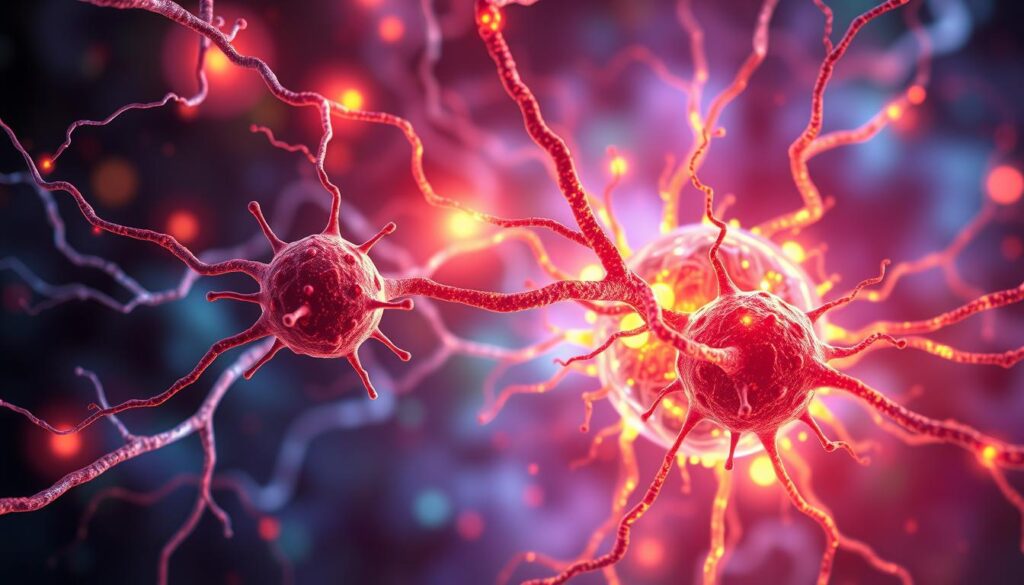
Multiple sclerosis (MS) affects many lives. Stem cell therapy is changing how we treat this complex condition. Brain stem cells show amazing potential for managing MS1.
This new therapy targets inflammation and immune system regulation. Researchers use mesenchymal stem cells (MSCs) to stop disease progression. They may even reverse nerve damage1.
MS impacts 250,000 to 300,000 people in the United States. Worldwide, it affects 2.3 million individuals. Stem cell therapy offers hope for those seeking new treatment options2.
Key Takeaways
- Brain stem cells offer promising therapeutic potential for MS patients
- Stem cell treatments target inflammation and immune system regulation
- Clinical trials show significant improvement in patient outcomes
- Neurogenesis through stem cell therapy can potentially reverse neurological damage
- Multiple sclerosis affects millions globally, making innovative treatments crucial
Understanding Multiple Sclerosis and Its Impact
Multiple sclerosis (MS) is a complex neurological condition affecting millions worldwide. It challenges patients, families, and healthcare providers. Effective MS treatment strategies are crucial for managing this disease.
MS typically affects young adults between ages 20 and 403. The disease presents unique challenges that can dramatically change a person’s life.
What is Multiple Sclerosis?
Multiple sclerosis is an autoimmune disorder affecting the central nervous system. The immune system attacks the protective myelin sheath covering nerve fibers. This disrupts communication between the brain and body.
MS Symptoms
- Extreme fatigue
- Vision problems
- Muscle weakness
- Cognitive difficulties
- Sensory disturbances
How MS Affects Daily Life
MS symptoms can greatly impact daily activities. People might struggle with mobility, work performance, and social interactions3.
| MS Type | Characteristics |
|---|---|
| Relapsing-Remitting | Periodic symptom flare-ups with recovery periods |
| Primary-Progressive | Steady neurological decline without distinct remission |
| Secondary-Progressive | Initial relapsing phase transitions to consistent progression |
Women are more likely to develop MS than men. Genetic factors can increase susceptibility3.
While no cure exists, modern treatments help manage symptoms. These treatments can also slow disease progression3.
Understanding MS is the first step toward effective management and maintaining quality of life.
The Role of Stem Cells in Medicine
Stem cell therapy is a groundbreaking approach in regenerative medicine. It offers hope for patients with challenging neurological conditions like multiple sclerosis. These remarkable cells have unique capabilities, making them powerful tools in medical research and treatment.
What Are Stem Cells?
Stem cells are unspecialized cells with extraordinary potential to transform into various cell types. They play a crucial role in neural regeneration by becoming specialized cells. These cells can repair damaged tissue4.
Unlike traditional treatments, stem cell therapy offers a more targeted approach to healing. This makes it a promising option for many patients.
Types of Stem Cells
There are several important types of stem cells used in medical research:
- Embryonic Stem Cells (ESCs)
- Adult Stem Cells
- Mesenchymal Stem Cells (MSCs)
- Neural Stem Cells (NSCs)
- Induced Pluripotent Stem Cells (iPSCs)
Stem Cells and Regenerative Medicine
Stem cell therapy for MS shows remarkable potential in addressing neurological challenges. These cells have unique properties that can help manage disease progression4:
| Stem Cell Property | Therapeutic Impact |
|---|---|
| Immunomodulation | Reduces inflammatory processes |
| Neurotrophic Factor Secretion | Enhances neural tissue survival |
| Cell Differentiation | Repairs damaged neural circuits |
Stem cells offer a revolutionary approach to treating complex neurological conditions by targeting the root causes of disease progression.
The future of regenerative medicine lies in understanding and harnessing the incredible potential of stem cells. Ongoing research promises more innovative treatments. These advancements could transform patient care5.
Introduction to Brain Stem Cells
Neural stem cells are a groundbreaking area in medical research. They offer new ways to understand and treat neurological conditions. These cells are key to neurogenesis and have amazing abilities.
Brain stem cells can change into different neural cell types. This makes them vital for brain cell transplantation research. Their regenerative potential is truly remarkable6.
Defining Neural Stem Cells
Neural stem cells are special cells in the central nervous system. They can make copies of themselves and turn into various neural cells. These include neurons, astrocytes, and oligodendrocytes.
- Neurons
- Astrocytes
- Oligodendrocytes
Sources of Brain Stem Cells
Scientists have found several sources of neural stem cells. Each source has its own unique features.
| Source | Characteristics |
|---|---|
| Subventricular Zone | Primary location for adult neurogenesis |
| Induced Pluripotent Stem Cells | Genetically reprogrammed cells with stem cell properties |
| Embryonic Tissue | High differentiation potential |
Unique Properties of Brain Stem Cells
Neural stem cells can move to injured areas in the brain. They can change into specific neural cells and release protective factors7. This makes them promising for treating conditions like multiple sclerosis.
“Neural stem cells represent hope for regenerative medicine, offering potential solutions to previously untreatable neurological conditions.” – Neurological Research Institute
Research on brain cell transplantation keeps revealing new possibilities. Scientists are exploring ways to reverse neurological damage. The future looks bright for this field of study6.
How Brain Stem Cells Work in MS Treatment
Neural stem cells offer hope for multiple sclerosis treatment. They bring new possibilities to manage this challenging neurological condition. These innovative therapies expand our understanding of MS care.
Brain stem cells are crucial in developing potential MS cure strategies. They target key disease mechanisms through multiple innovative pathways8.
Mechanisms of Action in Neural Stem Cell Therapy
Neural stem cells address MS progression through several key mechanisms:
- Immune system modulation
- Neuroprotection
- Remyelination support
- Inflammation reduction
Repairing Damaged Neural Tissue
Stem cells can repair damaged tissue, offering a groundbreaking MS treatment approach. Two drugs show promise in stimulating myelin-producing cells9:
| Drug | Type | Effectiveness |
|---|---|---|
| Miconazole | Antifungal | High myelin regeneration potential |
| Clobetasol | Steroid | Significant neural repair capability |
Reducing Inflammation and Promoting Healing
Mesenchymal stem cell therapy shows promise in managing MS. It suppresses immune responses that damage the nervous system10. The potential for neuroprotection offers hope for patients seeking alternative treatments.
Stem cell research unlocks new possibilities for MS treatment. It brings us closer to more effective management strategies.
Stem cell therapies remain experimental and aren’t FDA-approved yet. Ongoing clinical trials are crucial for validating these innovative approaches10.
Current Research on Brain Stem Cells and MS
MS research has made exciting breakthroughs recently. Scientists are exploring innovative stem cell therapies. These new approaches could transform patient outcomes.
Brain stem cell treatments for MS show promise globally. Over 2 million people worldwide have MS. This drives researchers to seek groundbreaking solutions11.
Overview of Recent Studies
Clinical trials have shown progress in stem cell therapy for MS. A study involved 15 patients with secondary progressive MS11. It explored brain stem cell transplantation.
Key findings from recent research include:
- Most participants had high disability levels before treatment11
- Four different doses of brain stem cells were tested11
- No severe adverse events were reported within 12 months11
Notable Findings
Researchers have made exciting discoveries in stem cell therapy. A phase 1 trial at San Raffaele Hospital studied neural precursor cells12.
Patients aged 18-55 with long-term MS joined the study. It focused on progressive multiple sclerosis.
“The study demonstrates the first compelling evidence in humans that a single brain stem cell transplant directly into the brain is safe and can have long-lasting effects.” – Research Team
Future Research Directions
MS research has a bright future ahead. Ongoing trials explore various treatment strategies. These focus on neuroprotection, immunomodulation, and regeneration12.
Researchers seek ways to halt or reverse MS progression. More studies are needed to understand long-term impacts. Your support drives continued exploration in this field.
Clinical Trials: Bridging Research and Treatment
Stem cell therapy research offers new hope for Multiple Sclerosis treatment. Clinical trials are key to advancing potential treatments. These trials bridge scientific discoveries with real-world medical interventions for MS patients13.
Importance of Clinical Trials
Clinical trials are vital for understanding stem cell therapies’ safety and effectiveness. They provide crucial insights into potential treatments. These trials carefully examine treatment protocols, patient responses, and long-term outcomes.
- Treatment protocols
- Patient responses
- Long-term outcomes
Current Trials in Stem Cell Research
Researchers are making major progress in MS clinical trials. One breakthrough shows stem cells coating over 40% of brain neurons with myelin. This represents a four-fold increase from previous research13.
The international MIST study recruited 110 people with MS. It aimed to compare innovative treatment approaches14.
*”Stem cell therapies offer hope for patients where traditional treatments have fallen short.”*
What Patients Should Know
Patient involvement is crucial for advancing MS treatment. Consider these key points when thinking about joining clinical trials:
- Understand potential risks and benefits
- Consult with healthcare providers
- Review detailed trial protocols
Autologous haematopoietic stem cell transplantation (AHSCT) has shown promising results. Patients experienced improvements in disability scores after one year14.
However, patients should be aware of potential complications. These include a small mortality risk and possible impact on fertility14.
Stem cell therapy research continues to evolve. It offers renewed hope for those affected by Multiple Sclerosis15.
Case Studies: Success Stories in MS Treatment
Stem cell therapy offers hope for Multiple Sclerosis patients. Real-life experiences showcase the potential of this regenerative medicine approach. Patient testimonials provide powerful insights into successful MS treatments.
Highlighting Successful Treatments
Stem cell therapy has shown promise in addressing various MS symptoms. Patients have experienced improvements in mobility challenges and cognitive function16.
Key benefits include increased energy levels and improved flexibility. Enhanced mobility and better control of basic functions are also notable improvements.
- Increased energy levels
- Improved flexibility
- Enhanced mobility
- Better control of basic functions
Patient Experiences and Testimonials
“Stem cell therapy gave me a second chance at life,” says one patient who underwent treatment.
Success stories highlight the transformative power of stem cell therapy. Reema Sandhu saw significant brain function improvements after her stem cell transplant17.
This treatment offers hope by potentially regenerating damaged tissues. It may also help reduce inflammation in MS patients16.
| Patient | Condition | Outcome |
|---|---|---|
| Jennifer | Multiple Sclerosis | Received 300 million mesenchymal stem cells |
| Reema Sandhu | Multiple Sclerosis | Significant brain function improvement |
Lessons Learned from Case Studies
The global MS landscape reveals important insights. About 2.8 million people worldwide are affected by this condition. Stem cell therapy offers a beacon of hope for many18.
Key takeaways include the importance of personalized treatment approaches. Stem cells can potentially regulate the immune system. Non-invasive treatments also show promising results.
- Personalized treatment approaches are crucial
- Stem cells can potentially regulate the immune system
- Non-invasive treatments show promising results
Stem cell therapy outcomes may vary among patients. However, these case studies highlight the potential for improved quality of life. Many MS patients have found hope through this innovative treatment16.
Potential Risks and Challenges
Stem cell therapy for multiple sclerosis offers hope but comes with risks. Patients need to understand these complexities fully. This innovative treatment requires careful consideration of potential challenges.
Ethical Considerations in Stem Cell Research
Stem cell therapy for MS raises ethical issues. These include sourcing stem cells and ensuring patient consent. Balancing experimental treatment with safety is crucial.
- Sourcing of stem cells, particularly embryonic stem cells
- Ensuring fully informed patient consent
- Balancing experimental treatment with patient safety
- Maintaining transparent research protocols
Possible Side Effects of Stem Cell Therapy
Knowing potential risks is vital for patients considering this treatment. Side effects can range from infections to rare complications.
| Type of Risk | Potential Consequences |
|---|---|
| Infection | Compromised immune response |
| Allergic Reactions | Immune system complications |
| Rare Complications | Potential tumor formation |
Managing Patient Expectations
Autologous Hematopoietic Stem Cell Transplantation (aHSCT) shows promise for some MS patients. It’s most effective for those with active relapsing forms of the disease19.
It’s essential to understand that stem cell therapy is not a guaranteed cure. Clinical trials have shown potential benefits like improved disability scores and fewer relapses19.
The journey of stem cell therapy is about hope, careful research, and realistic expectations.
Your medical team will guide you through MS treatment challenges. They’ll help you understand potential outcomes clearly. Ongoing research aims to improve these treatments for multiple sclerosis20.
The Future of MS Treatment with Stem Cells
Stem cell innovations are transforming multiple sclerosis treatment. They offer hope to millions of patients worldwide. Over 2 million people live with MS, spurring researchers to develop groundbreaking treatments.
Innovative Approaches on the Horizon
Stem cell research presents exciting possibilities for managing multiple sclerosis. Researchers are exploring several promising approaches:
- Personalized stem cell therapies tailored to individual patient needs
- Gene editing technologies like CRISPR to enhance stem cell effectiveness
- Advanced imaging techniques for tracking treatment progress
How Technology is Transforming Treatment
Cutting-edge technologies are revolutionizing MS treatment strategies. Early clinical trials have shown remarkable potential. Neural stem cell injections demonstrated substantial disease stability21.
Patients experienced no increase in disability during 12-month follow-ups21. This promising outcome fuels hope for future treatments.
“The future of MS treatment lies in our ability to harness the regenerative power of stem cells” – Leading Neurological Researcher
Collaborations in Research
Research collaborations are accelerating stem cell innovations. Partnerships between academic institutions, biotechnology companies, and healthcare providers are vital. They’re advancing MS treatments and addressing key challenges.
- Cell manufacturing techniques
- Improved delivery methods
- Navigating regulatory approvals
Personalized stem cell therapies continue to grow. They promise a future where MS treatment becomes more precise and effective21.
How to Get Involved and Stay Informed
Exploring MS research requires active engagement. Connect with reliable information networks to understand MS patient resources. Clinical trial participation can lead to new treatments22.
Set realistic goals and seek emotional support. These steps are vital in managing your MS journey22.
Empower yourself by using specialized resources for MS research updates. The National Multiple Sclerosis Society community offers platforms to discover latest developments. MS affects 1.8 million people worldwide, making shared knowledge crucial23.
Clinical trials offer innovative treatments for MS patients. Find current studies on ClinicalTrials.gov. Stem cell therapies have improved 40.4% of MS patients23.
Patient education and collaborative care advance treatment options22. Your involvement can make a big difference in MS research.
Stay updated by reading scientific journals and attending patient conferences. Follow trusted MS research foundations on social media. Staying connected keeps you informed about breakthroughs in managing this complex condition24.
FAQ
What are brain stem cells, and how can they help with Multiple Sclerosis?
Brain stem cells can self-renew and change into different types of brain cells. These cells may help MS patients by promoting myelin repair and reducing inflammation. They can also create a better environment for neural healing.
Is stem cell therapy a cure for Multiple Sclerosis?
Stem cell therapy isn’t a definitive cure for MS yet. It aims to slow disease progression and potentially repair some neural damage. Ongoing clinical trials are exploring its effectiveness, with results varying between individuals.
What types of stem cells are used in MS treatment?
The main types are mesenchymal, neural, and induced pluripotent stem cells. Mesenchymal stem cells are particularly promising for MS treatment. They can help control the immune system and support neural repair.
Are stem cell treatments for MS safe?
Early trials show stem cell treatments can be safe when done by qualified professionals. However, there are risks like infection and allergic reactions. It’s crucial to join regulated trials and talk with specialized doctors.
How can I participate in stem cell clinical trials for MS?
You can check websites like ClinicalTrials.gov for current studies. Consult your MS specialist about trial eligibility. Contact MS research organizations like the National Multiple Sclerosis Society.
Attend patient conferences and workshops on MS research. Stay informed about the latest developments in stem cell therapies.
What improvements can patients expect from stem cell therapy?
Patients may experience reduced inflammation and increased energy. Some see improved cognitive function and better balance. There’s potential for slowing disease progression and enhancing quality of life.
However, results can vary among patients. Not everyone will experience the same level of improvement.
What is the future of stem cell therapy for MS?
The future looks promising, with ongoing research exploring new approaches. These include combining stem cell therapy with immune-modulating drugs. Gene editing technologies like CRISPR are also being studied.
Researchers are developing personalized treatment protocols. Advanced imaging techniques are being used to track progress. Academic institutions and biotech companies are working together on new solutions.
How do stem cells actually work to help MS patients?
Stem cells help MS patients by controlling the immune response. They reduce inflammation and promote neuronal health. These cells can change into myelin-repairing cells called oligodendrocytes.
They also release growth factors that support neural repair. This creates a better environment for nerve regeneration.
Source Links
- Stem cell therapies for neurological disorders: current progress, challenges, and future perspectives – http://www.ncbi.nlm.nih.gov/pmc/articles/pmc11270957/
- Stem Cells Making a Difference in Treating Multiple Sclerosis – https://www.cryo-cell.com/stem-cell-insider/april-2015/multiple-sclerosis-treatment-stem-cells
- Multiple Sclerosis – https://www.ninds.nih.gov/health-information/disorders/multiple-sclerosis
- Stem cell therapies: a new era in the treatment of multiple sclerosis – https://pmc.ncbi.nlm.nih.gov/articles/PMC11111935/
- The bumpy road to treating multiple sclerosis with stem cells – https://www.drugdiscoverynews.com/the-bumpy-road-to-treating-multiple-sclerosis-with-stem-cells-15687
- Cell-based therapeutic strategies for multiple sclerosis – https://pmc.ncbi.nlm.nih.gov/articles/PMC5841198/
- Introduction: stem cells and brain repair – https://pmc.ncbi.nlm.nih.gov/articles/PMC2042520/
- VA.gov | Veterans Affairs – https://www.va.gov/MS/TREATING_MS/Whole_Health/Stem_Cell_Therapy.asp
- Drugs that activate brain stem cells may reverse multiple sclerosis – https://www.nih.gov/news-events/news-releases/drugs-activate-brain-stem-cells-may-reverse-multiple-sclerosis
- Stem cell therapy for multiple sclerosis: Explanation and safety – https://www.medicalnewstoday.com/articles/stem-cell-multiple-sclerosis
- Stem cell therapy shows promise for treating multiple sclerosis – new study – https://theconversation.com/stem-cell-therapy-shows-promise-for-treating-multiple-sclerosis-new-study-218528
- Neural stem cell transplantation in patients with progressive multiple sclerosis: an open-label, phase 1 study – Nature Medicine – https://www.nature.com/articles/s41591-022-02097-3
- Precision with Stem Cells a Step Forward for Treating M.S., Other Diseases – https://www.urmc.rochester.edu/news/story/precision-with-stem-cells-a-step-forward-for-treating-m.s.-other-diseases
- Stem cells and MS – AHSCT – https://mstrust.org.uk/a-z/stem-cells-and-ms-ahsct
- Experimental and Therapeutic Opportunities for Stem Cells in Multiple Sclerosis – https://pmc.ncbi.nlm.nih.gov/articles/PMC3509592/
- Patient Success Stories – Jennifer – https://www.dvcstem.com/post/patient-success-jennifer
- 5 stem cell success stories – https://cells4life.com/2019/12/5-stem-cell-success-stories/
- Stem Cell Transplantation for Multiple Sclerosis: A 2023 Review of Published Studies – https://pmc.ncbi.nlm.nih.gov/articles/PMC10686127/
- Stem cell therapy for MS – https://www.msif.org/research/challenges-of-ms-research/stem-cell-therapy-for-ms/
- Stem cell therapy for multiple sclerosis – https://pmc.ncbi.nlm.nih.gov/articles/PMC6759045/
- Early Stage Cell Therapy Trial Shows Promise in Treating Progressive Multiple Sclerosis – https://news.cuanschutz.edu/news-stories/early-stage-cell-therapy-trial-shows-promise-in-treating-progressive-multiple-sclerosis
- Multiple Sclerosis Self-Care: 2024 Guide – https://www.dvcstem.com/post/multiple-sclerosis-self-care
- How to Prepare for Stem Cell Therapy for Multiple Sclerosis – https://biorestorehealth.com/newtown-connecticut/how-to-prepare-for-stem-cell-therapy-for-multiple-sclerosis/
- Mesenchymal Stem Cells for the Treatment of MS – Biotherapy International – https://ibiotherapy.com/neurological-disorders/multiple-sclerosis/

