
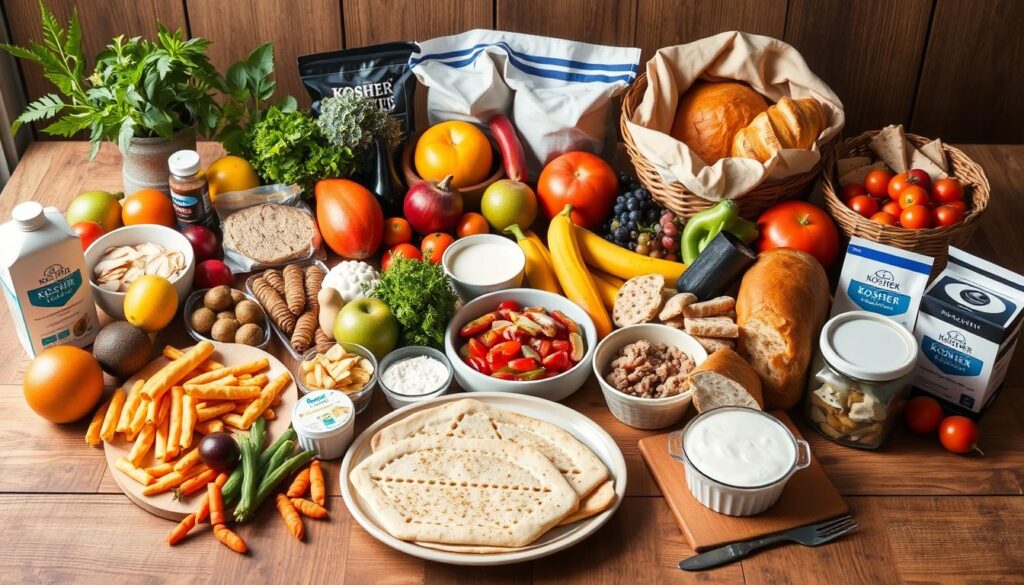
Kosher food is more than just dietary rules. It’s a rich culinary tradition rooted in Jewish religious practices1. Kosher rules guide not only what to eat but also how to prepare and consume food1.
Kosher guidelines come from ancient Jewish dietary laws. These rules, found in biblical texts, determine which foods are acceptable1. They group foods into meat, dairy, and pareve categories, each with specific preparation rules1.
Kosher isn’t just about rules; it’s about cultural connection. Every ingredient and cooking method matters in Kosher cuisine2. It’s a way to honor spiritual traditions through food.
Key Takeaways
- Kosher food follows strict religious dietary guidelines
- Laws are based on biblical texts and rabbinic interpretations
- Foods are categorized into meat, dairy, and neutral (pareve) groups
- Preparation methods are as important as ingredient selection
- Kosher practices connect individuals to cultural and spiritual traditions
Understanding Kosher Fundamentals
Kosher dietary laws reveal a rich cultural and spiritual tradition rooted in Jewish heritage. These guidelines represent a comprehensive approach to nutrition and spiritual living. The kosher food market has grown to $305 billion, expanding by 12% annually3.
Origins of Kosher Dietary Laws
Kosher dietary laws trace back to ancient biblical texts, specifically the Torah. These sacred guidelines outline precise rules for food preparation and consumption. Kosher certification ensures food meets strict requirements established by religious traditions.
Basic Kosher Categories
- Meat: Includes kosher mammals and birds
- Dairy: Milk and milk-based products
- Pareve: Neutral foods neither meat nor dairy4
“Kosher is not just a diet, it’s a way of life that connects food with spiritual meaning.”
The Role of Torah in Kosher Guidelines
The Torah provides detailed instructions about permitted and forbidden foods. Certain animals like pigs, rabbits, and horses are strictly prohibited5.
Non-Jewish consumers often view the kosher symbol as a mark of quality4.
| Kosher Category | Characteristics | Examples |
|---|---|---|
| Meat | Requires ritual slaughter | Kosher beef, chicken |
| Dairy | Strict production rules | Supervised milk products |
| Pareve | Neutral foods | Fruits, vegetables, grains |
The kosher diet balances culinary tradition and spiritual practice. Each food category needs careful preparation to maintain its kosher status4.
What Is Kosher?
Kosher is more than just a food label. It’s a complex dietary system based on ancient Jewish traditions. The Hebrew word “kosher” means “fit” or “proper,” guiding followers of these sacred laws6.
Kosher food falls into three main groups. These are meat (Fleishig), dairy (Milchig), and Pareve (neutral foods)6.
- Meat (Fleishig)
- Dairy (Milchig)
- Pareve (neutral foods)6
Kosher animals must meet specific criteria. Mammals need split hooves and must chew cud7.
- Mammals must have split hooves and chew cud7
- Acceptable species include addax, antelope, bison, cow, deer, goat, and sheep7
- Poultry options include chicken, turkey, duck, and goose7
Kosher symbols on packaging are vital. They show that foods meet strict dietary rules6.
The kosher diet represents more than dietary restrictions—it’s a spiritual connection to cultural heritage6.
Kosher guidelines involve complex rules. These cover food prep, animal selection, and ritual requirements.
Kosher Food Classifications and Preparation Rules
Kosher rules form a complex system of food classification and preparation. These guidelines go beyond simple eating habits. They reveal fascinating aspects of dietary practices.
Kosher rules cover animal selection, food processing, and ingredient combinations. Surprisingly, almost half of all packaged foods are kosher8. This makes these rules more common than many think.
Permitted and Forbidden Animals
Kosher dietary restrictions include specific rules about which animals are allowed. Kosher mammals must have split hooves and chew their cud. This includes animals like cows, sheep, and goats.
- Cows
- Sheep
- Goats
Domestic fowl such as chickens, ducks, and turkeys are considered kosher9. Sea creatures must have both fins and scales to be allowed. This means fish like salmon and tuna are acceptable9.
Meat and Dairy Separation Guidelines
A key rule of the kosher diet is separating meat and dairy products. Different utensils and areas must be used for these food groups9. Specific waiting periods are required between eating meat and dairy items.
Special Requirements for Food Processing
Kosher food processing involves careful procedures. Eggs are checked in a glass bowl for blood spots before cooking9. Kosher mammals are slaughtered using a precise, painless method by trained professionals9.
Kosher certification ensures that every ingredient meets strict dietary guidelines.
You can find kosher versions of almost every food and drink. This makes these dietary laws more accessible than ever8.
Conclusion
Kosher dietary practices are a complex system rooted in cultural and religious traditions. Kosher certification has become a global standard for food quality. Kosher products offer more than religious compliance; they represent meticulous food standards10.
Kosher symbols help you make informed food choices. These certifications ensure rigorous inspection and quality control. Comprehensive audits guarantee food meets exceptional purity standards1011.
Kosher food provides an extra layer of assurance for consumers seeking transparency. It involves careful food categorization and strict preparation guidelines. This approach appeals to diverse consumers who value thoughtful food preparation1011.
Kosher practices show how dietary traditions can cross cultural boundaries. They offer insights into precision, respect, and mindful eating. Understanding these principles helps you appreciate this unique food system.
This food system balances spiritual heritage with modern nutritional standards. It demonstrates a comprehensive approach to nutrition and culinary practices. Exploring kosher practices can enhance your awareness of food quality and preparation.
FAQ
What does kosher mean?
Kosher foods follow Jewish dietary laws called kashrut. The Hebrew word “kashér” means “fit” and describes foods meeting specific religious guidelines. These laws define acceptable foods for Jewish people, covering what to eat and how to prepare meals.
What are the main categories of kosher foods?
Kosher foods fall into three main groups: meat (fleishig), dairy (milchig), and pareve (neutral). Meat includes kosher mammals and birds. Dairy comprises milk and its products. Pareve foods are neither meat nor dairy, like fruits, vegetables, and eggs.
What animals are considered kosher?
Kosher land animals must have split hooves and chew their cud. Examples include cows, sheep, and goats. Kosher birds are chickens, turkeys, and ducks. Pork and shellfish are forbidden. Fish need both fins and scales to be kosher.
How are kosher foods prepared?
Kosher food prep follows strict rules. Meat must be slaughtered through a ritual called shechita and have all blood removed. Meat and dairy products are kept separate, using different utensils and prep areas. There’s a waiting period between eating meat and dairy.
What is a kosher certification?
A kosher certification, or hechsher, is a symbol on food packaging. It shows the product has been approved by a kosher agency. These agencies ensure food production meets all kosher dietary requirements. They check everything from ingredients to processing and packaging.
Do all Jewish people follow kosher dietary laws?
Not all Jewish people strictly follow kosher dietary laws. Only a small percentage of American Jews fully keep kosher. Many observe some aspects of these dietary guidelines. Some follow kosher rules for religious, cultural, or personal reasons.
Are kosher foods only for Jewish people?
Kosher foods are eaten by both Jewish and non-Jewish people. Many choose kosher products for various reasons. These may include perceived quality, dietary preferences, or ethical considerations related to food preparation.
What special rules apply to fruits and vegetables?
Fruits and vegetables must be carefully checked for insects, which aren’t kosher. Produce needs thorough cleaning to comply with kosher guidelines. Some fruits and veggies may need special cleaning or prep methods.
Source Links
- Kosher foods – https://en.wikipedia.org/wiki/Kosher_foods
- What Does Kosher Mean? – https://firmisrael.org/learn/what-is-kosher-from-salt-to-scripture-your-questions-answered/
- cRc Kosher Certification – A Basic Overview of Kosher – https://crckosher.org/a-basic-overview-of-kosher/
- Kosher in Depth | STAR-K Kosher Certification – https://www.star-k.org/articles/articles/getting-certified/what-kosher/1358/kosher-in-depth/
- Complete Guide to Kosher Food – Ba Ghetto | Blog – https://www.baghetto.com/en/about-kosher-world/complete-guide-kosher-food/
- What is kosher? Definition, examples, diet, and more – https://www.medicalnewstoday.com/articles/what-is-kosher
- What is Kosher Food? What Does Kosher Mean? OU Kosher Rules & Definition – https://oukosher.org/the-kosher-primer/
- What Is Kosher Food? – https://www.webmd.com/food-recipes/kosher-food
- Traditional and Kosher Rules – RMIG – https://rmig.eatrightpro.org/rmig/religionsandfaith/jewish/jewish-resources/traditional-kosher-rules
- Kosher Food: What You Need to Know – Kosherline – https://www.kosherline.com/kosher-food/?srsltid=AfmBOorm3mASOESOPLjA-ldt8ebHXW3xfrhetbc5sRm0sTKKmOpbSvfn
- Kosher Food: Dairy & Meat Guide – https://gbsalad.com/kosher-food-dairy-and-meat/

