
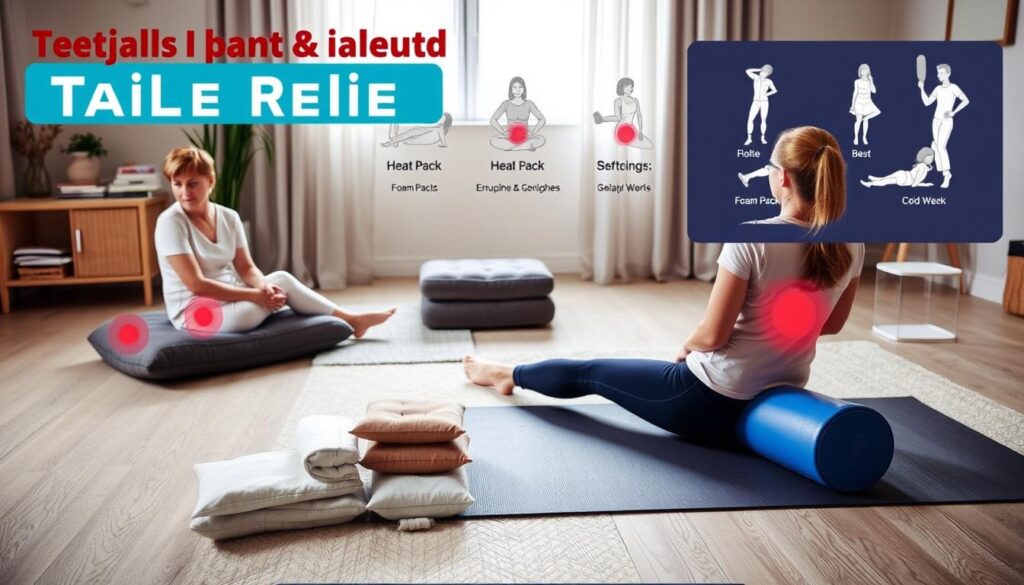
Tailbone pain, or coccydynia, can be a real challenge. It affects your lower back and impacts daily life. Various causes can lead to this discomfort1.
Your coccyx is a small triangular bone at the spine’s bottom. Injuries, prolonged sitting, or other conditions can make it painful2. Most cases of tailbone pain get better within weeks or months1.
Pregnant women often feel this pain due to lower back pressure3. The root cause helps find effective relief strategies. Tailbone pain can make simple tasks like sitting or moving hard.
Activities with repetitive motions might worsen your discomfort3. Luckily, there are many ways to manage and reduce coccyx pain.
Key Takeaways
- Tailbone pain typically resolves within weeks or months
- Multiple treatment options are available for coccyx pain
- Home remedies can provide significant relief
- Professional medical consultation is recommended for chronic pain
- Lifestyle modifications can help prevent tailbone discomfort
Understanding Tailbone Pain
Coccyx pain, or coccydynia, can greatly affect your daily life. Your tailbone supports your body during sitting and movement. Learning about this pain can help you manage and ease your discomfort.
What Is Tailbone Pain?
Tailbone pain is discomfort in the coccyx area. It can range from mild to severe. Women are five times more likely than men to experience this pain.
The feeling can vary from a subtle ache to intense stabbing. It’s often worse when sitting or standing.
Common Causes of Tailbone Pain
- Traumatic injuries from falls or accidents4
- Prolonged sitting on hard surfaces5
- Pregnancy and childbirth4
- Weight-related issues5
Certain activities can trigger tailbone pain. Repetitive motions like rowing or biking may strain coccyx muscles5. Falls causing bruising, dislocation, or fractures can lead to sitting discomfort4.
Symptoms to Watch For
Recognizing tailbone pain signs is key for early treatment. Main symptoms include:
- Sharp pain when sitting or standing
- Increased discomfort during bowel movements
- Persistent ache in the coccyx region
“Most tailbone pain resolves within a few weeks, but persistent symptoms require professional medical attention.”
Rarely, tailbone bruising might signal serious conditions like tumors or infections5. If pain persists or worsens, consult a healthcare professional6.
Home Remedies for Tailbone Pain
Tailbone pain can be tough to handle. But simple home remedies can offer real relief. Learn how to ease your discomfort and boost your recovery.
Ice and Heat Therapy
Cold and heat treatments are key for coccyx care. Apply ice or heat to the sore area four times daily. Each session should last about 15 minutes7.
For new injuries, start with ice to reduce swelling8. After two days, switch between ice and heat. This combo helps speed up healing8.
Comfortable Seating Options
A special Tailbone Cushion can be a game-changer. Look for ones with a cut-out where your tailbone rests7. Gel donuts or ergonomic cushions also help ease sitting pain8.
Gentle Stretching Exercises
Coccyx Exercises can ease tension and speed healing. Try these helpful stretches:
- Single-leg knee hug
- Figure 4 stretch
- Child’s Pose
“Healing takes time, but with the right approach, you can manage tailbone pain effectively.”
Additional Pain Management Strategies
Try these extra home remedies:
- Take over-the-counter pain meds like ibuprofen or naproxen8
- Practice pelvic floor relaxation techniques
- Rest and avoid painful activities8
Remember, most tailbone pain goes away in a few weeks or months7. If pain lasts or gets worse, see a doctor.
When to Seek Professional Help
Tailbone pain can be more than just a minor discomfort. It’s vital to know when to get medical help. Proper Coccyx Treatment can prevent long-term issues.
Recognizing Serious Symptoms
Your body may signal that it’s time to see a doctor. Coccyx Trauma can show up in several ways:
- Severe, persistent pain lasting more than a few weeks
- Difficulty performing daily activities
- Numbness or tingling in the lower back region
- Unexplained weight loss accompanying tailbone pain
Diagnostic Approaches
Doctors use various methods to check for Lower Back Injury. A full exam usually includes:
- Physical examination
- Detailed medical history review
- Potential imaging tests like MRI
- Specialized diagnostic procedures
Treatment Strategies
Coccyx pain treatments depend on how severe it is and what’s causing it. It can greatly affect daily life. About 1% to 2.7% of people seeking spinal care have tailbone pain9.
Doctors might suggest:
- Physical therapy
- Local anesthetic injections
- Manipulation techniques
- Surgical intervention in rare cases
Early intervention can prevent chronic pain and restore your quality of life.
Physical Therapy Benefits
Physical therapy offers special ways to manage tailbone pain. It may include pelvic floor relaxation and targeted exercises. These methods can help improve mobility.
Women are five times more likely to have coccyx pain10. This makes physical therapy even more important for them.
Don’t ignore ongoing tailbone pain. Talk to a doctor to find the cause and get the right treatment.
Preventative Measures for Tailbone Pain
Protecting your coccyx is key to preventing tailbone pain. A proactive approach can reduce sitting discomfort and maintain spinal health. By taking strategic steps, you can minimize the risk of potential injuries11.
Good posture is crucial for managing tailbone pain. Distribute your weight evenly when sitting and avoid long periods without breaks. Use an ergonomic chair with lumbar support to maintain your spine’s natural curve11.
Physical therapists suggest taking short breaks every 20 minutes. This helps prevent muscle strain and reduces pressure on your coccyx11.
Your lifestyle choices can greatly affect coccyx pain prevention. Regular exercise strengthens core and pelvic muscles, providing support for your tailbone. Maintaining a healthy weight reduces pressure on this sensitive area11.
Women should be extra careful due to their broader pelvic structure. They are more prone to tailbone injuries than men11.
Gentle stretching can protect your tailbone from potential damage. Avoid high-impact activities that may stress your coccyx. These strategies can help prevent chronic sitting discomfort12.
FAQ
What exactly is tailbone pain (coccydynia)?
Tailbone pain, or coccydynia, is discomfort in the coccyx at the bottom of your spine. It can cause sharp or dull pain, especially when sitting or standing. The pain can last for weeks or become chronic.
What are the most common causes of tailbone pain?
Common causes include falls, direct trauma, and prolonged sitting on hard surfaces. Childbirth, arthritis, and repetitive strain from activities like cycling can also cause pain.
How can I relieve tailbone pain at home?
Apply ice and heat therapy to reduce inflammation. Use a pressure-reduction cushion and perform gentle stretching exercises. Take over-the-counter pain relievers and lean forward while sitting to reduce pressure.
When should I see a doctor about my tailbone pain?
Seek medical help if you have severe pain or difficulty with daily activities. Also, consult a doctor if pain lasts more than a few weeks. Look out for symptoms like fever or unexplained weight loss.
Can tailbone pain be prevented?
Maintain proper posture and make ergonomic workstation adjustments. Sit with evenly distributed weight and use chairs with good lumbar support. Strengthen core and pelvic muscles regularly. Maintain a healthy weight to reduce pressure on the tailbone.
Are there specific exercises that can help with tailbone pain?
Gentle stretching exercises can provide relief. Try the figure 4 stretch, Child’s Pose, and single-leg knee hugs. Pelvic floor relaxation techniques can also help reduce tension and improve mobility.
What treatment options are available for persistent tailbone pain?
Professional treatments include physical therapy, manipulation techniques, and local anesthetic injections. In rare cases, surgical intervention (coccygectomy) may be necessary. Physical therapy is often recommended to improve mobility and reduce pain.
Can sitting position really affect tailbone pain?
Your sitting position greatly impacts tailbone pain. Use a specialized coccyx cushion and maintain proper posture. Avoid sitting for long periods and take regular breaks. These steps can significantly reduce discomfort and prevent strain.
Source Links
- How to relieve tailbone pain – https://www.mayoclinic.org/diseases-conditions/back-pain/expert-answers/tailbone-pain/faq-20058211
- Tailbone (coccyx) pain – https://www.nhs.uk/conditions/tailbone-coccyx-pain/
- Try These 10 Stretches to Reduce Tailbone Pain – New York Bone & Joint Specialists – https://nyboneandjoint.com/try-these-10-stretches-to-reduce-tailbone-pain/
- Tailbone Pain: Causes, Symptoms, Treatment – https://www.webmd.com/cancer/tailbone-pain-coccydynia
- Understanding Your Tailbone Pain: Causes and Treatments – New York Bone & Joint Specialists – https://nyboneandjoint.com/tailbone-pain-causes-treatments/
- Tailbone Pain: Overview, Causes, and Treatment – https://www.healthline.com/health/back-pain/tailbone-pain
- How Can You Get Tailbone Pain Relief at Home? – SpineINA – https://spineina.com/blog/how-can-you-get-tailbone-pain-relief-at-home/
- Tailbone trauma – aftercare: MedlinePlus Medical Encyclopedia – https://medlineplus.gov/ency/patientinstructions/000573.htm
- Why Your Tailbone Hurts – https://www.verywellhealth.com/tailbone-pain-and-injury-3120414
- Diagnosis of Coccydynia – Envision Radiology – https://www.envrad.com/diagnosis-coccydynia/
- Ten Tips for Tailbone Pain Relief – Step & Spine – https://stepandspine.urpt.com/blog/ten-tips-for-tailbone-pain-relief/
- Tailbone (coccyx) pain and injury – https://www.healthdirect.gov.au/tailbone-coccyx-pain-and-injury

