
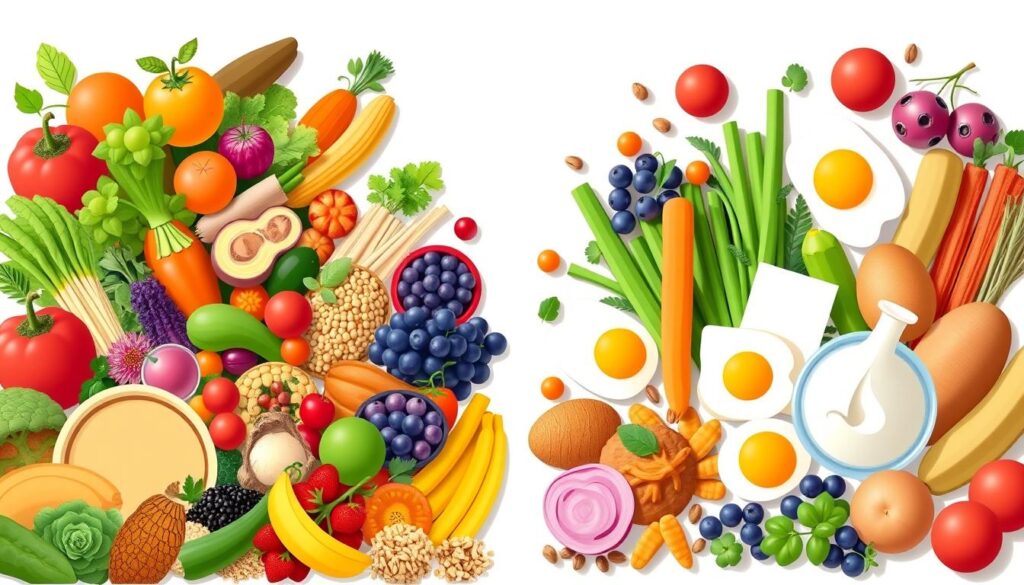
Plant-based diets are gaining traction worldwide. More people are exploring these options for health and environmental reasons1. Let’s dive into the fascinating world of vegan and vegetarian nutrition.
Vegetarians and vegans both limit meat consumption. Vegetarians may eat dairy and eggs, while avoiding meat products2. Vegans take it further by eliminating all animal-derived items from their diet and lifestyle2.
Your dietary choice can stem from health, ethics, or environmental concerns. Both diets focus on nutrient-rich plant foods like fruits, vegetables, and grains3. Vegetarianism offers flexibility, while veganism may have a lower environmental impact2.
Key Takeaways
- Plant-based diets offer diverse approaches to nutrition
- Veganism represents a stricter form of vegetarian eating
- Dietary choices can be motivated by health, ethics, and environment
- Both diets emphasize whole, plant-centered foods
- Nutritional awareness is crucial in plant-based diets
Understanding Basic Principles and Definitions
Plant-based diets offer a variety of nutritional choices. Vegan and vegetarian lifestyles have unique features. Let’s explore their key differences and characteristics.
Defining Vegetarian Diets
Vegetarian diets exclude meat but offer several variations. The vegetarian spectrum includes different approaches to meal planning.
- Lacto-ovo vegetarians consume dairy and eggs4
- Lacto-vegetarians include dairy but avoid eggs4
- Ovo-vegetarians eat eggs but skip dairy products4
Exploring Vegan Lifestyle Principles
Vegan choices go beyond food restrictions. This lifestyle excludes all animal products, including clothing and cosmetics5. Vegans focus on plant-based nutrition and reducing environmental impact5.
Common Diet Misconceptions
“Not all plant-based diets are automatically healthy” – Nutrition Expert
People often think vegan and vegetarian diets are always healthy. However, both need careful planning for balanced nutrition5.
Processed vegan foods can be as unhealthy as processed meat products. Proper meal planning is crucial for both diets.
| Diet Type | Key Characteristics | Nutritional Considerations |
|---|---|---|
| Vegetarian | Excludes meat | May include dairy/eggs |
| Vegan | Excludes all animal products | Requires careful nutrient supplementation |
Understanding these dietary approaches helps you make informed choices about your nutritional lifestyle.
Vegan vs. Vegetarian: Essential Nutritional Differences
Plant-based diets offer unique nutritional approaches. Both vegan and vegetarian eating patterns can support overall well-being. Understanding their differences is key to making informed choices6.
Vegetarian diets provide more nutritional flexibility than strict vegan diets. They include dairy and eggs, making it easier to get protein and calcium7.
Vegans must be more strategic in their nutrient intake. They often rely on fortified foods and supplements for essential nutrients.
- Key nutrients that require special attention in vegan diets include:
- Vitamin B12
- Calcium
- Iron
- Omega-3 fatty acids
Careful planning is essential to maintain optimal health in plant-based diets8. This ensures comprehensive nutrition for vegans and vegetarians alike.
| Nutrient | Vegetarian Sources | Vegan Sources |
|---|---|---|
| Protein | Eggs, Dairy, Legumes | Tofu, Legumes, Nuts |
| Calcium | Dairy Products | Fortified Plant Milk, Leafy Greens |
| Vitamin B12 | Eggs, Dairy | Fortified Foods, Supplements |
“Nutrition is not about perfection, but about making informed choices that support your health and values.” – Registered Dietitian
Vegan and vegetarian diets can offer significant health advantages. The key is understanding your individual nutritional needs. Plan your meals wisely to reap the benefits of plant-based eating67.
Health Benefits and Potential Challenges
Plant-based diets offer unique health advantages. They can transform your overall wellness approach. Vegan and vegetarian diets provide fascinating insights into nutrition9.
Cardiovascular Wellness
Vegetarian diets provide remarkable heart protection. They can significantly reduce heart disease risks. This is achieved through strategic nutrient consumption9.
People following these diets often experience:
- Lower blood pressure levels
- Reduced LDL cholesterol
- Decreased risk of coronary heart disease10
Weight Management Strategies
Plant-based eating can be great for weight control. The EPIC-Oxford study showed interesting results. Vegetarians and vegans typically have lower BMIs than meat-eaters10.
| Diet Type | Average BMI | Protein Intake |
|---|---|---|
| Meat-eaters | Higher | 17.2% |
| Vegetarians | Lower | 14.0% |
| Vegans | Lowest | 13.1% |
Digestive Health Insights
Plant-based diets boost digestive wellness. Higher fiber intake supports a diverse gut microbiome. It may reduce risks of various digestive conditions9.
A diet rich in whole grains, legumes, and nuts can provide approximately 15g of dietary fiber per 1000 calories9.
These diets offer many benefits, but careful planning is key. Consulting nutritional experts can help optimize your plant-based diet. They ensure you get all necessary nutrients11.
Conclusion
Vegan and vegetarian diets offer unique paths to health and wellness. Your choice depends on personal goals, ethics, and nutritional needs12. Both lifestyles reduce animal product consumption and can improve overall health13.
Plant-based diets require careful nutritional planning. Vegetarian diets provide flexibility, while vegan diets offer stricter health benefits12. Both can reduce risks of heart disease and high blood pressure14.
Success in these diets depends on your commitment to mindful eating. Prioritizing whole, nutrient-dense foods is crucial for both vegan and vegetarian lifestyles. Consulting nutrition experts can help create a balanced diet for your needs13.
The path to conscious eating is personal and empowering. It can transform your health and benefit the environment. Understanding these diets helps you make informed choices aligned with your goals and values.
FAQ
What is the main difference between vegan and vegetarian diets?
Vegetarians exclude meat but may eat eggs and dairy. Vegans avoid all animal products in food, clothing, and other areas. Vegetarians have more flexibility, while vegans follow a stricter plant-based approach.
Are vegan and vegetarian diets automatically healthy?
Not always. Both diets can be nutritious but need careful planning. Unhealthy choices are possible with processed foods and insufficient nutrients.
Focus on whole, nutrient-dense foods for a balanced diet. Consider supplements to meet all your nutritional needs.
Do vegans and vegetarians get enough protein?
Yes, both diets can provide adequate protein from plant-based sources. Vegans rely on legumes, tofu, tempeh, seitan, quinoa, and nuts.
Vegetarians have additional protein sources from eggs and dairy. Proper meal planning ensures meeting protein requirements on either diet.
What nutrients should I be most concerned about on a vegan diet?
Vegans need to focus on nutrients typically found in animal products. These include vitamin B12, calcium, iron, and omega-3 fatty acids.
Consume fortified foods or take supplements for these essential nutrients. A nutritionist can help develop a well-balanced meal plan.
Can vegan and vegetarian diets help with weight management?
Yes, both diets can support healthy weight. Plant-based diets are high in fiber and lower in calories.
Vegans often have lower BMI compared to vegetarians and omnivores. Focus on whole foods rather than vegan junk food.
Are there environmental benefits to choosing a vegan or vegetarian diet?
Absolutely! Both diets can greatly reduce your carbon footprint. Vegan diets have the most substantial environmental impact.
Plant-based options help reduce greenhouse gas emissions. They also conserve water and minimize deforestation linked to animal agriculture.
How do I transition to a vegan or vegetarian diet?
Start by adding more plant-based meals to your diet. Try meatless Mondays and explore new recipes.
Research nutritional needs and consider consulting a dietitian. Be patient during the transition.
Gradually replace meat and animal products with plant-based alternatives.
Do I need supplements on a vegan or vegetarian diet?
Supplements are often recommended, especially for vegans. Consider vitamin B12, vitamin D, omega-3, and possibly iron and calcium.
Vegetarians might need fewer supplements due to eggs and dairy. Consult a healthcare professional for your specific nutritional needs.
Source Links
- Vegan vs Vegetarian vs Plant Based Diets: Differences & Similarities – https://www.brownbleprograms.com/blog/vegan-vs-vegetarian-vs-plant-based-diets-flexitarian-pescatarian-plant-forward-diets-the-differences-and-similarities
- Vegan vs Vegetarian: Key Differences & Benefits – https://www.cleaneatzkitchen.com/a/blog/vegan-vs-vegetarianism?srsltid=AfmBOoqvd2WNw5_IpBPsaQ6P2xrdsLKTJr20cDhPTkUatJmnM3tHH4on
- Vegetarian and vegan diets – https://www.nhsinform.scot/healthy-living/food-and-nutrition/special-diets/vegetarian-and-vegan-diets/
- Vegan, Vegetarian, Pescatarian, Flexitarian and Macrobiotic Diets – What’s the Difference? – https://www.northshore.org/healthy-you/vegan-flexitarian-vegetarian-pescatarian-and-macrobiotic-diets–whats-the-difference/
- Vegan vs. Vegetarian: What’s The Difference? – https://aloha.com/blogs/articles/vegan-vs-vegetarian?srsltid=AfmBOorFEk-ICQexGuTWoNcm75G6UOCvs0NkVOkCgsXbVSRDBmczeLlt
- Should we be ditching meat and dairy? – https://www.heartfoundation.org.nz/wellbeing/healthy-eating/nutrition-facts/plant-based-vegetarian-vegan-diets
- The Truth About Vegan vs. Vegetarian Diets – https://www.health.com/nutrition/difference-between-vegan-and-vegetarian
- What’s the difference between vegetarian and vegan? – https://erudus.com/editorial/the-food-agenda/whats-difference-between-vegetarian-and-vegan
- Vegetarian and vegan diets: benefits and drawbacks – https://pmc.ncbi.nlm.nih.gov/articles/PMC10516628/
- Plant-based diets and long-term health: findings from the EPIC-Oxford study – https://pmc.ncbi.nlm.nih.gov/articles/PMC7613518/
- Vegan vs Vegetarian – What’s The Difference? – https://www.healthline.com/nutrition/vegan-vs-vegetarian
- A Discussion On Vegan vs. Vegetarian – https://www.bluetribefoods.com/blogs/articles/a-discussion-on-vegan-vs-vegetarian?srsltid=AfmBOop64lXrupNQ7WzhpZPiumNmcQe8kmZTmfxuqO4tMPQtkxgoMVph
- Difference Between Vegan and Vegetarian | Are They the Same? – https://www.nutritioned.org/difference-between-vegan-and-vegetarian/
- Vegan vs Vegetarian – Difference and Comparison – https://www.diffen.com/difference/Vegan_vs_Vegetarian

