
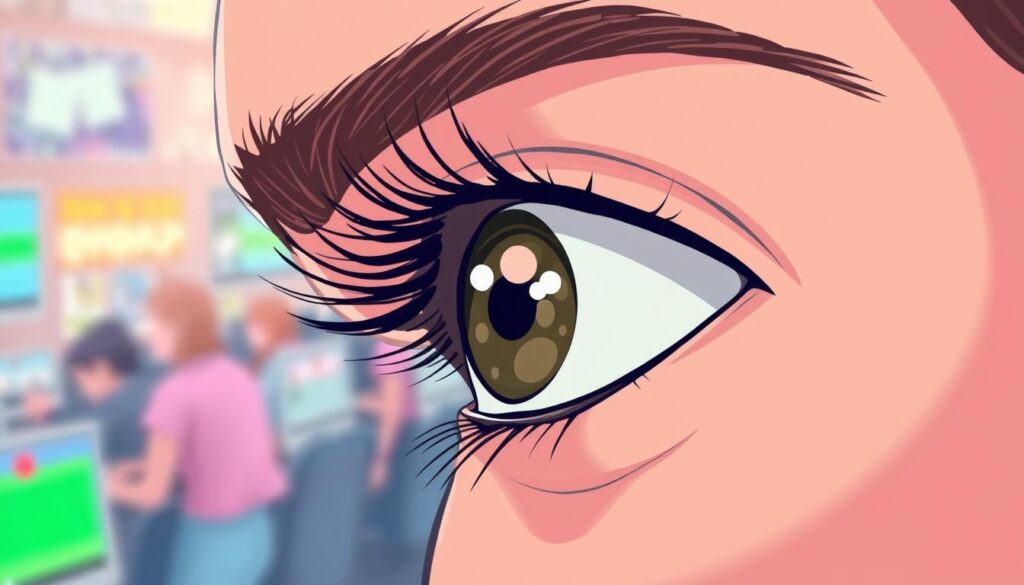
Ever noticed your eye moving on its own? Eye twitching, or eyelid spasms, happens more often than you’d think. These small muscle contractions can be mild or slightly uncomfortable1.
Most people have brief eye movements that go away in a few days. Blepharospasm affects eyelid muscles, causing sudden spasms. These spasms can briefly interrupt your daily tasks1.
Digital tech and modern life greatly contribute to eye twitching. Long hours on screens can strain your eye muscles, causing involuntary movements2.
Experts suggest taking screen breaks every 20 minutes. This can help reduce potential eye strain2.
Your lifestyle plays a big role in managing eye twitching. Lack of sleep, caffeine, and stress can all trigger these muscle contractions2.
Getting 7 to 8 hours of sleep each night can help. It may reduce these unexpected eye movements2.
Key Takeaways
- Eye twitching is a common, usually harmless muscle movement
- Digital screen time can contribute to eye muscle strain
- Adequate sleep helps reduce involuntary eye movements
- Lifestyle factors significantly impact eye health
- Most eye twitches resolve within a few days
Understanding Eye Twitching: An Overview
Eye twitching is a fascinating neurological phenomenon affecting many people. Your eye muscles can suddenly start moving involuntarily, creating an unexpected sensation. This movement, called blepharospasm, can range from mild to complex neurological experiences3.
What is Eye Twitching?
Blepharospasm refers to uncontrolled muscle contractions around the eye. These movements can manifest in different intensities and frequencies. Some people experience brief twitches, while others might develop more persistent spasms4.
- Mild occasional twitching
- Sustained muscle contractions
- Partial or complete eyelid closure
Common Types of Eye Twitches
Two main types of eye twitching exist: myokymia and benign essential blepharospasm. Myokymia is the most common and typically less severe form3.
| Type | Characteristics | Typical Triggers |
|---|---|---|
| Myokymia | Mild, intermittent twitching | Fatigue, caffeine, stress |
| Benign Essential Blepharospasm | Sustained muscle contractions | Nervous system dysfunction |
Eye twitching occurs more often in middle-aged and older women4. Stress, lack of sleep, and caffeine can greatly influence these involuntary movements4.
Understanding your body’s signals is the first step to managing unexpected eye movements.
If you have persistent eye twitching, consult a doctor. They can rule out any underlying neurological conditions4.
Potential Causes of Eye Twitching
Eye twitching can be frustrating and mysterious. Understanding the triggers can help manage these involuntary muscle spasms. Let’s explore some common causes of this pesky condition.
Stress and Anxiety: A Primary Trigger
Stress often leads to eyelid tics and muscle spasms. Your body responds to pressure with physical signs, including eye twitching. Try deep breathing and meditation to manage stress.
Taking regular breaks can also help reduce these involuntary movements. Remember, managing stress is key to controlling eye twitches.
Caffeine and Stimulants Impact
Your daily coffee might be causing your eye to twitch. Too much caffeine can trigger muscle spasms and worsen hemifacial spasm symptoms.
Cutting back on stimulants could help stop those persistent eye twitches. Consider swapping your energy drink for water or herbal tea.
Eye Strain: A Modern Concern
In our digital world, eye strain is common. Long hours on computers can cause Computer Vision Syndrome, often leading to eye twitching.
- Take regular breaks from screen time
- Use the 20-20-20 rule (every 20 minutes, look 20 feet away for 20 seconds)
- Ensure proper lighting while working
- Get regular eye examinations
Not all eye twitches are cause for alarm, but persistent symptoms should be evaluated by a healthcare professional.
Other factors might also contribute to eye twitching. Let’s look at some additional potential triggers:
| Potential Trigger | Impact on Eye Twitching |
|---|---|
| Fatigue | Can increase frequency of muscle spasms5 |
| Nutritional Deficiencies | Lack of vitamins B12, D, or magnesium can cause twitches5 |
| Allergies | Histamine release can trigger eyelid tics5 |
Remember, while most eye twitches are harmless, persistent or severe symptoms should be discussed with a healthcare provider6.
When to Seek Medical Advice
Eye twitching can be frustrating, but not all cases need immediate medical help. Knowing when to see a doctor is key for your eye health.
Understanding the signs that require professional attention is crucial. Your overall well-being may depend on it.
Warning Signs Indicating Professional Evaluation
Most eye twitches are harmless. But some symptoms call for medical attention. Watch out for these signs:
- Twitching persists for more than one week7
- The eyelid completely closes during spasms7
- Twitching spreads to other facial muscles7
- Accompanied by redness, swelling, or discharge7
- Causes significant visual disturbances8
Diagnostic Procedures for Eye Twitching
Doctors use a thorough approach to find the cause of persistent eye twitching. The process may include:
- Detailed medical history review
- Comprehensive eye examination
- Neurological assessment
- Potential imaging studies
Early detection can prevent potential complications associated with persistent eye twitching.
Eye twitching can be a sign of neurological conditions. These may include:
| Condition | Potential Symptoms |
|---|---|
| Multiple Sclerosis | Muscle weakness, fatigue8 |
| Parkinson’s Disease | Tremors, muscle stiffness8 |
| Tourette Syndrome | Involuntary facial movements8 |
Most eye twitches are harmless and go away on their own. But if symptoms persist, see a doctor to rule out serious conditions.
Tips for Managing and Preventing Eye Twitching
Eye twitching can be managed by making smart lifestyle changes. Knowing how stress, caffeine, and sleep affect these movements is key. These changes can help reduce eyelid tics effectively910.
Cut down on caffeine to less than 400 mg daily. Get at least seven hours of sleep each night. Try stress-busting activities like meditation or light exercise1110.
For more strategies, check out this guide to managing eye twitches9.
Over-the-counter eye drops can soothe dry or irritated eyes. For severe cases, doctors may suggest Botox or other treatments. If twitching persists, consult an eye care expert1110.
FAQ
What exactly is eye twitching?
Eye twitching is an uncontrollable movement of the eye or eyelid muscles. It can range from mild spasms to severe contractions. These contractions may cause partial or complete eyelid closure.
What are the most common triggers for eye twitching?
Common triggers include stress, excessive caffeine, eye strain, and fatigue. Bright light, alcohol, nicotine, and air pollution can also cause eye twitching. Medical conditions like dry eyes may contribute too.
When should I be concerned about eye twitching?
Seek medical advice if eye twitching lasts for several weeks. Also, consult a doctor if it interferes with your vision. Be concerned if it causes difficulty opening your eye.
Get help if eye twitching is accompanied by other facial spasms. Neurological symptoms alongside twitching are also a cause for concern.
Can eye twitching be a sign of a serious medical condition?
Most cases of eye twitching are harmless. However, persistent twitching can indicate underlying health issues. These may include neurological disorders like multiple sclerosis or Bell’s palsy.
In rare cases, it might relate to hemifacial spasm. It can also be a side effect of certain medications.
How can I prevent or reduce eye twitching?
To manage eye twitching, try reducing caffeine and alcohol intake. Get enough sleep and manage stress through exercise or meditation. Use artificial tear drops for dry eyes.
Practice relaxation techniques to ease tension. Ensure proper eye care and regular check-ups to maintain eye health.
What treatment options are available for persistent eye twitching?
Treatment depends on the severity and underlying cause. Options may include lifestyle changes and medications. Botulinum toxin injections can weaken muscles and prevent spasms.
In severe cases, doctors might consider surgical interventions. Always consult a healthcare professional for the best treatment plan.
Are there different types of eye twitching?
Yes, there are two main types of eye twitching. Eyelid Myokymia is a mild, occasional twitching often triggered by fatigue or stress.
Benign Essential Blepharospasm is more severe. It involves sustained muscle contractions that may cause significant eyelid closure.
Source Links
- Do not overlook! An eyelid twitch is probably more than just annoying. | Bangkok Hospital – https://www.bangkokhospital.com/en/content/eyelid-twitching
- 8 Common Causes of Eye Twitching – KE – Eye Centers of Texas – https://keeyecenters.com/eye-care-blog/8-common-causes-of-eye-twitching/
- Twitching Eyelid Causes & Symptoms – https://www.uclahealth.org/medical-services/ophthalmology/eye-signs-and-symptoms/twitching-eyelid
- What Are The Causes & Treatments for Eye Twitching? – https://www.coastaleyesurgeons.com/blog/what-are-the-causes-treatments-for-eye-twitching/
- Eye Twitches: Why do we get them? – https://coopervision.com/eye-health-and-vision/eye-twitches
- Eye Twitching – https://www.hopkinsmedicine.org/health/conditions-and-diseases/eye-twitching
- Eyelid twitch – https://www.mountsinai.org/health-library/diseases-conditions/eyelid-twitch
- When to Worry About Eye Twitching: Symptoms and Causes – https://www.healthline.com/health/when-to-worry-about-eye-twitching
- 5 Tips on How to Stop Eye Twitching – https://www.advancedeyecarecenter.net/5-tips-on-how-to-stop-eye-twitching/
- How to stop eye twitching, and why it happens – https://www.medicalnewstoday.com/articles/how-to-stop-eye-twitching
- How to Reduce or Stop Eye Twitching – https://www.verywellhealth.com/how-to-stop-an-eye-twitch-3422065

