
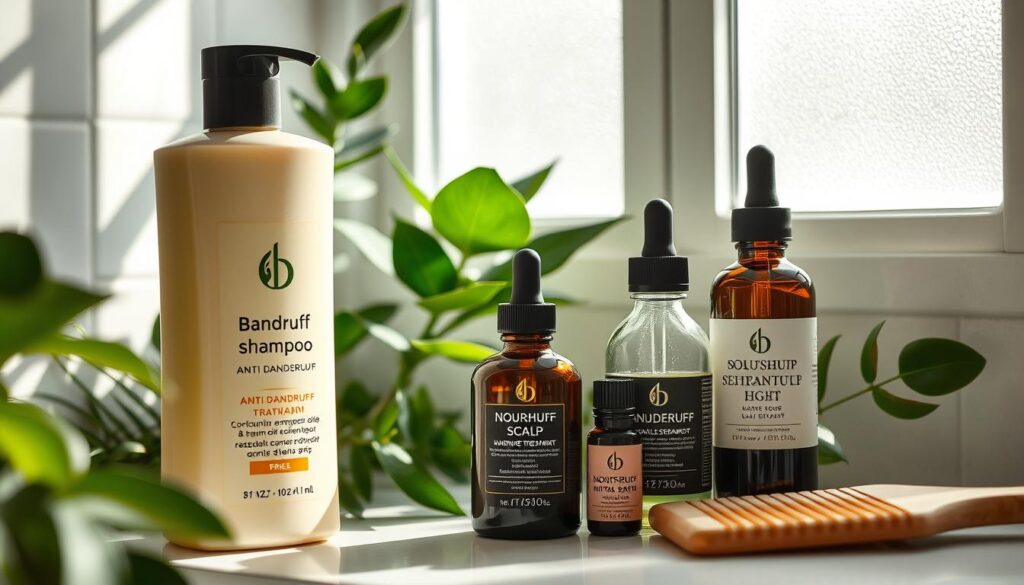
Itchy scalp and white flakes got you down? You’re not alone. Dandruff affects millions worldwide1. A whopping 50 million Americans deal with this pesky scalp issue2.
Understanding causes and finding effective treatments can help manage your scalp care. You’ll regain confidence and say goodbye to those flakes.
Dandruff isn’t just about looks. It can stem from medical conditions, hair care habits, or oily skin3. Your lifestyle, diet, and stress levels can also play a role3.
The good news? Many treatment options exist. You can fight those flakes and keep your scalp healthy with the right approach.
Key Takeaways
- Dandruff affects nearly 50% of the global population
- Multiple treatment options are available for scalp care
- Lifestyle and diet play crucial roles in managing dandruff
- Over-the-counter treatments can be highly effective
- Consistent scalp care is key to managing dandruff
Understanding Dandruff: Causes and Symptoms
Scalp health is vital for overall hair care. Dandruff affects millions worldwide, impacting confidence and comfort. Knowing its causes and symptoms helps manage it effectively.
What Causes Dandruff?
Dandruff has several potential sources that can disrupt scalp health. These include:
- Malassezia yeast overgrowth on the scalp4
- Dry scalp conditions, especially during winter months5
- Sensitivity to hair care products4
- Seborrheic dermatitis, a chronic skin condition5
Recognizing the Symptoms
Spotting dandruff early helps manage it better. Common signs include:
- White flakes on your scalp and shoulders
- Persistent itching
- Scalp redness and irritation
“Dandruff is more than just a cosmetic issue—it’s a signal from your scalp that something needs attention.”
Understanding Scalp Health
Many factors affect your scalp’s health. Males are more likely to have dandruff4. The condition usually starts in young adulthood4.
Stress, immune system issues, and seasonal changes can make symptoms worse4.
Pro tip: Regular cleansing and proper hair care products help maintain scalp health and reduce dandruff.
Effective Home Remedies for Dandruff
Got an itchy, flaky scalp? Natural remedies can help fight dandruff. These gentle treatments use ingredients you might already have at home.
Natural Ingredients That Help
Several natural items can combat dandruff and soothe your scalp. Tea tree oil has strong antimicrobial properties that target scalp-irritating fungus6.
Coconut oil deeply hydrates and reduces scalp inflammation7. Both can be powerful allies in your dandruff-fighting routine.
- Tea tree oil: Fights dandruff-causing fungus6
- Coconut oil: Improves scalp hydration7
- Aloe vera: Soothes scalp irritation8
- Apple cider vinegar: Balances scalp pH8
DIY Dandruff Masks
Make powerful natural treatments at home. Mix tea tree oil and coconut oil to reduce dandruff symptoms67.
Aloe vera gel can be great for treating seborrheic dermatitis7. Try these simple masks for a healthier scalp.
When to Use Home Remedies
Home remedies work best for mild dandruff. Use these treatments regularly for about three weeks.
If symptoms don’t improve or get worse, talk to a doctor8. They can offer more advanced solutions.
| Ingredient | Benefit | Application |
|---|---|---|
| Tea Tree Oil | Antifungal properties | Mix with carrier oil, apply to scalp |
| Coconut Oil | Hydration | Massage directly into scalp |
| Aloe Vera | Reduces inflammation | Apply gel directly to scalp |
| Apple Cider Vinegar | Balances pH | Dilute and rinse after shampooing |
Remember, a healthy scalp is key to managing dandruff. Consistency is crucial in seeing results with these natural remedies.
Over-the-Counter Treatments for Dandruff
Dealing with dandruff is easy using the right anti-dandruff shampoo. These products help manage scalp health and reduce flaking9.
Popular Anti-Dandruff Shampoo Ingredients
Look for key ingredients that target different scalp issues. These include:
- Zinc pyrithione: An antibacterial and antifungal agent that fights dandruff-causing microorganisms10
- Selenium sulfide: Helps reduce fungal growth on the scalp9
- Ketoconazole: A powerful antifungal ingredient10
- Salicylic acid: Effective in eliminating scalp scaling9
Choosing the Right Medicated Shampoo
Anti-dandruff shampoos work differently. You might need to try a few to find the best one for you10.
| Ingredient | Primary Function | Best For |
|---|---|---|
| Zinc Pyrithione | Antibacterial | Mild dandruff |
| Ketoconazole | Antifungal | Persistent dandruff |
| Selenium Sulfide | Reduces Fungal Growth | Oily scalp |
How to Use Medicated Shampoos
For best results, follow these tips with your anti-dandruff shampoo:
- Apply directly to the scalp
- Massage gently
- Leave on for 5 minutes
- Rinse thoroughly
Pro tip: If over-the-counter shampoos don’t work after a few weeks, consult a healthcare professional9.
Find more expert advice on managing dandruff at the Mayo Clinic’s comprehensive guide.
Lifestyle Changes to Combat Dandruff
Dandruff isn’t just about washing your hair. Your lifestyle greatly affects this stubborn scalp problem. While there’s no permanent fix, smart changes can reduce its impact11.
Diet plays a key role in dandruff prevention. Experts suggest eating omega-3 fatty acids, zinc, and biotin-rich foods. Rebecca Bitzer recommends essential fatty acids for healthy hair and skin12.
Try eggs, yogurt, oysters, and dark chocolate. These foods might help reduce dandruff flares.
Stress management is crucial for controlling dandruff. While stress doesn’t cause it, it can make symptoms worse11. Try meditation, exercise, and deep breathing to reduce stress.
Add probiotics to your diet and practice mindfulness. These can support overall scalp health12.
For dandruff prevention, keep a steady hair care routine. Wash your hair three times weekly with anti-dandruff shampoos. Avoid products without active dandruff-fighting ingredients.
Pay attention to your overall scalp health11. Remember, managing dandruff takes time and a well-rounded approach.
FAQ
Is dandruff a sign of poor hygiene?
Dandruff isn’t linked to poor hygiene. It’s often caused by dry skin, seborrheic dermatitis, or sensitive scalps. Even those with great hygiene can get dandruff.
How long should I try home remedies before seeking professional help?
Give home remedies about 3 weeks. If dandruff doesn’t improve, see a dermatologist. They can offer expert advice and possible prescription treatments.
Can diet affect dandruff?
Diet can impact dandruff. Omega-3 fatty acids and probiotics may help reduce inflammation. Eat fatty fish, nuts, seeds, and fermented foods.
Limit refined carbs and sugary foods to control yeast growth. A balanced diet can improve your scalp health.
How often should I use anti-dandruff shampoo?
Usage depends on hair type and dandruff severity. Some need medicated shampoos 2-3 times weekly, others daily. Follow product instructions carefully.
Try rotating between different anti-dandruff shampoos for best results. This can help prevent resistance to active ingredients.
Are natural remedies effective for treating dandruff?
Natural remedies can help mild dandruff. Tea tree oil, coconut oil, and aloe vera have antimicrobial properties. They work best for mild cases.
For severe dandruff, medicated treatments are usually more effective. Consult a doctor if natural remedies don’t work.
Can stress cause dandruff?
Stress can worsen dandruff symptoms. It may trigger or aggravate scalp conditions. Try stress management techniques like meditation and exercise.
These practices can improve your overall health and potentially reduce dandruff. Regular self-care is key to managing stress-related scalp issues.
What ingredients should I look for in an anti-dandruff shampoo?
Look for zinc pyrithione, selenium sulfide, and ketoconazole. These fight fungi and bacteria. Coal tar slows skin cell shedding.
Salicylic acid and sulfur are also effective. Each ingredient targets different causes of dandruff. Choose based on your specific needs.
Is dandruff a serious medical condition?
Dandruff isn’t serious but can be annoying. It affects about half of people worldwide. Most cases are manageable with proper care.
If symptoms persist or worsen, see a healthcare professional. They can rule out more serious scalp conditions.
Source Links
- 10 Home Remedies to Get Rid of Dandruff – https://www.healthline.com/nutrition/ways-to-treat-dandruff
- 4 Game-Changing Hacks for Getting Rid of Dandruff ASAP – https://www.cosmopolitan.com/style-beauty/beauty/a19636343/how-to-get-rid-of-dandruff/
- Treating Dandruff – https://www.webmd.com/skin-problems-and-treatments/understanding-dandruff-treatment
- Dandruff – Symptoms and causes – https://www.mayoclinic.org/diseases-conditions/dandruff/symptoms-causes/syc-20353850
- 5 Causes Of Dandruff (And How To Treat Them) – https://www.henryford.com/blog/2016/11/5-causes-dandruff-treat
- Dandruff Treatment at Home: Dandruff Solutions for Lasting Relief | H&S IN – https://www.headandshoulders.co.in/en-in/healthy-hair-and-scalp/dandruff/dandruff-home-remedies
- 10 ways to get rid of dandruff naturally – https://www.medicalnewstoday.com/articles/324756
- Dandruff: How to Spot and Manage It – https://www.verywellhealth.com/dandruff-8719584
- Over-the-counter vs prescription for dandruff | Selsun blue® – https://www.selsunblue.com/en-us/selsun-clinic/education/over-the-counter-vs-prescription-for-dandruff-shampoo
- Soothe Your Scalp And Lose the Flakes With These Top Tested Dandruff Shampoos – https://www.verywellhealth.com/best-dandruff-shampoos-4688809
- Can Lifestyle Changes Help Eliminate Dandruff? | Head&Shoulders UK – https://www.headandshoulders.co.uk/en-gb/all-articles/dandruff/can-lifestyle-changes-help-get-rid-of-dandruff/
- Food and Dandruff: What’s the Link? – https://www.webmd.com/skin-problems-and-treatments/features/food-link

