
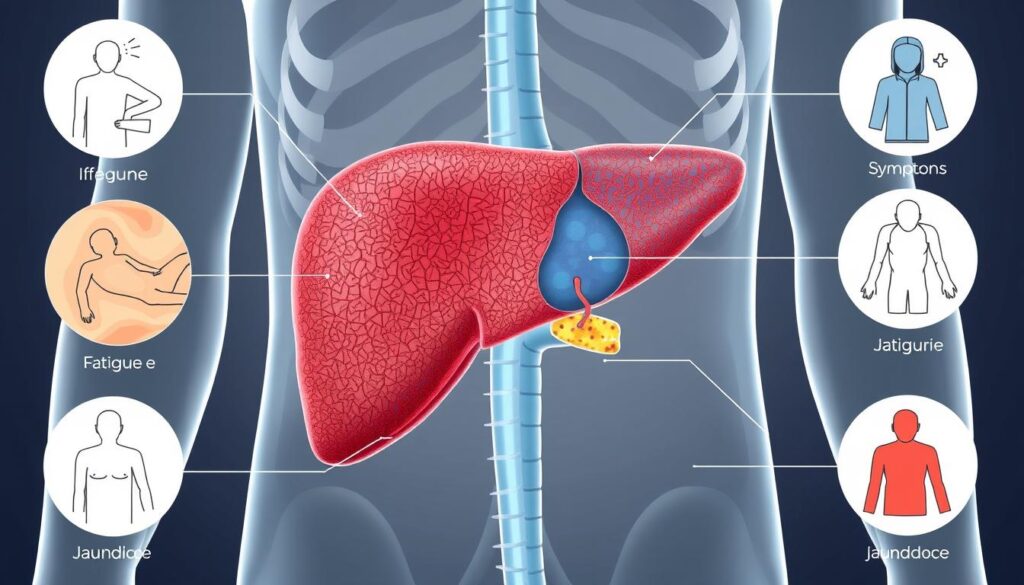
Primary Sclerosing Cholangitis (PSC) is a rare autoimmune disease affecting the liver. It targets bile ducts, causing inflammation and potential long-term damage1. Understanding PSC is key to managing its progression and maintaining your health.
PSC is a chronic liver disease that develops slowly over time1. It often starts before symptoms show up, making early detection important. The condition affects bile ducts, causing scarring that can harm liver function1.
You’re more likely to get PSC if you’re 30-40 years old and male. Northern European ancestry also raises your risk1. PSC often occurs with inflammatory bowel diseases, creating complex health issues.
Living with PSC can be unpredictable. Early signs may include feeling tired and itchy skin. You might also notice yellow eyes and skin (jaundice) and stomach pain1.
Despite the challenges, there’s hope. Modern treatments can help manage PSC effectively. Working closely with your doctor is crucial for the best care.
Key Takeaways
- PSC is a rare autoimmune liver disease affecting bile ducts
- Disease progression is typically slow and often detected early
- More common in men between 30-40 years old
- Closely associated with inflammatory bowel diseases
- Multiple treatment options available to manage symptoms
Understanding Primary Sclerosing Cholangitis
Primary Sclerosing Cholangitis (PSC) is a complex liver condition. It challenges both doctors and patients. Learning about PSC is crucial for managing your health2.
What PSC Means for Your Body
PSC inflames and scars your bile ducts. This narrows these vital passages over time. As a result, bile flow is restricted, potentially damaging your liver3.
PSC affects about one in 10,000 people. Most diagnoses occur between ages 30 and 403.
Key Risk Factors and Complications
- High-risk populations include individuals with Northern European heritage
- Male patients are more frequently diagnosed
- Strong connection with inflammatory bowel diseases
Potential complications of PSC include:
| Complication | Potential Impact |
|---|---|
| Liver Disease | Progressive damage leading to potential failure |
| Repeated Infections | Increased risk of systemic health issues |
| Cancer Risk | Higher likelihood of bile duct and colon cancer |
Inflammatory Bowel Disease Connection
About two-thirds of PSC patients also have ulcerative colitis3. This link suggests a potential immune system interaction3.
Experts are studying connections between triggers, immune responses, and gut microbiome3.
“Understanding PSC requires a comprehensive approach to patient care and ongoing medical research.”
There’s no definitive cure for PSC. However, treatments can manage symptoms and slow disease progression. In severe cases, a liver transplant might be necessary3.
Early Warning Signs and Treatment Options
Primary Sclerosing Cholangitis (PSC) is often hard to spot early on. Symptoms may not show up right away. Many people find out they have PSC during routine check-ups4.
PSC symptoms can be mild or severe. They need careful medical attention. Watch out for these signs:
- Jaundice (yellowing of skin and eyes)
- Intense itching
- Abdominal pain
- Unexplained fatigue
- Unexpected weight loss
Doctors use special imaging to check bile ducts for PSC. Two main tools help spot blockages. These are magnetic resonance cholangiography (MRC) and endoscopic retrograde cholangiopancreatography (ERCP)5.
PSC treatment aims to manage symptoms and protect liver function. Doctors may prescribe these:
- Bile acid sequestrants to reduce itching
- Antibiotics for potential infections
- Balloon dilation to address bile duct blockages
*The ultimate medical solution for advanced PSC remains liver transplantation*
Early detection and good care can improve your outlook with PSC. Regular check-ups and prompt treatment are key. These steps can boost your quality of life4.
While there’s no cure for PSC, modern treatments offer hope. They can help manage this complex condition effectively.
Conclusion
Living with Primary Sclerosing Cholangitis (PSC) demands resilience and proactive medical care. This complex autoimmune disease affects bile ducts, making your health journey seem daunting. However, advanced diagnostics and comprehensive care strategies offer hope67.
PSC mainly affects middle-aged males. Understanding your specific condition is key for effective treatment6. Ongoing research unlocks new insights into PSC, leading to more targeted approaches.
The strong link between PSC and inflammatory bowel conditions helps create integrated treatment plans7. About 40% of patients may need a liver transplant, highlighting the need for early detection8.
Your medical team will likely use advanced tools like magnetic resonance cholangiopancreatography (MRCP) to track your condition6. Stay informed about new treatments and keep open communication with your healthcare providers.
PSC presents challenges, but medical advances and personalized care strategies empower patients. You can navigate your health journey with confidence and hope. Effective management of this autoimmune liver disease can help maintain a high quality of life.
FAQ
What is Primary Sclerosing Cholangitis (PSC)?
Primary Sclerosing Cholangitis (PSC) is a rare chronic liver disease. It causes inflammation and scarring of bile ducts inside and outside the liver. PSC gradually damages bile ducts, restricting bile flow and potentially harming the liver.
It affects about 1 in 10,000 people worldwide. PSC is usually diagnosed in men around age 40.
What are the primary symptoms of PSC?
Early signs of PSC include fatigue, itching, jaundice, and abdominal pain. As it progresses, you might experience fever, chills, night sweats, and unexplained weight loss.
Many patients are diagnosed before noticeable symptoms appear. This often happens through routine medical tests.
What causes Primary Sclerosing Cholangitis?
The exact cause of PSC is unknown. Researchers believe it involves genetic predisposition and immune system reactions. It’s strongly linked to inflammatory bowel diseases, especially ulcerative colitis.
About 80% of PSC patients also have an inflammatory bowel condition.
Who is most at risk for developing PSC?
PSC most commonly affects people between 30-40 years old, with more cases in males. You’re at higher risk if you have Northern European heritage.
Other risk factors include inflammatory bowel disease and a family history of liver or autoimmune conditions.
Can PSC be cured?
Currently, liver transplantation is the only known cure for advanced PSC. There’s no standard medical treatment to stop the disease’s progression.
Management focuses on treating symptoms and monitoring liver function. Procedures to temporarily open blocked bile ducts are also used.
What complications can PSC lead to?
PSC can cause serious complications like liver disease, liver failure, and repeated infections. It can also lead to portal hypertension and bone thinning.
The disease increases risks of bile duct and colon cancer. PSC typically progresses over 10-15 years, often requiring comprehensive medical care.
How is PSC diagnosed?
PSC is often diagnosed through routine blood tests and imaging studies. These include X-rays or MRIs, and specialized procedures that examine bile ducts.
Your doctor might perform blood tests to check liver function. They may also conduct imaging studies or a liver biopsy to confirm the diagnosis.
How can patients manage PSC?
Management includes regular medical check-ups and potential calcium and vitamin D supplements. Screening for complications and maintaining a healthy lifestyle are crucial.
Your healthcare team will create a personalized treatment plan. This plan will focus on managing symptoms and slowing disease progression.
Source Links
- Primary sclerosing cholangitis – Symptoms and causes – https://www.mayoclinic.org/diseases-conditions/primary-sclerosing-cholangitis/symptoms-causes/syc-20355797
- Pathogenesis of primary sclerosing cholangitis and advances in diagnosis and management – PubMed – https://pubmed.ncbi.nlm.nih.gov/23827861/
- Understanding primary sclerosing cholangitis – UChicago Medicine – https://www.uchicagomedicine.org/forefront/gastrointestinal-articles/2021/august/understanding-the-liver-disease-primary-sclerosing-cholangitis
- Primary Sclerosing Cholangitis – https://www.hopkinsmedicine.org/health/conditions-and-diseases/primary-sclerosing-cholangitis
- Primary sclerosing cholangitis – Diagnosis and treatment – https://www.mayoclinic.org/diseases-conditions/primary-sclerosing-cholangitis/diagnosis-treatment/drc-20355802
- Primary Sclerosing Cholangitis – Diagnosis, Prognosis and Management – https://pmc.ncbi.nlm.nih.gov/articles/PMC3692584/
- Clinical features and management of primary sclerosing cholangitis – https://pmc.ncbi.nlm.nih.gov/articles/PMC2716588/
- Primary sclerosing cholangitis – https://tgh.amegroups.org/article/view/6491/html

