
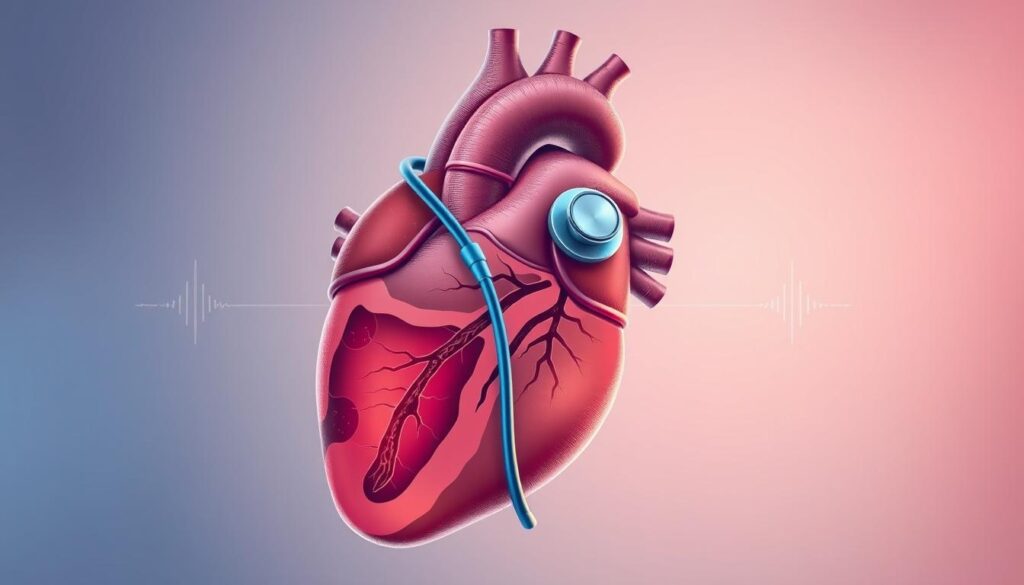
Heart murmurs are unique sounds heard during cardiac checks. They reveal details about your heart’s health. These sounds can occur at different life stages, potentially indicating various medical conditions1.
Doctors use stethoscopes to detect these subtle whooshing noises. These sounds differ from the usual “lubb-dupp” heartbeat rhythm. Heart murmurs can develop from birth or emerge later in life.
Some murmurs are harmless, while others might signal cardiovascular issues1. Early detection is crucial for potential medical intervention. Heart murmurs are common in newborns and children.
These often present as innocent variations needing no extensive treatment1. Factors like exercise, fever, anemia, or hormonal changes can influence these cardiac sounds1.
Key Takeaways
- Heart murmurs are unique sounds heard during heart function
- Some murmurs are harmless, while others may indicate health issues
- Cardiac auscultation helps detect and assess heart murmurs
- Murmurs can be congenital or acquired throughout life
- Regular medical check-ups are essential for monitoring heart sounds
Understanding Heart Murmurs: Causes and Types
Heart murmurs are unique sounds during your heartbeat. They reveal important info about your heart health. These sounds can range from faint to pronounced.
What Creates These Unusual Heart Sounds
Turbulent blood flow through heart chambers and valves causes murmurs. They’re categorized by intensity and timing during the heartbeat2.
Doctors grade murmurs on a scale from one to six. Lower grades are faint. Higher grades might feel like a “thrill” when touched3.
Innocent vs. Abnormal Heart Murmurs
Not all heart murmurs signal a serious problem. Innocent heart murmurs are common and usually harmless. They often occur in children during normal growth4.
These can be caused by:
- Physical activity
- Fever
- Anemia
- Rapid physical growth
Abnormal heart murmurs may indicate underlying heart issues. These can stem from various conditions like:
- Holes in the heart
- Cardiac shunts
- Heart valve abnormalities
- Endocarditis
Common Risk Factors and Triggers
Some people are more likely to develop heart murmurs. Risk factors include4:
- Family history of heart defects
- High blood pressure
- Rheumatoid arthritis
- Previous rheumatic fever
- Pulmonary hypertension
Doctors use various tests to evaluate heart murmurs. These include chest x-rays, electrocardiograms (ECG), and echocardiograms3. These methods can also detect Mitral Valve Prolapse.
“Understanding the nuances of heart murmurs can help you take proactive steps in managing your heart health.” – Cardiovascular Specialist
Heart Murmur Symptoms and Diagnosis
Heart murmur detection begins with a careful Stethoscope Examination by your doctor. Most murmurs are harmless, but understanding their traits is vital5. Some cases may need further investigation6.
Spotting potential symptoms is crucial for early detection. Adults might experience chest pain, shortness of breath, or dizziness.
Other signs include irregular heartbeat and unexplained fatigue.
- Chest pain
- Shortness of breath
- Dizziness
- Irregular heartbeat
- Unexplained fatigue
Children and babies may show different signs. These can include bluish skin color and feeding difficulties.
Slow growth and persistent cough are also possible indicators.
- Bluish skin color
- Feeding difficulties
- Slow growth
- Persistent cough
During Cardiovascular Diagnosis, your doctor might suggest more tests. Echocardiography is a key tool for checking heart structure and blood flow7.
“Not all heart sounds are cause for alarm, but understanding them is crucial to your heart health.”
Diagnostic procedures may include various tests. These can range from electrocardiograms to chest X-rays.
- Electrocardiograms
- Chest X-rays
- Blood tests
- Cardiac imaging
Quick detection and expert medical advice are vital. They’re your best defense against potential heart murmur issues6.
Conclusion
Heart murmurs are unique sounds that need professional evaluation through cardiac auscultation8. Many are harmless, but some may signal underlying heart problems8. Abnormal murmurs can result from valve defects present at birth or developing later8.
Children often experience heart murmurs, with most being harmless and resolving as they grow9. About 1 in 100 babies is born with a structural heart issue causing a murmur9. Adults should pay attention to persistent heart sounds, as they might indicate serious cardiac issues.
Seek professional cardiovascular diagnosis if you notice any concerning symptoms. Your health is worth protecting, so don’t hesitate to consult a doctor.
Early detection of heart murmurs is crucial for managing your heart health. A thorough evaluation may include reviewing your medical history and conducting clinical exams8. Stay proactive about your heart health to ensure a healthier future.
FAQ
What exactly is a heart murmur?
A heart murmur is an unusual sound during a heartbeat. It’s often described as a whooshing or swishing noise. These sounds happen when blood flows turbulently through your heart.
Doctors can detect murmurs using a stethoscope. Some murmurs are harmless, while others may signal underlying heart issues.
Are all heart murmurs dangerous?
Not all heart murmurs are dangerous. Many are innocent, especially in children and newborns. These often resolve on their own.
However, some murmurs can point to serious heart problems. It’s vital to have them checked by a doctor.
What causes heart murmurs?
Heart murmurs result from turbulent blood flow through the heart. In kids, they can stem from fever, anemia, or rapid growth.
For adults, heart valve issues, calcium deposits, or endocarditis might be the cause. Family history and certain medical conditions can raise your risk.
What symptoms should I watch for with heart murmurs?
Symptoms may include blue or gray fingernails/lips, chest pain, and persistent cough. Dizziness, fainting, shortness of breath, and swelling are also possible signs.
In babies, poor appetite and slow growth might occur. If you notice these symptoms, talk to your doctor.
How are heart murmurs diagnosed?
Diagnosis starts with a physical exam using a stethoscope. If a doctor suspects an abnormal murmur, they might order more tests.
These could include echocardiograms, chest X-rays, or electrocardiograms. These tests help determine the murmur’s cause and severity.
Can heart murmurs be treated?
Treatment depends on the murmur’s cause and severity. Many childhood murmurs go away on their own. Adult murmurs might need monitoring or medication.
In serious cases, surgery may be necessary. Your doctor will create a treatment plan based on your diagnosis.
Are some people more at risk for heart murmurs?
Yes, certain factors can increase your risk of heart murmurs. These include family history of heart conditions and maternal health during pregnancy.
Medical conditions like cardiomyopathy, lupus, and pulmonary hypertension also raise the risk. Regular check-ups help catch potential issues early.
Source Links
- Heart murmurs: Irregular heart sounds may be harmless-Heart murmurs – Symptoms & causes – Mayo Clinic – https://www.mayoclinic.org/diseases-conditions/heart-murmurs/symptoms-causes/syc-20373171
- Heart Murmurs: Types of Murmurs, Causes and Outlook – https://www.nationwidechildrens.org/conditions/heart-murmurs
- Heart murmurs: MedlinePlus Medical Encyclopedia – https://medlineplus.gov/ency/article/003266.htm
- Heart Murmurs Causes, Symptoms, and Treatments – https://www.upmc.com/services/heart-vascular/conditions/heart-murmurs
- Heart murmurs – causes, symptoms & treatment – https://www.bhf.org.uk/informationsupport/conditions/heart-murmurs
- Causes and Treatments of Heart Murmurs – https://www.webmd.com/heart-disease/heart-murmur-causes-treatments
- Heart murmur – https://www.healthdirect.gov.au/heart-murmur
- When to Evaluate Heart Murmurs – https://www.hopkinsmedicine.org/health/conditions-and-diseases/when-to-evaluate-heart-murmurs
- Heart Murmurs (for Parents) – https://kidshealth.org/en/parents/murmurs.html

