
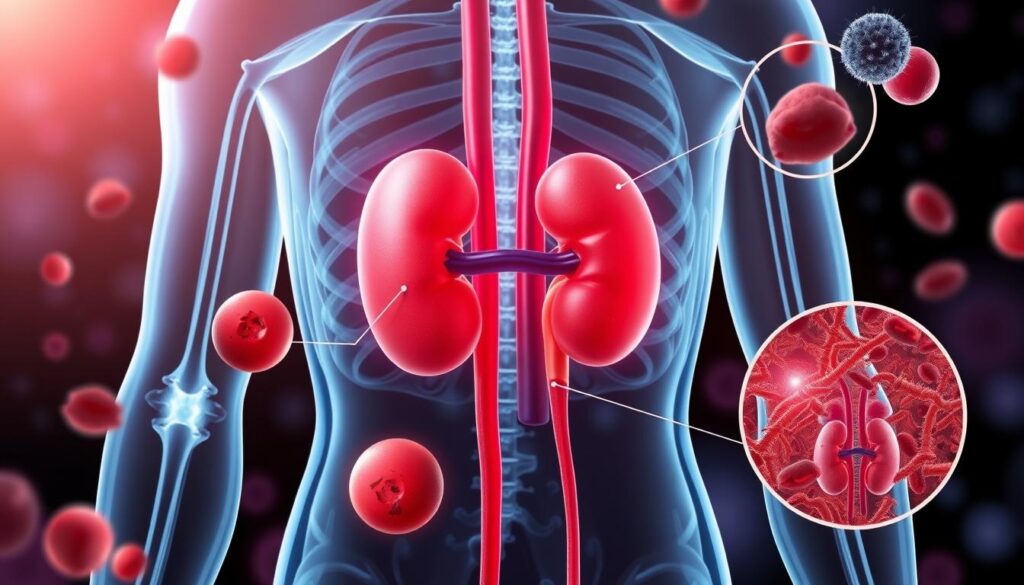
Hemolytic Uremic Syndrome (HUS) is a rare blood disorder that can be life-threatening. It mainly affects children and can cause severe kidney problems1. Knowing about HUS could help save lives by spotting early signs and getting quick medical help.
E. coli infection is the main cause of HUS12. Most cases happen in kids under five years old. The syndrome starts when certain bacteria toxins harm blood vessels3.
HUS can be very serious. About 200-300 cases are reported each year in the United States2. Quick treatment often leads to full recovery3.
Key Takeaways
- HUS is a serious blood disorder primarily affecting children
- E. coli infection is the most common cause of HUS
- Early detection and treatment are crucial for recovery
- Children under five are most vulnerable to HUS
- Proper food handling can help prevent HUS
Understanding Hemolytic Uremic Syndrome (HUS)
Hemolytic Uremic Syndrome (HUS) is a serious medical condition. It affects blood and kidney function, mainly in young children. HUS can lead to severe complications4.
What Causes HUS Development
HUS is often triggered by Shiga toxin-producing E. coli bacteria. This mostly affects children under 5 years old4. These bacteria can damage blood vessels severely.
HUS can result in hemolytic anemia, thrombocytopenia, and acute kidney damage. The toxin attacks blood vessel walls, causing red blood cell destruction5.
- Hemolytic anemia
- Thrombocytopenia
- Acute kidney damage
Risk Factors and Vulnerable Groups
Some people are more likely to develop HUS. Your risk is higher if you’re under 10 years old5.
A weakened immune system also increases your risk. Certain genetic factors can make you more susceptible4.
- Are a child younger than 10 years old5
- Have a weakened immune system
- Have specific genetic predispositions4
Early detection and understanding of HUS can be crucial for effective management and recovery.
HUS can be life-threatening, but most children recover fully. Proper medical care focuses on managing symptoms and preventing complications5.
| Risk Category | Potential HUS Impact |
|---|---|
| Children Under 5 | Highest risk of severe complications |
| Adults with Compromised Immunity | Increased susceptibility to HUS progression |
| Pregnant Women | Higher potential for HUS development |
You can reduce your HUS risk through prevention. Practice good hygiene and cook meat thoroughly. Avoid contaminated food and water4.
Key Signs and Complications of Blood Vessel Damage
Hemolytic Uremic Syndrome (HUS) causes complex blood vessel damage, leading to severe health issues. This blood disorder affects multiple organ systems, causing critical changes in your body6.
HUS can be especially dangerous for children. Symptoms may quickly worsen and become life-threatening6. Here are the main signs to watch for:
- Extreme fatigue and weakness
- Pale skin and easy bruising
- Bloody diarrhea and abdominal pain
- Decreased urination
- Blood in urine
- Unexpected swelling in legs and feet
Kidney damage is a major worry in HUS. Your risk of renal failure goes up, possibly needing intense medical care7. Up to 50% of children may need dialysis during recovery7.
Serious brain problems can also happen. These may include:
- Seizures
- Confusion
- Potential stroke
- Rare instances of coma
The long-term outlook varies for each person. Good news: less than 25% of HUS cases cause lasting kidney issues. With proper care, death rates are under 5% in developed countries8.
Early recognition and prompt medical care are crucial for managing HUS and preventing severe complications.
If you notice HUS symptoms, get medical help right away. See a specialized kidney healthcare provider for a full checkup and treatment.
Conclusion
Hemolytic Uremic Syndrome (HUS) is a complex condition that mainly affects children. About 90% of cases stem from Shiga toxin-producing bacterial infections9. Being aware and proactive can greatly impact patient outcomes, especially with E. coli infection risks10.
HUS has a low annual rate of 0.7 cases per 100,000 people9. While kidney damage can be severe, most patients recover with proper medical care. Half of the cases might need dialysis, but end-stage renal disease is rare9.
Prevention is key in reducing HUS risks. Practice good hygiene, avoid unpasteurized products, and handle food safely. The ongoing medical research offers hope for better treatments, especially for young children10.
Quick recognition and medical care can greatly improve outcomes. Acute phase mortality rates range from 2-5%. Long-term kidney problems affect 25-40% of patients. Staying informed is your best defense against this serious condition9.
FAQ
What is Hemolytic Uremic Syndrome (HUS)?
Hemolytic Uremic Syndrome is a rare but serious condition affecting kidney blood vessels. It can lead to kidney failure and is most common in young children. HUS damages red blood cells, causes blood clots, and impacts kidney function.
What are the primary symptoms of HUS?
Key symptoms include bloody diarrhea, abdominal pain, fever, vomiting, and pale skin. You might also experience extreme fatigue, easy bruising, and decreased urination. Severe cases can cause confusion, seizures, or swelling in legs and feet.
Who is most at risk for developing HUS?
Children under 5 and people with weak immune systems are most vulnerable. Higher risk comes from eating contaminated food or swimming in dirty water. Close contact with infected individuals also increases risk.
Some genetic factors and health conditions can make you more likely to get HUS.
What causes HUS?
The main cause is infection with Shiga toxin-producing E. coli, especially E. coli O157:H7. Other causes include pneumococcal bacteria, HIV, and flu viruses. Some medications and pregnancy problems can also trigger HUS.
Atypical HUS can be passed down in families.
What potential complications can HUS cause?
HUS can lead to kidney failure, high blood pressure, and stroke. It may cause seizures, coma, and blood clotting problems. Heart issues and digestive tract problems are also possible complications.
How is HUS treated?
Treatment focuses on managing symptoms and addressing the underlying cause. Timely medical care often leads to full recovery, especially in children. Treatment may include fluid replacement and blood transfusions.
Doctors closely monitor kidney function during treatment.
Can HUS be prevented?
You can reduce your risk by handling food safely and avoiding unpasteurized products. Good personal hygiene and caution with water sources are important. Cook meats thoroughly and wash hands often to prevent HUS.
Is HUS always fatal?
No, HUS is not always fatal. Most patients, especially children, recover fully with proper medical care. Ongoing research improves our understanding and management of HUS, offering hope for better outcomes.
Source Links
- Hemolytic Uremic Syndrome – StatPearls – https://www.ncbi.nlm.nih.gov/books/NBK556038/
- Hemolytic Uremic Syndrome (HUS) – Epidemiology – https://www.vdh.virginia.gov/epidemiology/epidemiology-fact-sheets/hemolytic-uremic-syndrome-hus/
- Hemolytic-uremic syndrome – https://www.mountsinai.org/health-library/diseases-conditions/hemolytic-uremic-syndrome
- Hemolytic uremic syndrome (HUS) – Symptoms and causes – https://www.mayoclinic.org/diseases-conditions/hemolytic-uremic-syndrome/symptoms-causes/syc-20352399
- Hemolytic Uremic Syndrome – https://www.hopkinsmedicine.org/health/conditions-and-diseases/hemolytic-uremic-syndrome
- Hemolytic Uremic Syndrome in Children – NIDDK – https://www.niddk.nih.gov/health-information/kidney-disease/children/hemolytic-uremic-syndrome
- Hemolytic Uremic Syndrome in Children – https://www.urmc.rochester.edu/encyclopedia/content.aspx?ContentTypeID=90&ContentID=P03089
- Hemolytic–uremic syndrome – https://en.wikipedia.org/wiki/Hemolytic–uremic_syndrome
- Haemolytic uremic syndrome: diagnosis and management – https://pmc.ncbi.nlm.nih.gov/articles/PMC6764117/
- Treatment and outcome of Shiga-toxin-associated hemolytic uremic syndrome (HUS) – Pediatric Nephrology – https://link.springer.com/article/10.1007/s00467-008-0935-6

