
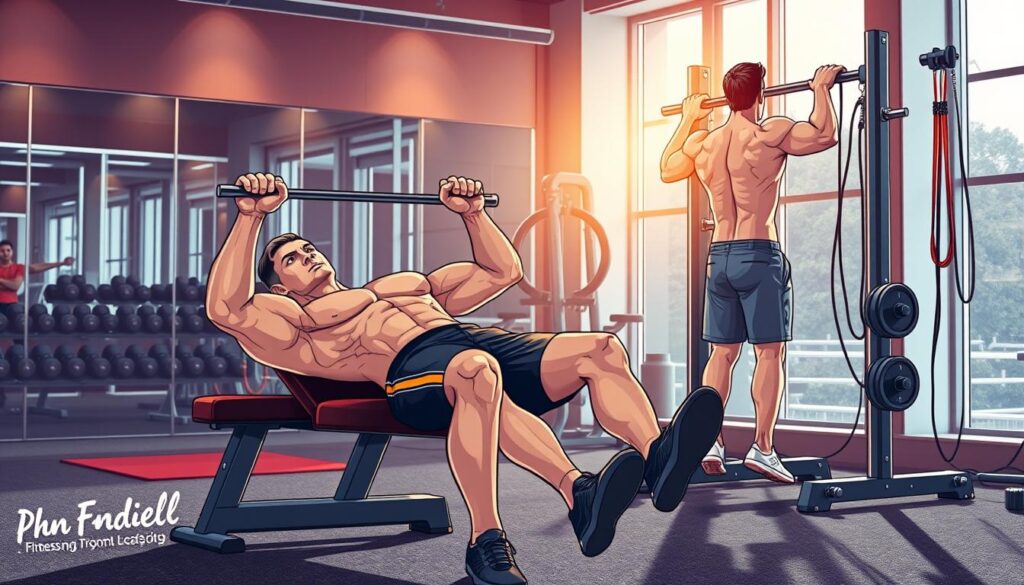
The push-pull workout is a game-changer for building muscle. It splits training into pushing and pulling movements, targeting specific muscle groups. This method helps you build muscle efficiently and effectively1.
Push-pull routines offer a smart way to boost muscle growth. They give your body enough time to recover. This approach creates a balanced workout that challenges your muscles systematically1.
Trainers recommend this method for strength and muscle growth. It’s simple yet effective, focusing on specific movement patterns. These patterns naturally group muscle groups together2.
Matt Pudvah suggests doing two push and two pull workouts weekly. This schedule helps you get the most muscle gains2.
Key Takeaways
- Push-pull workouts divide exercises into pushing and pulling movements
- Trains muscle groups twice weekly for optimal growth
- Allows for strategic muscle recovery and development
- Suitable for beginners and advanced fitness enthusiasts
- Provides a structured approach to strength training
Understanding the Push-Pull Workout Fundamentals
A push-pull split is a smart way to build strength. It splits exercises based on movement patterns. This method helps muscles grow and recover better3.
What Defines Push and Pull Movements
Push and pull movements are key to this workout plan. Push exercises move weight away from your body. Pull exercises bring weight toward you4.
These patterns create a balanced strength routine4.
- Push exercises target: chest, shoulders, triceps
- Pull exercises target: back, biceps, forearms
Muscle Groups Involved in Each Day
Your push-pull workout can target specific muscle groups. A push day might have 4-5 exercises for chest, triceps, and shoulders3.
A pull day focuses on back and bicep muscles3.
“Balanced strength training is about understanding how your muscles work together” – Fitness Expert
Recovery and Training Frequency
Rest is vital in any push and pull plan. Muscles need 48-72 hours to recover after hard workouts5. Your training schedule depends on your experience:
- Beginners: 2-3 sessions per week
- Intermediate lifters: 3-4 sessions per week
- Advanced trainees: Up to 6 sessions per week
The push-pull split helps muscles grow steadily. It ensures efficient training and proper rest35.
Essential Exercises for the Push-Pull Split
Creating the best push-pull exercises needs smart planning for muscle growth. This workout method targets specific muscle groups in an organized way6. Balancing pushing and pulling movements ensures complete muscle development.
Push Day Exercises
- Seated dumbbell shoulder press
- Dumbbell incline chest press
- Bodyweight triceps dips
- Cable rope triceps pushdown
- Incline dumbbell chest fly
- Dumbbell lateral shoulder raises
Pull Day Exercises
- Bent-over barbell row
- Cable pulldown
- Dumbbell shrugs
- Biceps curls
Push-pull workouts allow for optimal muscle recovery between sessions6. Intermediate lifters can train 3-4 days per week using this split6.
| Training Level | Recommended Training Frequency |
|---|---|
| Beginners | 3 days per week |
| Intermediate | 3-4 days per week |
| Advanced | Up to 6 days per week |
Pro tip: Choose weights that challenge you to finish your reps with proper form. Mix it up with different equipment to keep your muscles guessing7.
The key to an effective push-pull split is consistent progression and mindful exercise selection.
Conclusion
Push-pull training can revolutionize your fitness routine. This workout plan offers a smart way to build muscle and boost strength8. It targets specific muscle groups through pushing and pulling movements, creating a balanced training regimen9.
These workouts offer more than just muscle growth. They’re flexible for various fitness levels and can be tailored to your personal goals8. You can customize the routine to develop upper body muscle or improve overall body composition9.
For best results, focus on progressive overload and consistent training. Dive deeper into push-pull workout strategies by checking out this insightful article. Remember, proper recovery and technique are crucial for maximizing your fitness potential9.
Your success hinges on commitment, proper form, and understanding your body’s needs. The push-pull method provides a structured yet adaptable approach. It helps you reach your fitness goals efficiently and effectively.
FAQ
What is a push-pull workout?
A push-pull workout organizes exercises based on movement patterns. It targets muscles used in pushing and pulling actions. This approach creates a balanced physique and optimizes muscle recovery.
How often should I do a push-pull workout?
The frequency depends on your experience level. Beginners start with 3 days per week, alternating training and rest days. Intermediate lifters can train 3-4 days weekly.
Advanced athletes may train up to 6 days with careful recovery management.
What are some key push exercises?
Essential push exercises include seated dumbbell shoulder press and dumbbell incline chest press. Bodyweight triceps dips and cable rope triceps pushdown are also important.
Incline dumbbell chest fly and dumbbell lateral shoulder raises target chest and shoulder muscles.
What are some important pull exercises?
Key pull exercises include bent-over barbell row and cable pulldown. Dumbbell shrugs and biceps curls are also crucial.
These movements target your back, biceps, and forearm muscles. They help create a well-rounded upper body workout.
Is the push-pull workout suitable for beginners?
The push-pull split can be challenging for absolute beginners. It’s best to start with a simpler routine. Gradually progress to a push-pull workout as you build strength.
How do I choose the right weights for push-pull exercises?
Select weights that challenge you but allow proper form. You should feel the effort during the last few reps. Maintain correct technique throughout the set.
Can I customize the push-pull workout?
Absolutely! Add variety by using different cable attachments and alternating between dumbbells and barbells. Adjust the number of sets and repetitions to keep challenging your muscles.
What additional muscle groups should I include?
A complete push-pull routine includes a leg and core day. Essential exercises are deadlifts, barbell back squats, and leg extensions. Hamstring curls, calf raises, and hanging leg raises ensure a full-body workout.
Source Links
- The Best Push Pull Workout Routine for Muscle and Strength – https://www.strengthlog.com/push-pull-workout-routine/
- The Ultimate Push and Pull Workouts for Mass and Strength – Muscle & Fitness – https://www.muscleandfitness.com/routine/flexonline/training/ultimate-push-and-pull-workouts-mass-and-strength/
- Push Pull Legs: The Ultimate Beginner Guide | Brad Newton Fitness – https://www.bradnewtonfitness.com/the-ultimate-beginner-guide-push-pull-legs/
- Push/Pull Workouts: Benefits, How to Plan, Sample Workout | ISSA – https://www.issaonline.com/blog/post/push-pull-workouts-benefits-how-to-plan-sample-workout
- Why You Need Push and Pull Movements In Your Workouts – https://www.onepeloton.com/blog/push-pull-workout/
- Push-Pull Workouts: Routines and Guide for Building Muscle – https://www.healthline.com/nutrition/push-pull-workout
- The Push/Pull/Legs Routine for Muscle Gains – https://www.aston.ac.uk/sport/news/tips/fitness-exercise/push-pull-legs
- What is a Push/Pull Workout? Is It Right for You? – https://www.americansportandfitness.com/blogs/fitness-blog/what-is-a-push-pull-workout-is-it-right-for-you
- The “Push-Pull Routine” Is My New Favorite Lifting Hack – https://www.insidehook.com/wellness/push-pull-strength-training-routine

