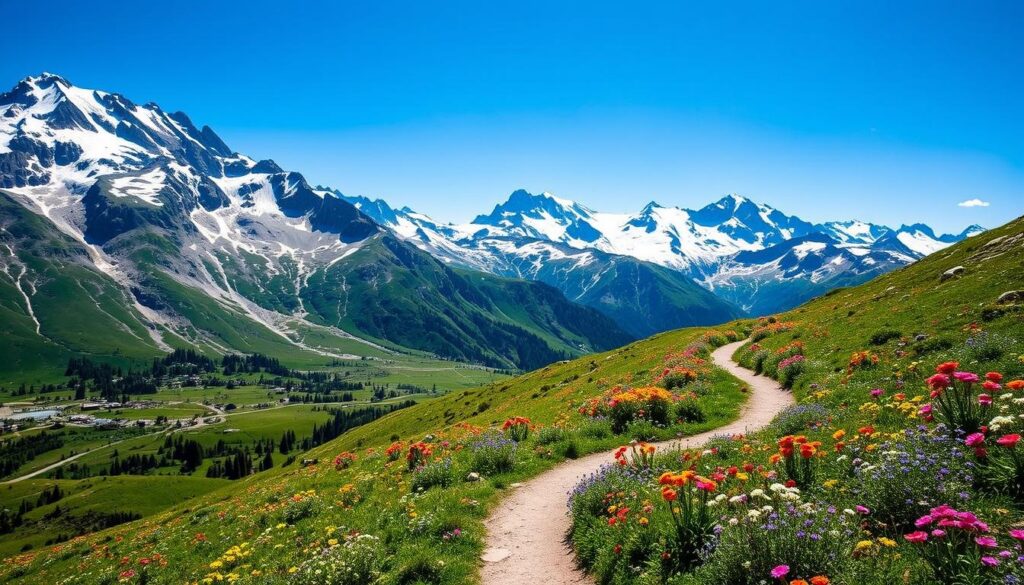
Get ready for an amazing Alpine trek! The Tour du Mont Blanc is a legendary hike through three countries. It offers a unique mountain experience across France, Italy, and Switzerland1.
This iconic trail covers 103 miles of stunning terrain. It’s a tough journey that will test your strength and endurance1. You’ll hike through forests, rocky paths, and green valleys.
The views along the way are simply breathtaking. You’ll see snowy peaks, glaciers, and alpine wildlife1. The highest point reaches 2,532 meters, offering incredible vistas.
This adventure usually takes 7-11 days to complete. Your hiking speed and chosen route will determine the exact length1. Get ready for an unforgettable journey through the Alps!
Key Takeaways
- Traverse three countries on a single hiking expedition
- Experience diverse alpine landscapes and challenging terrain
- Witness breathtaking mountain scenery and wildlife
- Prepare for a rigorous 7-11 day hiking challenge
- Explore a legendary trail with rich mountaineering history
Overview of the Tour du Mont Blanc Trail
The Tour du Mont Blanc (TMB) is a legendary hiking route. It winds through three countries, offering breathtaking landscapes. This epic Alpine experience challenges and inspires adventurers worldwide2.
What to Expect on the Hike
The TMB trail spans about 166 kilometers and crosses 10 mountain passes3. You’ll encounter diverse terrain, from Alpine meadows to rocky paths.
Lush forests and picturesque villages dot the landscape. The difficulty ranges from moderate to challenging.
Daily hikes typically cover 15-20 kilometers with significant elevation changes2.
- Alpine meadows
- Rocky mountain paths
- Lush forest trails
- Picturesque mountain villages
Trail Highlights and Key Stops
Your TMB journey includes breathtaking sights across France, Italy, and Switzerland2. Key stops offer unique experiences and stunning views.
- Courmayeur: An Italian mountain town with vibrant culture
- Champex-Lac: A picturesque Swiss village with a beautiful lake
- Aiguille Rouge National Park
- Suspension bridge over Bionnassay glacier
Enjoy spectacular mountain vistas along the way. You might spot local wildlife like ibex and chamois.
Duration and Distance of the Route
Most hikers complete the TMB in 7-11 days3. The circuit covers about 180 kilometers.
You’ll gain around 10,000 meters in elevation throughout the trek4. Elite hikers can finish in 4-6 days.
For a relaxed experience, some may take 12 or more days3. This allows time to fully appreciate the stunning landscapes.
“The Tour du Mont Blanc is not just a hike, it’s a journey through some of the most spectacular mountain terrain in the world.”
Preparing for Your Mont Blanc Adventure
Tour du Mont Blanc needs careful planning for a great trek. Good gear and fitness are key. Your journey starts well before you hit the trail.
Check out this Alpine hiking expedition guide for more info.
Essential Gear and Packing Tips
Your TMB packing list is vital for comfort and safety. Here are top Alpine trekking gear tips:
- Hiking boots with excellent ankle support
- Lightweight, moisture-wicking clothing layers5
- Waterproof jacket and pants
- Trekking poles for stability
- 3L water bladder and 1L water bottle5
Keep your backpack under 15 kg5. Pack smart. Bring a headlamp, extra batteries, and a portable charger5.
Physical Preparation: Training for the Hike
Alpine hiking needs serious training. Start months ahead with these tips:
- Build cardiovascular endurance through hiking and hill walking
- Practice with a loaded backpack weighing at least 10 pounds6
- Incorporate strength training for legs and core
- Break in hiking boots at least two months before the trek6
“The Tour du Mont Blanc is a challenge that rewards preparation and determination.”
Best Time to Hike the Tour du Mont Blanc
Timing is crucial for your Mont Blanc trek. The best window is mid-June to mid-September7.
| Month | Conditions |
|---|---|
| June | Potential snow patches, fewer crowds6 |
| July-August | Peak season, warmest weather, most crowded7 |
| September | Least rainfall, quieter trails6 |
Pro tip: Watch for afternoon storms and temp changes6. Always check Alpine weather forecasts before your trip.
Enjoying the Experience along the Trail
Your Tour du Mont Blanc adventure is more than just a hike. It’s a culinary and cultural journey through the Alps. The trail offers a chance to explore Alpine cuisine and local mountain traditions8.
Local cuisine becomes a highlight of your trek. Each region offers unique food experiences. In France, enjoy rich tartiflette and creamy raclette8.
Italian sections tempt you with perfect pasta and warming polenta. Swiss stops bring delightful fondue and crispy rösti. Mountain huts provide sustaining meals for your adventure8.
Photography buffs will find endless inspiration along the trail. Alpine landscapes come alive with sweeping vistas and village life details. Capture early morning light at Lac Blanc or views from Col de la Seigne9.
Pack a lightweight tripod and versatile lenses. These tools will help you document your incredible hiking journey9.
The Tour du Mont Blanc is a transformative experience. It connects you with Alpine culture and mountain history. Every step reveals new insights into local traditions8.
You’ll learn about ancient shepherd routes and seasonal farming practices. By immersing yourself, you’ll create lasting memories beyond the physical trail8.
FAQ
How difficult is the Tour du Mont Blanc?
The Tour du Mont Blanc challenges fit hikers. Daily hikes cover 15-20 miles with 4,000-5,000 feet of elevation gain. Good hiking experience and cardiovascular fitness are essential.
The trail reaches 8,323 feet at Grand Col Ferret. Some altitude acclimatization is recommended for a smoother experience.
What is the best time of year to hike the Tour du Mont Blanc?
Mid-June to mid-September offers the best hiking conditions. July and August see peak crowds on the trails.
Late June or September provide quieter trails and stable weather. Early June may have snow, while September offers clear paths and comfortable temperatures.
How long does it take to complete the entire route?
Most hikers finish the Tour du Mont Blanc in 7-11 days. The 170-kilometer (105-mile) route varies based on fitness and chosen path.
A typical day involves 4-9 hours of hiking. The longest single day stretch is around 20 miles.
What gear do I need for the hike?
Essential gear includes sturdy hiking boots, trekking poles, and a comfortable backpack. Pack weather-appropriate clothing, sun protection, and a first aid kit.
Bring microspikes for early season hikes. Many use luggage transfer services for lighter daypacks. Navigation tools and reliable water bottles are crucial.
Do I need to book accommodations in advance?
Booking in advance is highly recommended, especially during peak season (July-August). The trail offers various accommodation options including mountain huts, hotels, and guesthouses.
Popular stops like Chamonix, Courmayeur, and Champex-Lac fill up quickly. Book several months ahead to secure your preferred lodging.
What kind of physical preparation is needed?
Incorporate regular hill walking with at least 500 meters of weekly elevation gain. Cardiovascular exercises and strength training for legs and core are beneficial.
Practice hiking with a loaded backpack. Use stair climbing or treadmill inclines if hilly terrain isn’t available. Start training months before your hike.
What wildlife might I encounter on the trail?
Alpine wildlife like ibex, chamois, and marmots inhabit the area. The trail passes through diverse ecosystems, including Aiguille Rouge National Park.
Animals are typically shy and avoid human contact. Bring binoculars for better viewing. Observe wildlife from a distance without disturbing their habitat.
Is the trail well-marked?
The Tour du Mont Blanc is well-marked with clear signposts and trail markers. Most sections are easy to navigate, even for hikers without extensive backcountry experience.
Carry detailed maps, a GPS device, or a reliable hiking app. These tools ensure you stay on course, especially in challenging weather.
Source Links
- The Beginner’s Guide to Trekking the Tour du Mont Blanc – https://www.muchbetteradventures.com/magazine/the-beginners-guide-to-trekking-the-tour-du-mont-blanc/
- How to Hike the Tour du Mont Blanc: 3 Countries, 11 Mountain Passes, and All the Fresh-Baked Tarts You Can Eat – https://www.outsideonline.com/adventure-travel/destinations/europe/beginners-guide-tour-du-mont-blanc/
- Tour du Mont Blanc — The Hiking Club – https://www.thehiking.club/tour-du-mont-blanc?srsltid=AfmBOorgI9BR_g8crN8nkTWdDDNn-0d2jwWIB7Us99eawMLhoYJVldlT
- A guide to the trek, by Alpine Exploratory – https://www.alpineexploratory.com/walking-guides/tourdumontblanc.html
- The Ultimate Tour du Mont Blanc Packing List – WHOA travel | Women-Powered Adventures – https://www.whoatravel.com/tour-du-mont-blanc-packing-list
- How to Physically Prepare for the Tour du Mont Blanc – https://www.pygmy-elephant.com/blog/how-to-physically-prepare-for-the-tour-du-mont-blanc
- How to prepare to do the Tour du Mont Blanc? – https://www.trekking-mont-blanc.com/en/how-to-prepare-for-the-tour-du-mont-blanc
- Hiking the Tour du Mont Blanc:- Women’s Wine Hiking Society – https://winehikingsociety.com/hiking-the-tour-du-mont-blanc/
- Running the Tour du Mont Blanc in 7 Days — The Hiking Club – https://www.thehiking.club/blog/running-the-tour-du-mont-blanc-in-7-days?srsltid=AfmBOorD6QQezfopFJydeKCiENYcC5hbqfuxyZG_Nz9RMNanRfA4wLGh