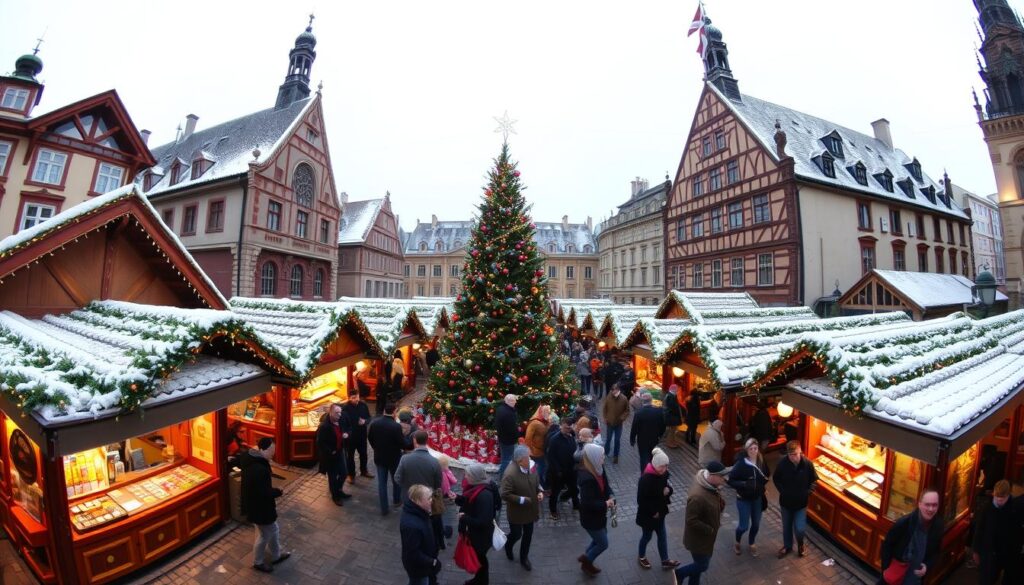
European Christmas Markets transform city squares into magical winter wonderlands. Twinkling lights, festive cheer, and age-old traditions create an enchanting atmosphere1. From Strasbourg to Cologne, these markets immerse you in the heart of winter magic2.
These markets have roots in the Middle Ages, starting in German-speaking regions. They’ve evolved from practical marketplaces into spectacular celebrations. Millions of visitors flock to these markets each year1.
Most markets run from late November to just before Christmas. They offer a perfect winter escape that blends tradition, culture, and holiday spirit.
Picture yourself exploring over 100 stalls, sipping warm mulled wine. Discover unique handcrafted gifts in markets like Cologne Cathedral with its 160 stalls1. Or wander through Vienna’s romantic streets for an unforgettable holiday experience.
Key Takeaways
- European Christmas Markets offer a unique cultural experience
- Markets typically run from late November to early December
- Each market has its own unique character and local traditions
- Expect amazing local foods, crafts, and festive entertainment
- Markets range from family-friendly to romantic evening experiences1
Introduction to European Christmas Markets
European Christmas markets are magical winter wonderlands. They offer festive cheer and timeless traditions. These markets provide an immersive experience into old-world Christmas festivities that have charmed visitors for centuries34.
Christmas market tours have deep roots in medieval Europe. Vienna hosted its first traditional Christmas stalls in 1298. This marked the start of a beloved tradition3.
Germany became a key location for these festive gatherings. Today, more than 1,400 Christmas markets dot the country’s landscape4.
What Makes Christmas Markets Special?
These markets offer unique cultural experiences. Visitors can explore authentic local crafts and handmade gifts. They can also taste traditional seasonal foods and drinks.
- Explore authentic local crafts and handmade gifts
- Taste traditional seasonal foods and drinks
- Immerse themselves in regional holiday traditions
- Experience the warm community atmosphere
History and Tradition Behind the Markets
Christmas markets started as winter supply markets. They later transformed into festive celebrations4. The 16th-century Protestant Reformation boosted their popularity4.
| Market Location | Year Established | Annual Visitors |
|---|---|---|
| Vienna Christmas World | 1298 | 3 million |
| Nuremberg Christkindlesmarkt | 1628 | 2 million |
| Dresden Striezelmarkt | 1434 | 1.5 million |
“Christmas markets are not just markets, they are living museums of cultural heritage and festive joy.”
These markets have now spread worldwide. Major celebrations occur in London, Moscow, New York, and Tokyo4. They continue to preserve winter traditions while offering a magical holiday experience.
Top European Christmas Markets You Must Visit
European Christkindlmarkts offer a magical journey through festive traditions. These outdoor holiday bazaars capture the spirit of the season. Explore unique cultural experiences across the continent5.
Vienna Christmas Market: An Austrian Wonderland
Vienna shines as a top destination for festive celebrations6. The city’s markets draw thousands, creating a magical atmosphere. You’ll find multiple markets, each with unique experiences5.
- Traditional Austrian cuisine
- Stunning holiday decorations
- Authentic mulled wine markets
Nuremberg Christkindlesmarkt: A German Tradition
Nuremberg’s Christmas market is the peak of German holiday traditions. It’s known for strict quality controls on crafts and food. This market offers an authentic experience that takes you back in time5.
| Market Feature | Details |
|---|---|
| Location | Nuremberg City Center |
| Market Style | Traditional German Christkindlmarkt |
| Unique Offerings | Handcrafted Toys and Local Specialties |
Strasbourg Christmas Market: A French-German Fusion
Strasbourg boasts a remarkable Christmas market dating back to 1570. With over 300 stalls, it’s known as the “Capital of Christmas”6. The market runs from November 27 to December 27, 20245.
Prague Christmas Market: A Bohemian Winter Wonderland
Prague’s markets turn the Old Town Square into a holiday wonderland. You’ll find Czech specialties and handcrafted gifts. The markets run from November 30, 2024, to January 6, 20255.
“European Christmas markets are not just markets, they’re living traditions that connect people with centuries of cultural heritage.”
What to Expect at These Christmas Markets
European Christmas markets bring festive traditions to life with vibrant sights, sounds, and flavors. These enchanting markets capture the true spirit of holiday cheer. Explore unforgettable experiences across European destinations.
Festive Foods and Delicious Treats
Prepare your taste buds for mouth-watering delicacies at traditional Christmas markets. Local culinary treasures warm hearts and souls in these magical settings. Each city boasts multiple markets offering a range of treats, from sizzling Bratwurst to sweet pastries7.
- Steaming mulled wine (Glühwein)
- Crispy Kartofelpufer (potato pancakes)
- Spiked hot chocolate
- Freshly baked gingerbread
Unique Gifts and Handcrafted Items
Uncover one-of-a-kind treasures at traditional Christmas stalls showcasing incredible craftsmanship. Vendors travel hours daily to share their artisan creations with visitors. Find intricate wooden ornaments and hand-knitted winter accessories among the unique offerings7.
Entertainment and Activities
European Christmas markets transform city centers into magical winter wonderlands. They offer exciting activities for all ages, going beyond typical shopping experiences. Visitors can enjoy a festive atmosphere filled with holiday magic7.
- Live musical performances
- Ice skating rinks
- Festive carousels
- Special holiday parades
Cities provide extra transportation to help visitors explore these magical events. Markets typically open around 10 or 11 am, creating a joyful holiday atmosphere7.
Experience the joy of festive European travel through these enchanting Christmas market celebrations!
Tips for Visiting European Christmas Markets
Planning your festive European travel to holiday markets needs smart preparation. Timing is crucial for exploring these markets. Most run from late November through December, with some lasting into early January8.
Weekdays offer a more relaxed experience at the markets. You can avoid the crowded weekend rushes by visiting on weekdays9. This allows for a more enjoyable exploration of the festive atmosphere.
Smart financial planning is key for your market adventure. Some markets now prefer cashless transactions, especially in bigger cities8. Bring various payment methods, including credit cards and some cash.
When buying glühwein, expect to pay a small deposit for the unique market mug10. Use debit cards that reimburse ATM fees and credit cards without foreign transaction charges8.
Dress wisely for your Christmas market trip. These markets often have cold temperatures, frequently below freezing10. Layer your clothing for warmth and comfort, especially for markets outside city centers8.
Experienced travelers recommend starting your market exploration later in the day. Wandering through illuminated evening markets creates the most magical experience10. The twinkling lights add to the festive charm.
Market hours can vary, so check schedules beforehand. Larger markets usually close around 7-8 p.m., with some open until 9 p.m. or later8. Each market offers something special.
Don’t stress about finding the perfect destination for your European Christmas markets journey. Every market you visit will create lasting memories and unique experiences9.
FAQ
What are European Christmas Markets?
European Christmas Markets are outdoor festivals with roots in German-speaking regions. They offer local foods, handcrafted gifts, and spiced drinks in a festive setting. These markets run from late November to December 23rd, featuring decorated stalls and unique cultural experiences.
Which European Christmas Market is the most famous?
The Nuremberg Christkindlesmarkt stands out as one of Europe’s most famous and oldest Christmas markets. It’s known for its strict quality controls on crafts and food. Other notable markets include Vienna’s grand event and Strasbourg’s historic market dating back to 1570.
What kind of food can I expect at European Christmas Markets?
You’ll find traditional foods like Bratwurst, Glühwein (mulled wine), and Kartofelpufer (potato pancakes). Each market offers unique regional treats reflecting local culinary traditions. Hot beverages, roasted nuts, and seasonal sweets are also popular at these festive markets.
How should I prepare for visiting Christmas Markets?
Pack warm clothing including thermal layers, sturdy boots, gloves, and scarves. Consider renting a car for flexibility and book accommodations with flexible cancellation policies. Bring cash, as some smaller stalls may not accept credit cards.
Plan for crowded conditions, especially on weekends. Be prepared to explore multiple markets in larger cities.
When is the best time to visit European Christmas Markets?
The prime time is from late November to late December, with most markets operating until December 23rd. Early to mid-December offers a perfect balance of festive atmosphere and less crowded conditions. Weekdays are typically less crowded than weekends, allowing for a more relaxed experience.
Are Christmas Markets suitable for children?
Absolutely! Many European Christmas Markets are family-friendly, offering activities like carousels and ice skating rinks. Live music and special events such as angel appearances or holiday parades are common. Cities like Cologne feature themed markets that are particularly enjoyable for children.
What unique gifts can I find at Christmas Markets?
You’ll discover handcrafted items including wooden crafts, traditional decorations, and local artisanal products. Ornaments, toys, and unique regional souvenirs are also available. Many markets pride themselves on selling locally made, high-quality items as memorable gifts.
Source Links
- Discover Some of Europe’s Most Charming Christmas Markets – https://living.acg.aaa.com/travel/holiday-markets-a-special-european-tradition
- My European Christmas Market Road Trip Itinerary – https://heleneinbetween.com/2024/11/my-european-christmas-market-road-trip-itinerary.html
- Christmas market – https://en.wikipedia.org/wiki/Christmas_market
- The History of Europe’s Christmas Markets – VisitCroatia.com – Tasteful Croatian Journeys – https://visitcroatia.com/the-history-of-europes-christmas-markets/
- 29 of the best Christmas markets in Europe for 2024 – https://www.thetimes.com/travel/destinations/europe-travel/best-christmas-markets-holidays-rff27td28
- Best Christmas Markets in Europe | Europe with Kids – https://ciaobambino.com/12-best-christmas-markets-europe
- 10 Things to Know Before Going to a European Christmas Market – – https://www.thecravetraveler.com/know-before-going-christmas-market/
- 22 Essential Christmas Market Tips + Mistakes to Avoid! (2024) – https://www.twowanderingsoles.com/blog/christmas-market-tips
- 10 Things To Know Before You Go to a European Christmas Market – https://www.travelpulse.com/news/features/10-things-to-know-before-you-go-to-a-european-christmas-market
- Vibe Teaching | European Christmas Market Tips | Teach in London – https://www.vibeteaching.co.uk/european-christmas-market-tips/