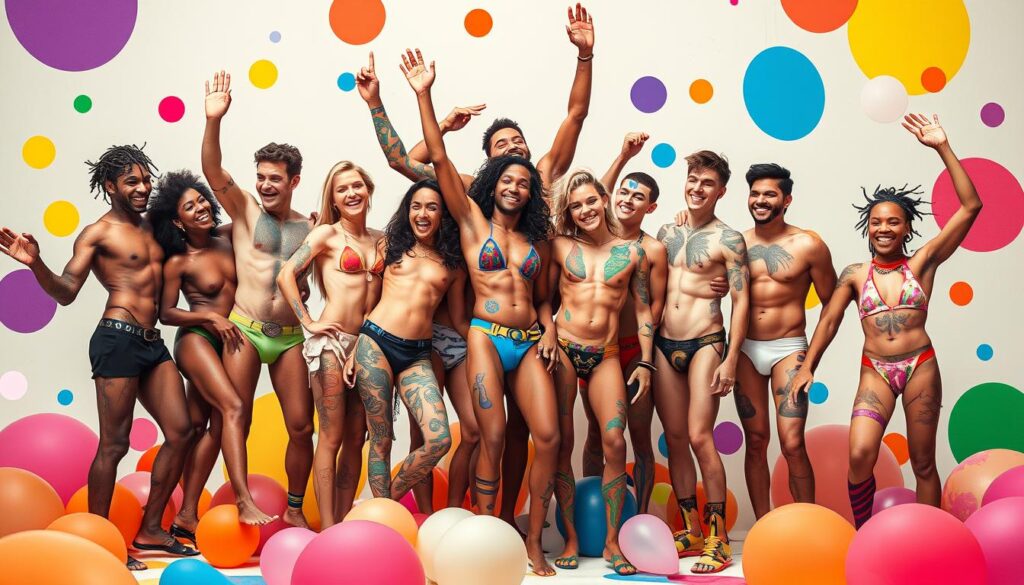
Being your true queer self is a journey of self-acceptance. Your body is a canvas of identity, challenging norms and celebrating diversity1. Coming out often changes how you see your gender and present yourself1.
Society can make you feel conflicted about your body. Queer folks often face unrealistic expectations about looks and beauty standards1. Rejecting these limits is a bold act of self-love1.
Your path is yours alone. Love and respect your body as it is. Focus on your happiness, not others’ opinions1.
Embrace self-acceptance to feel more at home in your skin. Remember, your gender expression is fluid and personal.
Key Takeaways
- Your queer body is a valid expression of identity
- Reject societal beauty standards that limit your authenticity
- Embrace self-love as a transformative experience
- Understand that your gender expression is fluid and personal
- Celebrate the diversity of queer body experiences
Embracing Your Queer Identity
Discovering your queer identity is a powerful journey of self-exploration. Your body tells a unique story. It’s where intersectional identities and queer aesthetics blend to represent you.
Many LGBTQIA+ individuals feel pressured to look a certain way. This can make self-acceptance harder. But knowing your true self is vital.
Understanding the Connection Between Body and Identity
Your body is more than just physical. It’s a statement of your authentic self. Queer identities often challenge traditional body narratives.
They do this by embracing diverse expressions:
- Exploring unique fashion choices
- Redefining personal style
- Challenging conventional beauty standards
The Importance of Self-Acceptance
Fat liberation and queer liberation are closely linked. Both groups have faced societal stigma and attempts to define them2. Embracing your body means rejecting outside judgments.
“Your body is valid, beautiful, and uniquely yours.”
Celebrating Your Unique Journey
Your queer journey is personal and powerful. Resources like Qlife and Minus18 offer support for exploring your identity3.
| Support Resource | Focus Area |
|---|---|
| Qlife | Anonymous LGBTQIA+ peer support |
| Minus18 | Youth empowerment and social inclusion |
| LGBTIQ+ Health Australia | National health research and programs |
Remember, your body celebrates your unique queer identity. Embrace it, love it, and let it tell your story.
Navigating Societal Expectations
Queer individuals face unique body image challenges and societal pressures. Understanding these dynamics is crucial for developing body autonomy. Resisting fatphobia in our culture is an important part of this journey.
Societal expectations can be overwhelming, especially for those exploring gender non-conformity. About 1 in 6 LGBTQ+ individuals face discrimination due to their identity4. Building resilience and self-acceptance is key to overcoming these challenges.
Recognizing Societal Pressures on Body Image
The traditional binary gender system often favors certain body types and appearances. Research shows that gender is a performative social construct, not a fixed concept5. This insight can be freeing for those challenging conventional beauty standards.
- Challenge internalized beauty norms
- Reject restrictive body expectations
- Celebrate body diversity
Finding Strength in Community Support
Community plays a vital role in healing and empowerment. Studies show 63% of LGBTQ+ individuals experience identity-related microaggressions4. Creating supportive networks can help combat these issues.
“Your body is valid, beautiful, and deserving of respect, exactly as it is.”
Challenging Conventional Beauty Standards
Intersex bodies and queer experiences show the beautiful complexity of human diversity. About 30% of LGBTQ+ individuals struggle with societal expectations4. Embracing your unique identity can turn these pressures into personal power.
| Societal Challenge | Empowerment Strategy |
|---|---|
| Body Shaming | Self-Love Practice |
| Gender Stereotypes | Identity Affirmation |
| Discrimination | Community Support |
Remember, your body is your own. Embrace your unique journey of self-discovery and radical self-acceptance.
Cultivating Mind-Body Awareness
Connecting with your body opens doors to self-discovery. For queer individuals, it’s crucial for body positivity and gender diversity. Your physical experience shapes your emotional well-being and personal identity.
Practicing Mindfulness for Body Positivity
Mindfulness can be a powerful tool for embracing your true self. Exploring body awareness through meditation helps queer individuals develop deeper self-acceptance6. LGBTQIA+ youth report significant benefits from mindfulness practices.
- Reduced stress
- Enhanced self-compassion
- Improved mental health
The Role of Movement and Exercise
Movement celebrates queer aesthetics when you focus on your body’s capabilities. Somatic practices help release trapped energy and heal from past trauma7.
Try dance, yoga, or martial arts to reconnect with your physical self. These activities can boost your body awareness and confidence.
“Your body is a landscape of resilience and beauty.”
Exploring Your Body Through Creative Expression
Creative outlets offer powerful modes of self-discovery. Art, writing, or fashion can help you explore and affirm your queer identity.
Many find that creative expression helps them reclaim their bodies. It’s a way to celebrate their unique journey6.
Cultivating mind-body awareness is a personal, ongoing process. Be patient and kind to yourself as you explore your identity.
Building a Safe Space for Self-Expression
Your body autonomy is a powerful statement of identity within intersectional LGBTQIA+ communities. You’re part of a vibrant group that makes up 5-10% of the population. This diverse community celebrates individual expression and challenges traditional norms8.
Surround yourself with art, literature, and media that reflect your authentic self. This can include queer-centered artwork and books by diverse authors. Digital spaces that prioritize representation and inclusivity are also valuable9.
Artists who challenge cisnormative standards can inspire your living space. Create an environment that genuinely resonates with your gender identity and personal experiences.
Use your chosen name and pronouns to champion your identity. Dress in ways that feel authentic and join queer-centered activities you enjoy. Your body is a canvas of self-expression, celebrating your unique identity8.
Seek out inclusive resources for guidance and emotional support. LGBTQIA+ organizations, supportive healthcare providers, and online communities can be invaluable.
Building a safe space is an ongoing journey of self-discovery. Embrace your intersectional identities and prioritize body autonomy. Your experience is valid, your identity is beautiful, and your self-expression is revolutionary.
FAQ
How do I know if my feelings about my queer identity are valid?
Your feelings are absolutely valid, even if they feel confusing or changing. It’s normal to experience doubt during your self-discovery journey. Identity is fluid, and what you feel now is genuine.
Confusion about labels is common. You don’t need to have everything figured out right away.
How can I develop a positive relationship with my body as a queer person?
Focus on what your body can do rather than how it looks. Engage in creative expression that affirms your identity. Connect with your body through authentic movement.
Challenge societal beauty standards that don’t represent your unique experience. Practice self-acceptance and mindfulness to build a positive body relationship.
What if I feel scared or uncertain about coming out?
Fear during the coming out process is normal and justified. Your emotions are valid, and you’re not “faking” anything. Take your time and prioritize your safety.
Build a support network of trusted friends, allies, or queer community resources. They can provide validation during this journey.
How can I challenge societal pressures about body image?
Reject narrow beauty standards and celebrate body diversity. Recognize that attractiveness isn’t determined by a specific body type. Engage with queer-affirming communities that celebrate all body shapes and sizes.
Focus on self-love, body autonomy, and finding joy in your unique expression. Embrace your individuality and challenge societal norms.
How do I create a safe space for my queer identity?
Curate an environment that reflects and affirms your identity. Surround yourself with inclusive art and use chosen names and pronouns. Dress authentically and engage with queer-friendly resources.
Seek out supportive communities, both online and offline. These spaces can validate your experiences and help you feel empowered.
What if my gender expression doesn’t fit traditional expectations?
Your gender expression is valid, regardless of traditional expectations. Embrace your unique way of presenting yourself. There’s no “right” way to be queer.
Explore different styles and presentations that feel true to you. Remember, diversity in gender expression is beautiful and important.
How can I practice self-care as a queer individual?
Prioritize your mental and physical well-being. Set boundaries and seek affirming healthcare. Engage in mindfulness practices and connect with supportive communities.
Be gentle with yourself during your journey of self-discovery. Celebrate your resilience and remember that your experiences are valuable.
Source Links
- How did coming out as queer help me come to terms with my body? – https://blog.jkp.com/2022/03/how-did-coming-out-as-queer-help-me-come-to-terms-with-my-body/
- Embracing being both fat and queer — is liberation – https://medium.com/@queeraf/coming-out-as-both-fat-and-queer-2338ede52823
- Embracing your queerness is about embracing who you are as a whole person – Butterfly Foundation – https://butterfly.org.au/embracing-your-queerness-is-about-embracing-who-you-are-as-a-whole-person/
- Navigating Trans/Queer Love – https://medium.com/disability-and-society/navigating-trans-queer-love-4759279da2e6
- 2. Queer theory and gender norms – https://www.alignplatform.org/2-queer-theory-and-gender-norms
- How Mindfulness Can Support the Transgender Experience – https://www.healthline.com/health/mind-body/embracing-the-trans-and-non-binary-body-through-mindfulness
- The Queer Body Remembers: Somatic-Focused Trauma Healing – https://drpayam.medium.com/the-queer-body-remembers-somatic-focused-trauma-healing-419969e830a1
- Creating Safe Spaces: An Introduction for Program Staff – https://www.virtuallabschool.org/focused-topics/creating-gender-safe-spaces/lesson-1
- Artist Ggggrimes on Expression, Kindness, and Creating A Safe Space Through Art – https://eratomagazine.com/2024/10/15/artist-ggggrimes-on-expression-kindness-and-creating-a-safe-space-through-art/