
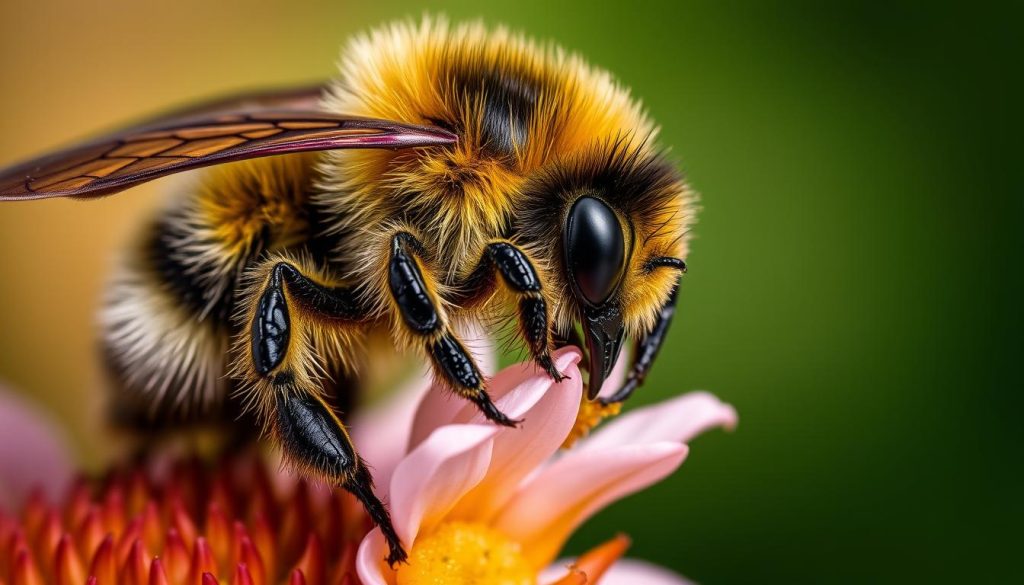
Bumblebees are amazing insects that help our environment. They rarely use their stinger and prefer to collect nectar peacefully. These gentle pollinators focus on supporting our ecosystem instead of picking fights.
Bumblebees aren’t naturally aggressive. They only sting when they feel seriously threatened, like if their nest is disturbed. These bees have special ways to defend themselves, unlike other bee types.
Not all bumblebees can sting. Male bumblebees can’t sting at all. They don’t have the body parts to do it.
Female bumblebees can sting multiple times. Their smooth stinger can be pulled back into their body after use123.
Key Takeaways
- Bumblebees are generally non-aggressive insects
- Only female bumblebees can sting
- Bumblebees rarely use their stinger unless seriously threatened
- Their primary focus is pollination and nectar gathering
- Male bumblebees cannot sting at all
Understanding Bumblebee Defense Mechanisms
Bumblebees have amazing ways to protect their colonies. These tiny insects have unique defense strategies. With over 250 species, each bumblebee type has its own remarkable approach4.
Bumblebee defense is complex and fascinating. Their mechanisms ensure survival against potential threats. These strategies help us appreciate these incredible pollinators more.
The Anatomy of Bumblebee Stingers
Bumblebee stingers differ from other bee species. Only female bumblebees can sting. Workers and queens can deliver multiple venom injections when threatened5.
Unlike honeybees, bumblebees sting repeatedly without dying. This makes their attack potential more versatile.
- Female bumblebees have functional stingers
- Male bumblebees cannot sting
- Stingers are used primarily for defense
Differences Between Male and Female Bumblebees
Male and female bumblebees have different defense abilities. Males lack stingers and can’t defend the colony5. Females have sophisticated defense mechanisms.
These mechanisms protect their small colonies. A colony can have as few as 50 individuals4.
Natural Defense Behaviors
Bumblebees rarely attack first. They typically sting only when directly threatened. Their bright colors warn predators of potential danger4.
When near bumblebees, stay 10 to 20 feet from their nests. This helps avoid provoking a defensive response5.
Remember, bumblebees are more interested in collecting nectar and pollinating plants than attacking humans.
Bumblebee Biting vs Stinging: What You Need to Know
Bumblebees are peaceful insects that rarely confront humans. Understanding their defense methods can ease fears about bee aggression. Bee safety improves when we know their behaviors.
Bumblebees have several ways to protect themselves:
- Stinging as a last resort defense mechanism
- Occasional biting when directly threatened
- Producing warning sounds to deter potential predators
Bumblebee stings can cause intense pain. This is especially true for people with allergies6. About 3% of adults and 0.5% of children are allergic to bee stings.
These allergies can lead to serious reactions. However, severe anaphylactic responses only occur in 0.04% of people7.
| Behavior | Frequency | Typical Response |
|---|---|---|
| Biting | Rare | Mild discomfort |
| Stinging | More Common | Moderate to Severe Pain |
Bumblebees are more interested in collecting nectar than attacking humans.
If stung, put ice on the site for 20 minutes every hour. This helps with pain relief6. Symptoms usually get better within hours.
Swelling might last for 7-10 days after the sting6. Don’t worry, this is normal and will go away.
How to Avoid Bumblebee Stings and Bites
Bee safety means knowing how bees act and taking steps to prevent attacks. Bumblebees are usually peaceful, but they can sting if they feel threatened. Learning about their habits helps reduce risks during outdoor activities89.
Wearing the right clothes is key to avoiding bee attacks. Choose light-colored, smooth fabrics that cover most of your body. Skip bright floral patterns and strong perfumes that might attract bees9.
If you’re allergic to bee stings, be extra careful. Avoid risky activities like gardening during peak bee seasons9.
Stay calm when you see bumblebees. Move slowly and don’t swat at them. If a bee comes close, stand still and let it fly away10.
About 1% of people may have an allergic reaction to bumblebee stings. Know the symptoms and be prepared. If you have severe allergies, carry an epinephrine auto-injector9.
Talk to an allergist about venom immunotherapy for added protection9.
Look for bee nests on your property, especially in spring and summer. Teach kids not to disturb insect homes. Keep a safe distance from known nesting areas9.
By respecting bumblebees and understanding their behavior, you can live safely alongside them. This approach minimizes the risk of stings.
FAQ
Do bumblebees actually bite or just sting?
Bumblebees can bite and sting, but stinging is their main defense. Female bumblebees have a venomous stinger, while males don’t. Bumblebees rarely bite with their mandibles when extremely threatened.
How painful is a bumblebee sting compared to other bee stings?
Bumblebee stings hurt less than honeybee stings. Their venom is mild, and they’re not very aggressive. The pain feels sharp and burning but fades quickly.
People with allergies should always take bee stings seriously.
Are male and female bumblebees different in their defensive capabilities?
Yes, female bumblebees have stingers and can sting multiple times. Male bumblebees can’t sting at all. Males may seem more aggressive during mating season, but they’re harmless.
When are bumblebees most likely to sting?
Bumblebees usually sting when their nest is threatened or they’re badly provoked. They’re most defensive near their nest. They might sting if accidentally trapped or crushed against someone’s body.
How can I avoid getting stung by a bumblebee?
To avoid stings, move slowly around bumblebees and wear light-colored clothes. Avoid strong fragrances and be careful near flowers and nests. If a bumblebee approaches, stay calm and move away slowly.
Are bumblebee stings dangerous?
For most people, bumblebee stings cause minor pain and swelling. They’re not dangerous. However, people with bee allergies can have severe reactions and need immediate medical help.
Do bumblebees die after stinging like honeybees?
Bumblebees can sting multiple times without dying, unlike honeybees. Their stinger is smooth and stays attached to their body. This allows them to sting repeatedly if threatened.
What should I do if a bumblebee stings me?
If stung, remove the stinger if you see it. Clean the area with soap and water. Apply a cold compress to reduce swelling.
Over-the-counter pain relievers and antihistamines can help with discomfort. Seek medical help if you have signs of a severe allergic reaction.
Source Links
- Do Bumblebees Sting? – https://beevive.com/blogs/bee-blog/do-bumblebees-sting?srsltid=AfmBOoqDr6xp2ISqd_NeYMCz8lp-IqmB8HojUm7zW7_p2qNWc5-ZgD2G
- Bee Stings (Part Two): What you need to know about bumblebees – https://crawliomics.wordpress.com/2019/07/31/bumblebee-stings/
- The Buzz on Bees: Do Bumble Bees Sting and What to Do – https://hawxpestcontrol.com/the-buzz-on-bees-do-bumble-bees-sting-and-what-to-do-if-they-do/
- Bumblebee – https://en.wikipedia.org/wiki/Bumblebee
- No Fear of Stings Blog | Pollinator.org – https://www.pollinator.org/blog-old/no-fear-of-stings
- Bee and Wasp Stings Treatment – https://www.webmd.com/first-aid/bee-and-wasp-stings-treatment
- How to treat a bee sting: Treatments and home remedies | HealthPartners Blog – https://www.healthpartners.com/blog/bee-sting-treatment/
- Bee sting – Symptoms and causes – https://www.mayoclinic.org/diseases-conditions/bee-stings/symptoms-causes/syc-20353869
- 12 Tips for How to Avoid Bee Stings – https://www.beeawareallergy.com/bee-stings/prevention/avoid-bee-stings/
- Treatment of bumblebee stings and allergies | Koppert US – https://www.koppert.com/news-information/treatment-of-bumblebee-stings-and-allergies/

