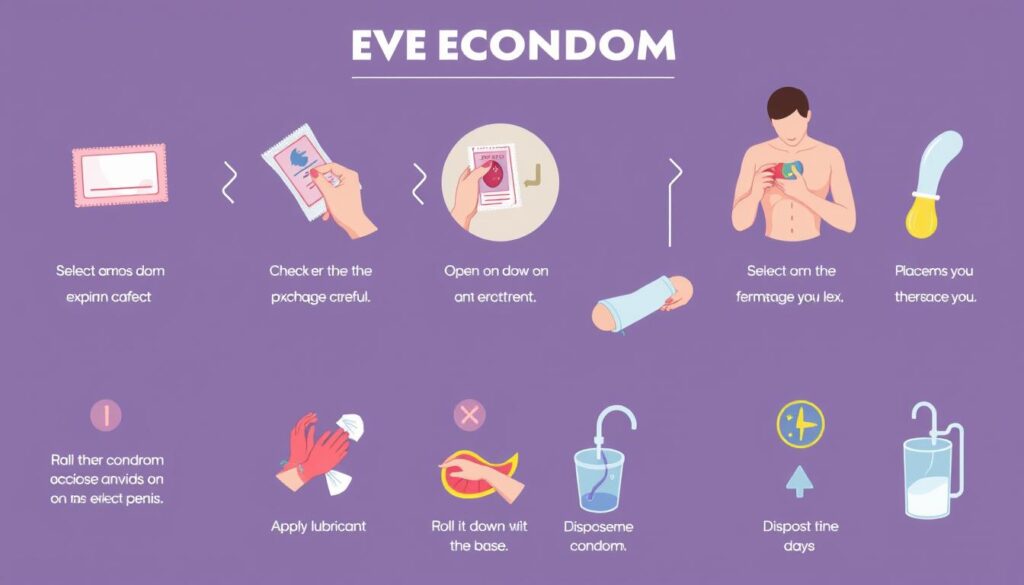
Condoms are vital for protecting your sexual health. They help prevent pregnancy and sexually transmitted infections1. When used right, condoms offer up to 98% protection during sex213.
Proper protection requires knowing the right techniques. Many people make mistakes that can reduce condom effectiveness. User error is the main reason for potential failures1.
Picking the right condom and using it correctly lowers risks. Safe sex involves careful selection, proper storage, and precise application2.
Key Takeaways
- Condoms are 98% effective when used perfectly
- Always check expiration dates before use
- Use one condom per sexual encounter
- Store condoms in cool, dry places
- Practice proper application techniques
- Communicate with your partner about protection
Introduction to Condom Usage
Safer sex habits protect your sexual health. Condoms are a key barrier method. They help prevent STIs and unplanned pregnancies when used correctly45.
Safe sex needs more than just protection. It requires knowledge and preparation. Consistent use of barrier methods like condoms is crucial.
Importance of Safe Sex
Protecting yourself and your partner is vital. Condoms offer major benefits in preventing STIs:
- Prevent transmission of HIV4
- Block genital fluid-transmitted STDs like gonorrhea and chlamydia4
- Reduce unintended pregnancy risks6
“Prevention is always better than cure in sexual health.”
Common Myths About Condoms
Myths about condoms can lead to risky behavior. Let’s clear up some common misconceptions:
| Myth | Reality |
|---|---|
| Using two condoms provides better protection | This actually increases breakage risk |
| Condoms can be reused | Always use a new condom for each sexual encounter4 |
| Condoms are 100% effective | Effectiveness depends on correct and consistent use6 |
Knowing these facts helps you use condoms effectively. You can make smart choices about safer sex habits5.
Choosing the Right Condom
Picking the best condom is key for safe sex. Your well-being hinges on finding the right fit and understanding various contraceptive options.
Condom choices vary widely to boost protection and enjoyment. Not all condoms are created equal.
Types of Condoms Available
- Latex Condoms: Most common and effective barrier7
- Polyurethane Condoms: Thinner and better heat transfer7
- Polyisoprene Condoms: Latex-free alternative7
- Lambskin Condoms: Natural feel but limited protection7
Size Matters: Finding the Right Fit
The right condom size is vital for safety and comfort. Your measurements are key in making the best choice.
| Penis Length | Penis Girth | Recommended Condom Size |
|---|---|---|
| Under 5 inches | Under 4.25 inches | Snug/Small Fit8 |
| 5-7 inches | 4.25-5 inches | Standard/Regular Fit8 |
| Over 7 inches | Over 5 inches | Large/XL Fit8 |
Remember: A proper fit ensures maximum protection during intercourse.
The average erect penis length in the U.S. is 5.57 inches8. Most brands offer sizing in millimeters to help you find your perfect match7.
Pro tip: Focus on girth over length when choosing your ideal condom7. This ensures a snug, comfy fit for the best protection.
Inspecting the Condom Package
Careful package inspection is vital for condom safety and effectiveness. It’s a crucial step in safe sex practices. Proper examination helps prevent potential risks9.
- Check the expiration date printed clearly on the package
- Examine the packaging for any visible damage or tears
- Gently squeeze the package to verify an intact air bubble
- Look for signs of brittleness or discoloration
Decoding Expiration Dates
Condoms have a limited shelf life. Expired condoms can be less reliable. They may not protect against pregnancy and STIs10.
Always discard condoms past their expiration date. Do this regardless of how they appear.
Detecting Package Damage
A damaged package could mean the condom is compromised. Visual and tactile inspection is your first defense. Select a new condom if you notice:
- Visible tears or punctures
- Dried out or brittle packaging
- No air bubble when gently squeezed
- Unusual discoloration
“Prevention starts with careful inspection – your health is worth those extra moments of careful checking.”
A few seconds of careful examination can boost your safe sex practices9. When unsure, always pick a new, undamaged condom.
This ensures maximum protection for your health and well-being10.
Proper Condom Application
Careful condom application is key for safe sex. It’s vital to use condoms correctly. Doing so cuts the risk of pregnancy and STIs.
Good techniques can make a big difference. They help ensure your protection during intimacy.
- Check the expiration date and package integrity
- Ensure proper handling to prevent damage
- Open the package carefully with clean hands
Opening the Package Safely
Use your fingers to open the condom package. Don’t use teeth or sharp objects. Tear along the edge with care.
Handle condoms gently to keep them safe. This helps maintain their protective qualities11.
Correct Installation Techniques
For safe sex, follow these critical steps:
- Check the condom is right-side out
- Pinch the tip to remove air
- Place on erect penis before any genital contact
- Unroll completely to the base
Pro Tip: If you put the condom on inside out, use a new one. This prevents possible contamination.
Condoms work well when used right. They can give up to 98% protection against pregnancy3.
For uncircumcised men, pull back the foreskin first. This helps with proper condom application11.
Important Precautions
| Technique | Recommendation |
|---|---|
| Lubrication | Use water-based lubricants only |
| Multiple Condoms | Never use two condoms simultaneously |
| Allergies | Consider alternative materials if latex causes reactions |
Master these steps for better protection. Your sexual safety depends on proper condom use.
Key Tips for Condom Use
Safer sex goes beyond just using barrier contraception. Knowing the ins and outs of condom use can boost your sexual health protection. Let’s explore some crucial tips for effective condom use.
Lubricant Selection Matters
Your lube choice can greatly impact comfort and safety. Water-based or silicone-based lubricants are ideal for enhancing pleasure and protecting condoms12.
Steer clear of oil-based products like petroleum jelly. These can damage latex and reduce condom effectiveness12.
Smart Lubrication Techniques
- Add a small drop of lubricant inside the condom dome for increased pleasure12
- Use water-based lubricant externally to reduce friction and potential tearing12
- Ensure the entire condom surface remains adequately moistened
Never Double Up on Condoms
Using two condoms at once is a big no-no. This increases friction and raises the risk of condom breakage12.
Always use one high-quality condom. Replace it for each new sexual activity12.
“Protection is about smart choices, not multiple layers.”
Essential Condom Usage Tips
- Carry your personal condom supply12
- Check expiration dates before use12
- Store condoms in cool, dry places away from direct sunlight12
- Use a new condom when switching between different types of intercourse12
Following these guidelines boosts your safer sex practices. It ensures proper barrier contraception protection. Stay safe and enjoy your intimate moments responsibly.
Safe Condom Removal
Proper condom removal is vital for safe sex. It helps prevent risks and maintain hygiene during intimate moments. Knowing how to remove and dispose of condoms correctly is crucial13.
Correct Condom Removal Technique
Follow these key steps for safe condom removal:
- Hold the base of the condom firmly while withdrawing the penis
- Prevent potential semen leakage by maintaining a grip
- Carefully remove the condom away from your partner
Proper Disposal Methods
Responsible disposal is crucial for safe sex. Here are important guidelines:
- Wrap the used condom in tissue paper
- Throw it directly into the garbage bin
- Never flush condoms down the toilet
Proper condom disposal prevents plumbing issues and environmental contamination.
Post-Removal Hygiene
Always wash your hands after removing a condom. This simple step helps prevent the spread of bacteria or bodily fluids14.
| Condom Removal Step | Recommended Action |
|---|---|
| Withdrawal | Hold condom base, withdraw before penis becomes soft |
| Disposal | Wrap in tissue, discard in trash |
| Hygiene | Wash hands immediately |
About 31% of people have trouble with condom use sometimes. Following these tips can make your sexual experiences safer and more responsible13.
Understanding Condom Effectiveness
Condoms are vital for sexual health. They prevent STIs and support healthy intimacy. Their effectiveness relies on proper and regular use.
Perfect condom use offers great protection against pregnancy and STIs. With typical use, 15 out of 100 women might get pregnant yearly. Perfect use reduces this to just 2 pregnancies.
Reliability Statistics
Condom effectiveness varies based on usage. Here’s a quick look at key stats:
- Perfect use effectiveness: 98% protection against pregnancy15
- Typical use effectiveness: About 87% protection15
- Cost: Approximately $2 per condom15
What Condoms Prevent and Don’t Prevent
Condoms excel at stopping STIs spread through bodily fluids. However, they may not completely protect against skin-to-skin transmitted infections.
| Infections Prevented | Infections with Limited Protection |
|---|---|
| HIV | Herpes |
| Chlamydia | HPV |
| Gonorrhea | Genital Warts |
“Combining condoms with regular STI testing and open communication provides the best protection for sexual health.”
A survey revealed worrying usage patterns. 42% of men didn’t use condoms consistently during sex. 23% failed to leave space at the tip16.
These errors can greatly reduce condom effectiveness against STIs. To maximize protection, follow proper usage guidelines. Consider pairing condoms with other birth control methods15.
Condom Storage Guidelines
Proper condom storage is crucial for safe sex. It ensures your condoms work when you need them most. Protecting your condoms keeps them effective and reliable17.
Different condoms have unique storage needs. Knowing these requirements helps maintain condom quality. Proper storage techniques can greatly impact condom integrity18.
Best Practices for Storing Condoms
- Store condoms in a cool, dry place away from direct sunlight17
- Keep condoms at stable room temperature17
- Avoid storing in wallets, cars, or bathrooms17
Ideal storage locations include:
- Bedside drawer
- Underwear drawer
- Secure box in a cool area
Avoiding Extreme Temperatures
Temperature is key for condom quality. Latex condoms are especially sensitive to their environment18.
| Condom Type | Shelf Life | Storage Recommendations |
|---|---|---|
| Male Latex Condoms | 3-5 years | Below 104°F, low humidity |
| Female Condoms | 5 years | More resistant to environmental factors |
“Proper storage is not just about preserving condoms, it’s about ensuring your sexual health and safety.”
Follow the recommended guidelines for temperature and humidity when storing condoms. This helps maintain their effectiveness18.
Storage details can greatly impact condom use. Good storage habits support safe sex practices19.
Addressing Condom Breakage
Careful attention to condom issues is vital for safe intercourse. Knowing the risks and responses helps maintain sexual health and safety.
Condoms are crucial contraceptives that can sometimes fail unexpectedly. Studies show 41% of users face problems within three months20. Being ready for such situations is essential.
Recognizing Signs of a Broken Condom
Spotting a broken condom quickly is crucial. Look out for these key signs:
- Visible tears or holes
- Unexpected leakage
- Changes in sensation during intercourse
- Unusual looseness or displacement
Immediate Steps After Condom Breakage
If a condom breaks during sex, follow these steps:
- Stop sexual activity immediately
- Withdraw carefully
- Wash genitals with soap and water
- Consider emergency contraception
- Schedule STI testing
Prevention is always better than reaction when it comes to sexual health.
Improper storage and usage increase condom breakage risks. Heat exposure and wallet storage can weaken condoms21. About 6.0% of condom uses result in breakage or slippage20.
Prevention Strategies
| Prevention Method | Impact on Condom Integrity |
|---|---|
| Proper Storage | Reduces material degradation |
| Check Expiration | Ensures optimal strength |
| Correct Size | Minimizes breakage risk |
| Water-Based Lubricants | Decreases friction |
Remember, your sexual health depends on careful and informed contraceptive methods.
The Importance of Consent
Open communication is vital in intimate relationships. Consent is the cornerstone of healthy sexual behavior. It ensures respect and comfort for both partners.
Safer sex habits go beyond physical protection. They involve mutual respect and emotional safety. Discussing protection and boundaries is crucial.
Research reveals key insights about sexual communication and consent:
- Females demonstrate higher self-efficacy in obtaining sexual consent22
- Communication about prevention is crucial for consistent condom use22
- Social and relationship dynamics significantly impact protection choices23
Communicating with Your Partner
Talking about sexual protection shouldn’t be awkward. Create a safe, judgment-free space for both partners. Express your feelings and concerns openly.
Be direct about your expectations and boundaries. Prioritize health in your discussions.
“Consent is an ongoing conversation, not a one-time agreement.”
Mutual Understanding about Protection
Protection involves more than just using condoms. Consider these factors:
| Protection Aspect | Key Considerations |
|---|---|
| STI Prevention | Over 2 million Chlamydia cases reported annually23 |
| Pregnancy Prevention | Nearly 50% of US pregnancies are unintended24 |
| Communication | Open dialogue reduces transmission risks23 |
Healthy sexual behavior is about mutual respect and clear communication. It involves shared responsibility for both partners’ well-being. Prioritize comfort and safety when discussing protection.
Conclusion: Empowering Safe Sex Practices
Protecting yourself during sex involves more than just using contraceptives. It’s about understanding the importance of condoms for sexual health. Research shows that comprehensive sexual education improves safe sex awareness and attitudes25.
Nearly half of sexually active youth in the U.S. don’t use condoms consistently26. This highlights the need for better education and communication in sexual relationships. Learning proper protection techniques can reduce the risk of STIs and unplanned pregnancies26.
Your sexual health requires knowledge, preparation, and respect. It’s about creating a safe environment where partners can discuss their needs openly. Stay informed and be proactive about your sexual well-being.
FAQ
How effective are condoms at preventing pregnancy and STIs?
Condoms are highly effective when used correctly. They prevent pregnancy 98% of the time with perfect use. They also reduce STI risks, including HIV. However, no method is 100% foolproof. Combine condom use with regular testing and open communication.
Can I use two condoms for extra protection?
No, using two condoms increases breakage risk due to friction. Always use one condom at a time. Make sure it fits properly and is used correctly.
How should I store condoms to keep them effective?
Store condoms in a cool, dry place away from sunlight and sharp objects. Avoid keeping them in wallets, pockets, or glove compartments for long periods. Heat and friction can damage them.
Choose safe locations like purses, backpacks, or bedside drawers.
What should I do if a condom breaks during sex?
If a condom breaks, stop immediately and withdraw. Both partners should wash their genitals with soap and water. Consider emergency contraception if pregnancy is a concern.
Get tested for STIs as a precautionary measure.
Are there condoms for people with latex allergies?
Yes, polyurethane and polyisoprene condoms are great alternatives for latex allergies. They provide similar protection against pregnancy and STIs. These options are safe for those with latex sensitivities.
How do I know if a condom is expired?
Always check the expiration date on the condom package. Inspect the package for damage before use. Squeeze to ensure an air bubble is present.
Discard if the condom looks brittle, discolored, or damaged.
Can I use oil-based lubricants with condoms?
No, never use oil-based products with latex or polyisoprene condoms. These can damage the condom and reduce its effectiveness. Instead, use water-based or silicone-based lubricants.
How should I dispose of a used condom?
Wrap the used condom in tissue and throw it in the garbage. Never flush condoms down the toilet. They can cause plumbing issues and harm the environment.
Always wash your hands after handling used condoms.
Do condoms protect against all sexually transmitted infections?
Condoms protect well against STIs transmitted through bodily fluids. These include HIV, chlamydia, and gonorrhea. However, they may not fully protect against skin-to-skin transmitted infections like herpes or HPV.
How important is communication about condom use?
Communication is crucial for safe and consensual sexual experiences. Discuss protection methods before sexual activity. Ensure both partners are comfortable with condom use.
Remember that consent is ongoing and can be withdrawn at any time.
Source Links
- Safer Sex Education: How to Put on a Condom – https://njfpl.org/safer-sex-education-how-to-put-on-a-condom/
- How to use condoms, correctly: – https://helloclue.com/articles/sex/how-to-use-a-condom-a-step-by-step-guide
- Condoms – https://www.nhs.uk/contraception/methods-of-contraception/condoms/
- Condom Use: An Overview – https://www.cdc.gov/condom-use/index.html
- Condoms – https://www.who.int/news-room/fact-sheets/detail/condoms
- Condoms: Effectiveness, Types, and Proper Use – https://www.webmd.com/sex/birth-control/birth-control-condoms
- Condom size chart: How to find the right size – https://www.medicalnewstoday.com/articles/323707
- Condom Sizing: How to Know What Size Condom to Buy – https://www.trojanbrands.com/en/sex-information/condom-size-fit-guide
- Internal & External Condom Steps – https://www.healthyteennetwork.org/resources/resources-condom-steps/
- External Condom | University Health Service – https://uhs.umich.edu/contraception-external-condom
- Condoms – https://www.nhsinform.scot/healthy-living/contraception/condoms/
- Using condoms | Island Sexual Health – https://www.islandsexualhealth.org/sex-safety/using-condoms/
- How, not just if, condoms are used: the timing of condom application and removal during vaginal sex among young people in England – https://pmc.ncbi.nlm.nih.gov/articles/PMC2598583/
- Wrap it up right: a guide to using condoms – https://www.health.qld.gov.au/newsroom/features/a-guide-to-using-condoms
- What Is the Effectiveness of Condoms? – https://www.plannedparenthood.org/learn/birth-control/condom/how-effective-are-condoms
- Correct and consistent use of condoms – https://pmc.ncbi.nlm.nih.gov/articles/PMC3168044/
- How to Store Condoms: Expert Advice and Tips – https://flo.health/menstrual-cycle/sex/birth-control/how-to-store-condoms
- Condom Storage and Distribution Guidelines – https://www.health.state.mn.us/diseases/hiv/partners/storage.pdf
- Condom Storage and Expiration Tips – https://www.trojanbrands.com/en/sex-information/condom-storage-and-expiration
- FACTORS ASSOCIATED WITH CONDOM USE PROBLEMS DURING VAGINAL SEX WITH MAIN AND NON-MAIN PARTNERS – https://pmc.ncbi.nlm.nih.gov/articles/PMC3421460/
- How Can Condoms Break? (for Teens) – https://kidshealth.org/en/teens/condom-tore.html
- Sexual Communication and Sexual Consent Self-Efficacy Among College Students: Implications for Sexually Transmitted Infection Prevention – https://pmc.ncbi.nlm.nih.gov/articles/PMC9028224/
- Reasons People Give for Using (or not Using) Condoms – https://pmc.ncbi.nlm.nih.gov/articles/PMC5720389/
- The Importance of Access to Contraception – https://www.aap.org/en/patient-care/adolescent-sexual-health/equitable-access-to-sexual-and-reproductive-health-care-for-all-youth/the-importance-of-access-to-contraception/?srsltid=AfmBOorPYvBi9Cc2I09VAOEMhYCMs0sSBo1Jhc9jOI0z-9gDSAFABIVs
- Confidence and Empowerment Are Key to Safe Sex – https://www.urban.org/urban-wire/confidence-and-empowerment-are-key-safe-sex
- Adolescent Sexual Health Communication and Condom Use: A Meta-Analysis – https://pmc.ncbi.nlm.nih.gov/articles/PMC4180730/