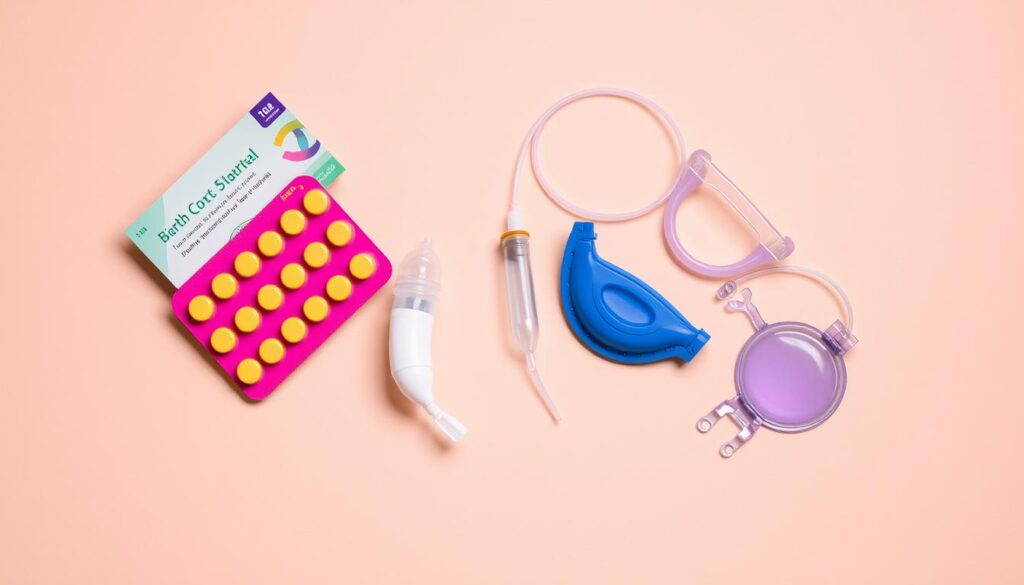
Understanding birth control options is key to making smart choices about reproductive health. Contraceptive methods prevent pregnancy in various ways. They differ in effectiveness and how well they suit individual needs1.
Contraceptive options include barrier methods and hormonal solutions. Your health history, lifestyle, and future plans influence your choice. Some methods need little effort, making them more reliable1.
Long-acting reversible contraceptives (LARCs) are highly effective. These include intrauterine devices and implants. They have a failure rate of less than 1%2.
Your preferences and cultural background matter when picking contraception. Consider convenience, possible side effects, and protection against STIs. These factors should guide your decision1.
Key Takeaways
- Contraceptive methods vary in effectiveness and personal suitability
- LARCs offer highest pregnancy prevention rates
- Personal health and lifestyle impact contraception choice
- Some methods require minimal user intervention
- Comprehensive evaluation is crucial when selecting birth control
Understanding Contraception
Family planning empowers people to make informed choices about their bodies and futures. It allows individuals to prevent unintended pregnancies and control their reproductive decisions. Contraception is a key part of this process.
What is Contraception?
Contraception refers to methods used to prevent pregnancy. These techniques stop sperm from fertilizing an egg. Some options prevent ovulation, while others create barriers or change the body’s reproductive environment3.
Importance of Effective Contraception
Choosing the right contraception method is vital for successful family planning. Different methods offer varying levels of effectiveness.
- Long-acting reversible contraceptives (LARCs) have less than 1% failure rate3
- Hormonal methods typically prevent pregnancy in 91-94% of cases4
- Barrier methods provide moderate protection4
“Understanding your contraception options is key to making informed reproductive health decisions.”
Nearly 50% of pregnancies in the United States are unplanned. This fact shows the critical need for effective contraception3. Reliable birth control helps people avoid surprise pregnancies and space out children.
- Prevent unintended pregnancies
- Space children appropriately
- Improve overall reproductive health
Your health, lifestyle, and needs will shape your best contraception choice. Talk to a healthcare pro to find the right solution for you.
Types of Contraceptive Methods
Contraceptive technology helps you make smart choices about your reproductive health. Various methods prevent pregnancy, each with unique features and success rates5.
Your health, lifestyle, and preferences determine the best contraceptives for you. Let’s look at the main types of contraception methods available.
Hormonal Methods
Hormonal contraception uses man-made hormones to stop pregnancy. These methods work in several ways.
- Stopping ovulation
- Thickening cervical mucus
- Altering uterine environment
Barrier Methods
Barrier methods stop sperm from reaching the egg. Here are some key options:
Intrauterine Devices (IUDs)
IUDs are long-acting reversible contraceptives placed in the uterus. They are highly effective at preventing pregnancy.
| IUD Type | Failure Rate |
|---|---|
| Levonorgestrel IUD | 0.1-0.4%7 |
| Copper T IUD | 0.8%7 |
Permanent Methods
Permanent contraception offers reliable solutions for those who don’t want future pregnancies. These methods are highly effective.
Remember, no single contraceptive method is perfect for everyone. Consulting with a healthcare provider helps you choose the most suitable option.
Contraceptive use is growing worldwide. In 2020, 851 million women used modern methods5.
Understanding these options empowers you to make informed choices about your reproductive health.
Hormonal Contraceptives
Hormonal contraceptives offer reliable protection against unplanned pregnancy. These methods use synthetic hormones to prevent conception. They come in various forms to suit different needs.
Hormonal birth control options include pills, patches, and rings. Each type is designed for different lifestyles. Understanding these choices helps you make informed decisions about your health8.
Birth Control Pills: A Popular Choice
Birth control pills are widely used for contraception. They contain synthetic estrogen and progestin to prevent ovulation8. These pills offer benefits beyond pregnancy prevention.
- Reduce menstrual cramps
- Regulate menstrual cycles
- Lower risk of certain cancers
About seven in 100 users may get pregnant with typical pill use9. Newer formulations have improved safety profiles8.
Patches and Vaginal Rings
Patches and vaginal rings offer convenient alternatives to daily pills. They deliver hormones through the skin or vaginal lining. These methods provide consistent protection against pregnancy8.
Long-Acting Hormonal Solutions
Injectables and implants are highly effective long-term contraceptives. Implants work for up to three years8. Injectable methods like DMPA have low failure rates when used consistently8.
“Choosing the right contraceptive method is a personal decision that requires careful consideration of individual health needs and lifestyle factors.”
Note: Consult healthcare professionals to determine the most suitable hormonal contraception for your specific circumstances.
Barrier Methods
Barrier methods are vital for family planning. They prevent pregnancy by blocking sperm from reaching the egg10. These methods work well when used correctly and consistently10.
Exploring Condoms
Condoms are a popular contraceptive choice. They come in male and female versions, made from various materials. Condoms offer several benefits:
- Protection against sexually transmitted infections11
- Readily available over-the-counter12
- Low-cost contraceptive option
Male latex condoms effectively reduce STI risks, including HIV11. Their typical use effectiveness ranges from 72-88%10.
Diaphragms and Cervical Caps
These internal barriers need careful application. They require a prescription and must be fitted by a healthcare professional12.
When used with spermicide, they are 78-94% effective10.
| Barrier Method | Typical Effectiveness | STI Protection |
|---|---|---|
| Male Condoms | 85% | High |
| Female Condoms | 79% | Limited |
| Diaphragm | 88% | None |
| Cervical Cap | 77% | None |
Important Note: Barrier methods are safe but need careful use. Be aware of possible latex allergies and the need for consistent application12.
“Effective contraception is about finding the method that works best for your individual needs and lifestyle.”
Intrauterine Devices (IUDs)
IUDs are a modern approach to birth control. These small, T-shaped devices offer reliable, long-lasting pregnancy prevention. They require minimal effort from users13.
Types of IUDs: Understanding Your Options
There are two main types of IUDs available. Copper IUDs use metal to prevent pregnancy. Hormonal IUDs release progestin for the same purpose14.
The U.S. has five FDA-approved IUD brands. These are Paragard, Mirena, Kyleena, Liletta, and Skyla13. Each brand offers unique benefits for different needs.
Benefits of Choosing an IUD
IUDs are among the best contraceptives available. They offer remarkable advantages for users.
- 99% effectiveness in preventing pregnancy13
- Long-term protection (3-12 years depending on the type)13
- Quick insertion procedure (typically 15 minutes or less)14
“IUDs offer an exceptional blend of convenience and reliability for modern contraception.” – Reproductive Health Expert
Copper IUDs create an inflammatory response to prevent fertilization14. Hormonal IUDs thicken cervical mucus and may suppress ovulation13.
Important note: IUDs don’t protect against sexually transmitted diseases. For full protection, use condoms along with an IUD13.
Long-Acting Reversible Contraceptives (LARCs)
Long-Acting Reversible Contraceptives (LARCs) are game-changing birth control options. They provide top-notch pregnancy prevention with minimal effort. LARCs offer a reliable solution for those seeking effective contraception.
Understanding LARCs
LARCs are advanced methods offering long-term protection without daily upkeep. They include intrauterine devices (IUDs) and contraceptive implants. These methods prevent pregnancy 99% of the time15.
Advantages of LARCs
LARCs have gained popularity in recent years. IUD use jumped from 2% to 14% among females between 2002 and 201415.
These contraceptives offer several key benefits:
- Highly effective pregnancy prevention
- Long-term protection lasting several years
- No daily maintenance required
- Cost-effective over time
The contraceptive implant is the most effective reversible method. It has a typical-use pregnancy rate of just 0.05%16.
The Colorado Family Planning Initiative saw impressive results. LARC use among young women rose from 5% to 19%. This led to significant drops in birth and abortion rates16.
“LARCs offer an unprecedented level of convenience and reliability in contraception.” – Reproductive Health Experts
LARCs provide an excellent mix of effectiveness and convenience. They offer long-term protection without daily hassle. For many, LARCs are a compelling choice for reliable birth control.
Permanent Contraception Methods
Permanent contraception offers reliable family planning for those not wanting future pregnancies. These surgical procedures provide long-term, highly effective contraception. They’re ideal for individuals and couples seeking definitive birth control solutions.
Permanent contraception involves surgical interventions to prevent pregnancy indefinitely. About one-third of married U.S. couples choose this approach. It’s especially popular among individuals over 30 seeking definitive birth control.
Tubal Ligation
Tubal ligation is a surgical procedure for women that blocks or cuts the fallopian tubes. This method boasts an impressive 99.4% effectiveness rate. Only 0.6% of women may become pregnant after the procedure17.
- Minimally invasive surgical procedure
- Nearly 99% effective in preventing pregnancy
- Fewer than 1% experience major complications17
Vasectomy
Vasectomy is a permanent contraception method for men. It involves cutting or blocking the vas deferens to prevent sperm from entering semen. This procedure offers remarkable effectiveness.
| Metric | Pregnancy Rate |
|---|---|
| One year after vasectomy | Less than 0.2%17 |
| Five years after vasectomy | Approximately 1.1%17 |
Important note: These procedures are considered permanent, but surgical reversal is sometimes possible. However, success isn’t guaranteed. By 12 weeks post-vasectomy, 80% of men achieve azoospermia, making pregnancy extremely unlikely18.
“Permanent contraception offers peace of mind for those certain about their family planning decisions.”
Natural Family Planning
Natural family planning is a unique birth control approach. It relies on understanding your body’s fertility cycles. This method needs careful tracking and commitment to be effective.
Natural family planning monitors specific bodily signs to identify fertile periods. These methods track changes in body temperature, cervical mucus, and menstrual cycles. They help prevent pregnancy without using hormonal or barrier contraceptives.
Overview of Natural Methods
The primary natural family planning techniques include:
- Calendar Method
- Basal Body Temperature Method
- Cervical Mucus Method
- Symptothermal Method
Effectiveness of Natural Family Planning
When used perfectly, fertility awareness methods can be highly effective. They are 91% to 99% effective at preventing pregnancy with precise instruction following19. However, typical use presents a different scenario.
Natural family planning methods have varying effectiveness. Only about 2% of sexually active women ages 15-44 use these methods20. The failure rate can reach up to 25 pregnancies per 100 women annually20.
“Natural family planning requires dedication, precision, and a deep understanding of your body’s fertility signals.”
Different natural methods have varying success rates. The Calendar-based Standard Days Method has a 5% perfect use failure rate. This increases to 8-25% with typical use20.
These methods don’t protect against sexually transmitted infections. They require strict adherence to tracking protocols. Consult a healthcare provider to determine if this option suits your lifestyle and goals.
Emergency Contraception
Emergency contraception prevents unintended pregnancy after unprotected sex or contraceptive failure. It’s a crucial safety net for reproductive health. Understanding these methods helps you make informed decisions.
What is Emergency Contraception?
Emergency contraception is a time-sensitive approach to prevent pregnancy after potential contraceptive mishaps. It can significantly reduce pregnancy risks when used promptly.
Emergency contraception pills can lower pregnancy risk by about 75%. In 100 women with unprotected mid-cycle intercourse, only 2 would become pregnant instead of 821.
Types of Emergency Contraceptives
Multiple contraception methods exist for emergency prevention:
- Emergency Contraceptive Pills (ECPs)
- Copper Intrauterine Devices (IUDs)
| Method | Effectiveness | Time Window |
|---|---|---|
| Levonorgestrel Pills | Pregnancy Rate 1.2-2.1% | Up to 72 hours |
| Ulipristal Acetate | Pregnancy Rate 1.2% | Up to 120 hours |
| Copper IUD | Over 99% Effective | Up to 120 hours |
The copper IUD remains the most effective emergency contraception. It prevents pregnancy over 99% of the time when inserted within 120 hours of unprotected sex22.
Emergency contraception provides a crucial option for preventing unintended pregnancy, but should not replace regular contraceptive methods.
Remember, timing is critical with emergency contraception. The sooner you use these methods after unprotected sex, the more effective they become23.
Factors Influencing Choice of Contraception
Choosing the right contraceptive involves many personal factors. Your health, lifestyle, and needs are key in finding the best family planning options24.
Your unique situation helps in making smart birth control decisions. Different methods fit various life stages and preferences25.
Personal Health Considerations
Your medical history affects contraceptive choices. Important factors to consider include:
- Age and reproductive goals
- Current health conditions
- Potential side effects
- Medication interactions
Effectiveness and Convenience
Contraceptive effectiveness varies widely. Key aspects to think about:
| Contraceptive Method | Perfect Use Effectiveness | Typical Use Effectiveness |
|---|---|---|
| Oral Contraceptives | 99.7% | 92% |
| Condoms | 98% | 85% |
| Intrauterine Device (IUD) | 99.8% | 99.2% |
About 89% of sexually active women use contraception to prevent unplanned pregnancies24. Your choice depends on several factors:
- Sexual relationship characteristics
- Social and economic circumstances
- Personal pregnancy goals
- Partner influences
Choosing a contraceptive method is a personal journey that requires thoughtful evaluation of your unique needs and lifestyle.
Pro tip: Talk to a doctor about the best contraceptive options for your health and family planning goals25.
Conversations about Contraception
Open talks are key for effective contraception. Discussing options with doctors and partners helps make smart choices. Your honesty can greatly affect your health and relationships26.
Be ready to share your health history and preferences with your doctor. Patients who engage more tend to like their chosen method better26. Ask about success rates, side effects, and how to use different options27.
Talking with your partner is just as crucial. Discuss shared duties, likes, and worries about different methods. Some options need both partners to commit for success27.
Being open and respectful can lead to better teamwork in family planning26. This approach helps build a strong foundation for your reproductive health choices.
FAQ
What are the most effective contraception methods?
Long-acting reversible contraceptives (LARCs) top the list of effective methods. These include IUDs and implants, with over 99% effectiveness. Sterilization is a permanent option with similar success rates.
Hormonal contraceptives like birth control pills are also highly effective. When used consistently, they boast success rates between 91% and 99%.
How do I choose the right contraception method for me?
Selecting the ideal contraception method depends on several personal factors. These include your health history, lifestyle, and future pregnancy plans. Potential side effects should also be considered.
A healthcare provider can help you evaluate your options. They’ll consider your individual needs and medical background to find the best fit.
Are barrier methods effective at preventing pregnancy?
Condoms, when used correctly, are about 85% effective. They offer the added bonus of STI protection. Diaphragms and cervical caps, paired with spermicide, can be 78-94% effective.
However, these methods rely on consistent and proper use. Regular practice ensures the best results.
What are long-acting reversible contraceptives (LARCs)?
LARCs provide long-term pregnancy prevention without daily action. These include IUDs and contraceptive implants. They’re over 99% effective and can last 3-12 years.
LARCs are easily reversible, making them a great option. Many individuals find them convenient and reliable.
How do hormonal contraceptives work?
Hormonal contraceptives use synthetic hormones to prevent pregnancy. They suppress ovulation, thicken cervical mucus, or alter the uterine lining.
Methods include daily pills, patches, and vaginal rings. Injectable contraceptives and implants are also available. When used correctly, these methods are highly effective.
What is emergency contraception?
Emergency contraception prevents pregnancy after unprotected sex or contraceptive failure. Emergency contraceptive pills work within 72 hours of unprotected intercourse.
Copper IUDs can be inserted up to 5 days after. These methods are crucial backups, but shouldn’t replace regular birth control.
Can natural family planning be an effective contraception method?
Natural family planning can be effective when used perfectly. Success rates can reach 95-99%. However, typical use effectiveness is lower, around 76-88%.
These methods require careful tracking of fertility signs. Consistent monitoring and abstinence during fertile periods are crucial.
What are permanent contraception methods?
Permanent contraception includes tubal ligation for women and vasectomy for men. These surgical procedures are over 99% effective in preventing pregnancy.
They suit those certain about not wanting future pregnancies. Reversal is sometimes possible but not guaranteed.
Source Links
- Birth control options: Things to consider – https://www.mayoclinic.org/healthy-lifestyle/birth-control/in-depth/birth-control-options/art-20045571
- Contraception Explained: Birth Control Options for Teens & Adolescents – https://www.healthychildren.org/English/ages-stages/teen/dating-sex/Pages/Birth-Control-for-Sexually-Active-Teens.aspx
- Contraception – StatPearls – NCBI Bookshelf – https://www.ncbi.nlm.nih.gov/books/NBK536949/
- Contraceptive Options and Effectiveness – Most or Moderately Effective Contraception – https://opa.hhs.gov/contraceptive-options-and-effectiveness-highlight1-text-only
- Family planning/contraception methods – https://www.who.int/news-room/fact-sheets/detail/family-planning-contraception
- Birth Control: Forms, Options, Risks & Effectiveness – https://my.clevelandclinic.org/health/articles/11427-birth-control-options
- Contraception and Birth Control Methods – https://www.cdc.gov/contraception/about/index.html
- Patient education: Hormonal methods of birth control (Beyond the Basics) – https://www.uptodate.com/contents/hormonal-methods-of-birth-control-beyond-the-basics/print
- Combined Hormonal Contraceptives – https://www.cdc.gov/contraception/hcp/usspr/combined-hormonal-contraceptives.html
- Barrier Methods of Birth Control | Cigna – https://www.cigna.com/knowledge-center/hw/barrier-methods-of-birth-control-zm2456
- Appendix E: Classifications for Barrier Methods – https://www.cdc.gov/contraception/hcp/usmec/barrier-methods.html
- Birth Control Methods and Choices – https://health.alaska.gov/dph/wcfh/Pages/informedconsent/familyplanning/barrier.aspx
- IUD Birth Control | Info About Mirena & Paragard IUDs – https://www.plannedparenthood.org/learn/birth-control/iud
- Intrauterine Device (IUD): Birth Control, Use & Side Effects – https://my.clevelandclinic.org/health/treatments/24441-intrauterine-device-iud
- LARC (Long-Acting Reversible Contraceptive): Overview – https://my.clevelandclinic.org/health/treatments/23269-larc
- Long-Acting Reversible Contraception Implants and Intrauterine Devices – https://www.acog.org/clinical/clinical-guidance/practice-bulletin/articles/2017/11/long-acting-reversible-contraception-implants-and-intrauterine-devices
- Permanent Contraception – Women’s Health Issues – Merck Manual Consumer Version – https://www.merckmanuals.com/home/women-s-health-issues/family-planning/permanent-contraception
- Permanent Contraception – https://www.cdc.gov/contraception/hcp/usspr/permanent-contraception.html
- Natural family planning – https://www.nhs.uk/contraception/methods-of-contraception/natural-family-planning/
- Natural Family Planning as a Means of Preventing Pregnancy | KFF – https://www.kff.org/womens-health-policy/fact-sheet/natural-family-planning-as-a-means-of-preventing-pregnancy/
- Emergency Contraception – “Morning After Pill” – https://yalehealth.yale.edu/topic/emergency-contraception-morning-after-pill
- Emergency contraception review: evidence-based recommendations for clinicians – https://pmc.ncbi.nlm.nih.gov/articles/PMC4216625/
- Emergency contraception – https://www.who.int/news-room/fact-sheets/detail/emergency-contraception
- Factors Associated with Contraceptive Choice and Inconsistent Method Use, United States, 2004 – https://www.guttmacher.org/journals/psrh/2008/factors-associated-contraceptive-choice-and-inconsistent-method-use-united
- Factors influencing the contraceptive method choice: a university hospital experience – https://pmc.ncbi.nlm.nih.gov/articles/PMC3939130/
- Contraceptive Counseling: Best Practices to Ensure Quality Communication and Enable Effective Contraceptive Use – https://pmc.ncbi.nlm.nih.gov/articles/PMC4216627/
- Counseling Adolescents About Contraception – https://www.acog.org/clinical/clinical-guidance/committee-opinion/articles/2017/08/counseling-adolescents-about-contraception