
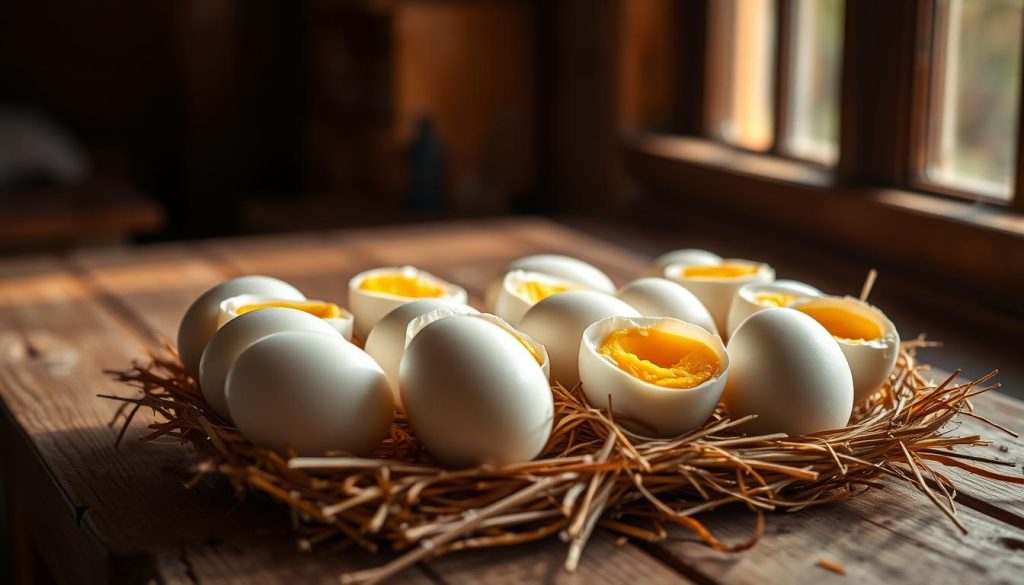
Egg safety is vital to avoid foodborne illness. Hard-boiled eggs have specific rules for temperature and time. These rules are essential for every home cook to understand.
Unrefrigerated hard-boiled eggs can quickly become unsafe. The USDA has strict guidelines for these protein-packed snacks. They should not be left out for more than two hours at room temperature.
If temperatures reach 90°F, the safe window shrinks to just one hour. Bacteria grow fast in the “danger zone” between 40°F and 140°F1.
Proper storage is key to preventing food-related illnesses. Refrigeration is the best way to keep hard-boiled eggs safe longer2.
Key Takeaways
- Hard-boiled eggs can only sit out for 2 hours maximum
- Temperatures above 90°F reduce safe time to 1 hour
- Refrigeration extends egg safety up to one week
- Always check for signs of spoilage before consuming
- Store eggs at 40°F or colder for optimal safety
Understanding Food Safety for Hard-Boiled Eggs
Food safety is vital for protein-rich foods like farm-fresh eggs. Hard-boiled eggs are tasty and nutritious. Proper handling keeps them safe to eat.
The Danger Zone Temperature Range
Eggs can harbor bacteria when left at unsafe temperatures. Harmful bacteria thrive between 40°F and 140°F. This range is called the “danger zone” for food safety3.
Don’t leave hard-boiled eggs out for more than two hours. Doing so increases the risk of bacterial growth4.
- Keep eggs refrigerated at 40°F or below
- Discard eggs left at room temperature for over 2 hours
- Reduce risk of foodborne illness by proper storage
Impact of Shell Porosity on Bacterial Growth
Eggshells have tiny pores that can let bacteria in, even after cooking. This makes proper storage crucial for hard-boiled eggs. The microscopic pores in eggshells can become potential entry points for harmful microorganisms.
Signs of Egg Spoilage
Knowing when eggs have gone bad is key to food safety. Watch for these warning signs:
- Unusual or sulfur-like odor
- Discoloration of the egg white or yolk
- Sour or off taste
- Visible mold growth
Food safety begins with careful observation and proper storage techniques.
Properly stored hard-boiled eggs can last up to a week in the fridge5. Understanding these tips helps you enjoy eggs safely.
Proper Storage Methods for Maximum Freshness
Storing hard-boiled eggs correctly is crucial for meal prep success. The middle shelf of your fridge offers the best temperature for these protein-packed snacks. Careful handling ensures quality and safety.
Cool eggs quickly in an ice bath to prevent overcooking and reduce bacteria risks. Unpeeled eggs protect against contamination and unwanted fridge odors. For peeled eggs, use a damp paper towel to keep them moist6.
Choose airtight containers to seal in freshness. Hard-boiled eggs last up to a week in the fridge. They’re great for meal prep strategies.
Always check for spoilage before eating. Store-bought pre-packaged eggs might last longer6. Keep eggs below 40°F to slow bacterial growth.
These storage tips will keep your hard-boiled eggs fresh and safe. They’ll remain a tasty, nutritious addition to your meals7.
FAQ
How long can hard-boiled eggs be left unrefrigerated?
Hard-boiled eggs should be refrigerated within 2 hours. In warm environments above 90°F, this time reduces to 1 hour. Leaving them out longer increases the risk of foodborne illness.
Are hard-boiled eggs more prone to bacterial growth than raw eggs?
Yes, hard-boiled eggs can be more vulnerable to bacteria. Cooking kills initial bacteria, but the eggshell remains porous. Peeling removes the egg’s natural protective coating, making it more susceptible to bacterial growth.
How can I tell if a hard-boiled egg has gone bad?
Look for these signs of spoilage:
– Unusual or sulfurous odor – Slimy or chalky texture – Discoloration or dark spots on the egg white or yolk – Unusual appearance or separation of egg components
What’s the best way to store hard-boiled eggs?
For maximum safety and freshness:
– Refrigerate immediately after cooking – Store in an airtight container – Keep at or below 40°F – Consume within 7 days – Store with shells on for better protection
Is there a difference between farm-fresh and store-bought eggs in terms of safety?
Farm-fresh eggs may have a slightly different bacterial risk profile. Store-bought eggs are usually washed and sanitized. Farm-fresh eggs keep their natural protective bloom. All hard-boiled eggs need the same food safety care.
Can I use hard-boiled eggs in meal prep?
Absolutely! When preparing hard-boiled eggs for meal prep:
– Peel eggs just before use – Store in sealed containers – Keep refrigerated – Use within 3-5 days – Check for any signs of spoilage before consuming
What happens if I accidentally leave hard-boiled eggs out overnight?
Discard hard-boiled eggs left out for more than 2 hours. In warm temperatures, throw them away after 1 hour. Even if they seem fine, the risk of food poisoning is too high.
Source Links
- This Is How Long Hard-Boiled Eggs Can Sit Out Unrefrigerated | Livestrong.com – https://www.livestrong.com/article/520934-how-long-can-hard-boiled-eggs-be-left-unrefrigerated/
- Here’s How Long Hard-Boiled Eggs Last Before Going Bad – https://www.countryliving.com/food-drinks/a27006089/do-hard-boiled-eggs-go-bad/
- What You Need to Know About Egg Safety – https://www.fda.gov/food/buy-store-serve-safe-food/what-you-need-know-about-egg-safety
- PSA: You Should Really Throw Out Hard-Boiled Eggs After One Week – https://www.goodhousekeeping.com/food-recipes/cooking/a32020400/how-long-do-hard-boiled-eggs-last/
- How Long Do Hard Boiled Eggs Last In The Fridge? A Complete Guide – https://www.thedplg.com/gas-grief-fades/how-long-do-hard-boiled-eggs-last-in-the-fridge-a-complete-guide.html
- How to Store Hard-Boiled Eggs So They Stay Fresh for Up to a Week – https://www.marthastewart.com/8310926/how-to-store-hard-boiled-eggs
- How Long Can Eggs Sit Out? – Keep Food Safe – https://keepfoodsafe.org/blog/how-long-can-eggs-sit-out/

