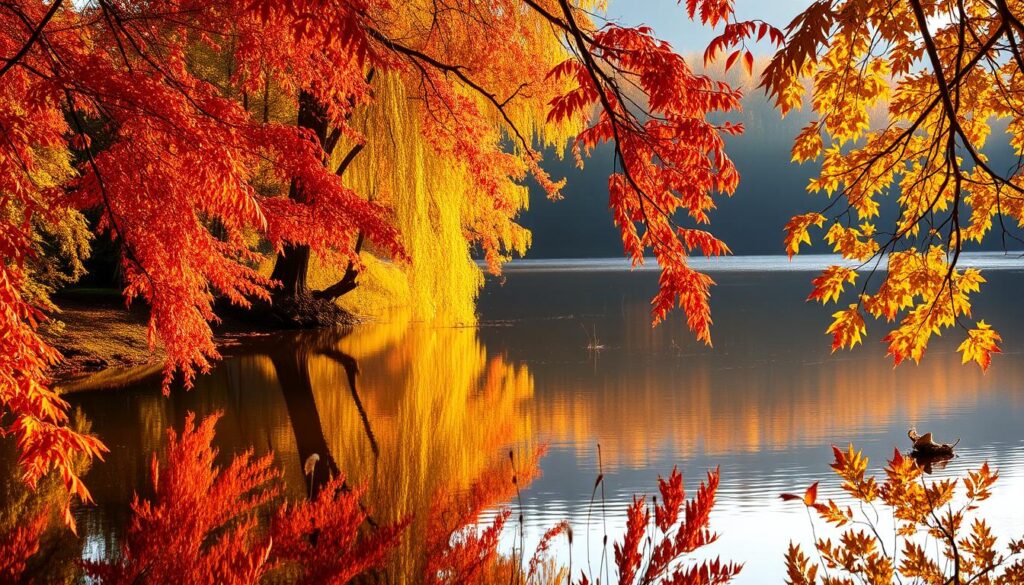
Fall paints landscapes with vibrant hues. Photographers can seize this chance to immortalize nature’s seasonal masterpiece. Capturing autumn’s beauty requires skill in seasonal landscape photography.
The right gear is crucial for autumn photography. A 100mm f2.8 macro lens is great for detailed shots. Try different lenses to showcase fall’s intricate color palette.
Timing is everything when shooting fall colors. Peak foliage times vary yearly, so plan ahead. Scout locations and study how light affects your autumn photos.
Key Takeaways
- Master specialized photography techniques for autumn landscapes
- Choose the right lens for capturing fall foliage details
- Understand seasonal color variations
- Experiment with different lighting conditions
- Prepare for rapidly changing autumn photography opportunities
Understanding Autumn Colors: What to Expect
Autumn paints landscapes with vibrant hues, captivating photographers and nature lovers. Trees shed their green coats, revealing nature’s hidden palette. This seasonal spectacle invites us to explore the science behind it.
The Science Behind Autumn Foliage
As days shorten and cool, trees undergo a chemical transformation. Chlorophyll breaks down, unveiling hidden yellow and orange pigments1.
Some trees produce additional red pigments during this process. This creates a stunning display of autumn colors.
- Pigment changes reveal hidden colors
- Temperature and sunlight influence color intensity
- Different tree species produce unique color variations
Regions Known for Vibrant Colors
Some regions offer spectacular autumn displays. The northeastern United States, especially New England, provides impressive fall color experiences2.
The Midwest and Rocky Mountains also showcase remarkable autumn transformations. Each area has its own unique color characteristics.
| Region | Color Characteristics |
|---|---|
| New England | Intense reds, bright oranges |
| Midwest | Warm golden yellows |
| Rocky Mountains | Muted earth tones |
“Autumn is a second spring when every leaf is a flower.” – Albert Camus
Knowing these color patterns helps plan perfect autumn photo trips. It also enhances appreciation for nature’s beauty around us.
Best Times to Experience Autumn Colors
Autumn transforms landscapes into breathtaking displays of nature’s palette. Capturing perfect colorful scenery requires careful timing and planning. Foliage tours offer exciting adventures for outdoor enthusiasts and photographers alike3.
Autumn’s color progression varies across regions, creating unique harvest hues. Leaves can change color from mid-September to early November. Peak times typically occur in the second and third weeks of October3.
Seasonal Changes and Timing
Understanding fall color timing helps plan the perfect leaf-viewing experience. Here’s a regional breakdown of autumn color progression:
- Northern Tier States: Color changes begin by late September3
- New England and Pacific Northwest: Peak colors around October 113
- Blue Ridge Mountains: Peak colors mid-October3
- Northeast: Best viewing late September to early October4
- Midwest: Ideal viewing throughout October4
- West: Peak period in late October4
- South: Optimal viewing early to mid-November4
Planning Your Outdoor Adventures
To maximize your autumn color experience, consider these tips:
- Check local foliage prediction maps
- Plan visits during peak color weeks
- Explore areas with diverse tree species
- Photograph during early morning or late afternoon for best lighting
Pro tip: Deciduous trees like oak, birch, and beech offer the most spectacular color displays3.
Remember, the beauty of autumn is fleeting – plan ahead to capture the most stunning colorful scenery!
Techniques for Capturing Autumn Colors in Photography
Autumn photography requires specific skills to transform vibrant scenes into stunning memories. Understanding essential techniques will elevate your fall photography. Let’s explore how to capture Nature’s Palette effectively.
Selecting Your Photography Gear
The right equipment is crucial for capturing vibrant autumn landscapes. Key tools include a sturdy tripod and wide-angle lens. These help create stable shots and expansive views.
A telephoto lens is great for detailed scenes5. A circular polarizing filter enhances colors6.
Mastering Composition and Lighting
Successful autumn photography needs strategic approaches. Utilize golden hour lighting for warm, soft tones. Experiment with sidelight and backlighting for dramatic effects6.
Look for unique reflection opportunities in water bodies5. Capture seasonal transition moments to show nature’s changing colors5.
- Utilize golden hour lighting
- Experiment with sidelight and backlighting6
- Look for unique reflection opportunities5
- Capture seasonal transition moments5
“Photography is about capturing the essence of a moment, and autumn offers a canvas of extraordinary beauty.” – Professional Landscape Photographer
Creative Editing Techniques
Transform raw images into breathtaking autumn scenes with careful editing. Adjust white balance for warm tones. Use graduated filters to balance exposure.
Experiment with intentional camera movement for unique effects5. This technique can create abstract, artistic images.
- Adjust white balance for warm tones
- Use graduated filters to balance exposure
- Experiment with intentional camera movement5
| Technique | Best Use | Recommended Settings |
|---|---|---|
| Slow Shutter Movement | Abstract Autumn Images | 1-second exposure5 |
| Polarizing Filter | Color Enhancement | Reduce glare, intensify colors6 |
| Focal Length | Detailed Landscapes | 200-260mm range5 |
Capturing autumn’s beauty blends technical skill with creative vision. Practice and experiment with these techniques. Enjoy documenting Nature’s Palette in all its glory.
Enjoying Autumn Colors Beyond Photography
Autumn colors offer more than just photo opportunities. Your creative journey can extend to inspiring art projects and memorable experiences. Engaging with the season differently helps you appreciate the rich, evolving landscape.
Creative Fall Art Projects
Try making unique art pieces that celebrate leaf peeping. Press colorful leaves between wax paper to preserve their vibrant hues. Design a mixed-media collage featuring autumn’s diverse textures.
These projects capture fall colors in a personal way. You might discover new views by focusing on smaller details within the landscape.
Outdoor Adventures and Social Experiences
Gather friends for a scenic autumn trip through state parks or local trails. Plan a fall color viewing adventure with hiking, picnicking, or cycling.
These group activities showcase fall’s dynamic color palette. They also create lasting memories of the season’s natural beauty7.
FAQ
When is the best time to photograph autumn colors?
Autumn colors peak from late September to mid-October in northern areas and higher elevations. The colors move southward through November. Peak times usually last only a week or two.
Check local fall foliage maps and forestry websites for precise timing in your area.
What equipment do I need for autumn photography?
Key equipment includes a sturdy tripod, polarizing filter, and wide-angle and telephoto lenses. The polarizing filter boosts color saturation. Different lenses capture both sweeping landscapes and detailed close-ups of fall foliage.
Why do leaves change color in autumn?
As days shorten and cool, chlorophyll breaks down in leaves, revealing hidden yellow and orange pigments. Some trees produce new red pigments during this process. Temperature, moisture, and sunlight affect the intensity of autumn colors.
Which regions have the most vibrant fall colors?
The northeastern United States, especially New England, offers spectacular autumn displays. Parts of the Midwest and Rocky Mountains also provide stunning fall foliage. Areas with diverse trees and distinct seasons create the most colorful landscapes.
How can I improve my autumn photography techniques?
Use golden hour lighting in early morning or late afternoon. Try composition techniques like the rule of thirds. Use a polarizing filter to enhance color saturation.
Experiment with different perspectives, including close-ups of leaves and wide landscape shots.
What factors affect the intensity of autumn colors?
Color intensity depends on temperature, moisture levels, sunlight exposure, and tree types. Cool nights, sunny days, and adequate moisture typically produce the most vibrant fall colors.
How long do autumn colors typically last?
Peak fall colors usually last only 7-14 days in any given location. The exact duration depends on local climate, tree types, and elevation. This short window makes timing crucial for capturing spectacular displays.
What are some creative ways to enjoy autumn colors?
Create fall-themed art projects like leaf pressing. Organize group hikes or scenic drives. Host color viewing parties. Enjoy outdoor activities like cycling, camping, or canoeing amid beautiful autumn landscapes.
Source Links
- The 12 Color Seasons: Autumn and its Subsets – https://goplaycosmetics.com/blogs/colorcreateloveplay/the-12-color-seasons-autumn-and-its-subsets?srsltid=AfmBOop0pHuo72VwanVXT_erBUlNY1abd1s4YQXZ8iVkX7veMfJaf9M4
- The seasonal sub-types – Autumn – https://www.kettlewellcolours.co.uk/seasonal-blog/2018/the-seasonal-sub-types-autumn
- 2024 Fall Foliage Color Map: When is Peak Foliage? – https://www.almanac.com/fall-foliage-color-map-when-peak-foliage
- The Best Time to See the Leaves Change, According to Where You Live – https://theeverygirl.com/when-leaves-change/
- 8 Tips for Capturing Fall Colors — Kristen Ryan Photography – https://kristenryanphotography.com/blog/2020/10/2/8-tips-for-capturing-fall-colors
- Fall Photography Essentials: Techniques for Capturing the Season’s Splendor – https://fstoppers.com/nature/fall-photography-essentials-techniques-capturing-seasons-splendor-679779
- Making the Most of Autumn: Essential Lessons for Nature Photographers — Sarah Marino & Ron Coscorrosa Photography – https://smallscenes.com/blog/making-the-most-of-autumn-nature-photography