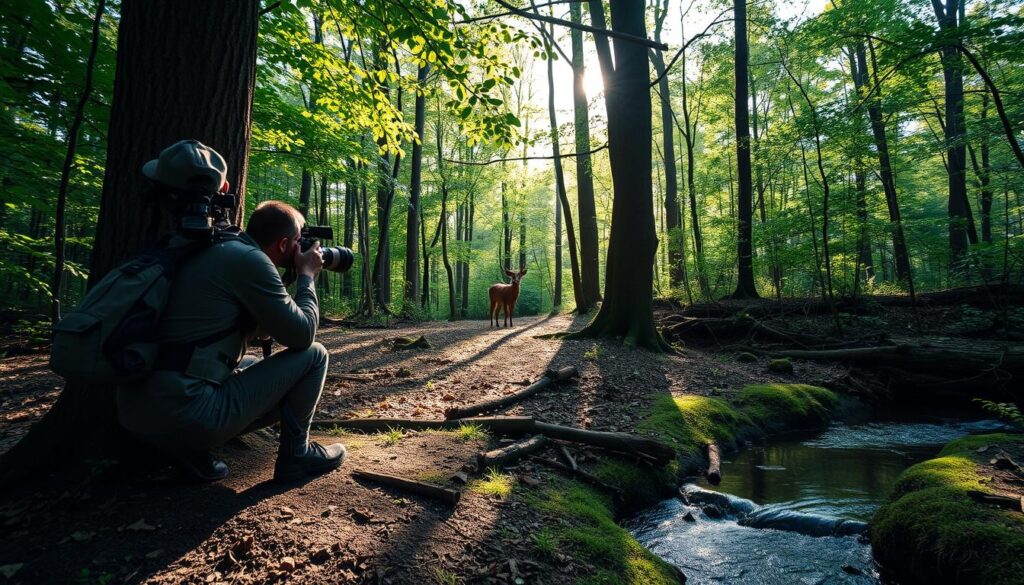
Wildlife photography captures nature’s intimate moments. It demands respect for animals and their habitats. Careful planning and safety principles are essential for this exciting adventure.
Safety should be your top priority in the wilderness. Bring a companion for protection and support. Pack essential navigation and communication tools for successful wildlife encounters1.
Gear selection is crucial for stunning images and safe distances. A DSLR with a long lens helps photograph animals without disturbing them. National parks provide guidelines for appropriate distances from wildlife2.
Carry emergency devices, offline maps, and learn the terrain. Solar-powered smartwatches with GPS can track your location and provide photo coordinates. Always pack a first aid kit and emergency contacts1.
Key Takeaways
- Always travel with a photography companion for safety
- Use long focal length lenses to maintain safe distances
- Carry emergency communication and navigation tools
- Respect wildlife behavior and park guidelines
- Prepare comprehensive safety equipment before expeditions
Understanding Wildlife Behavior
Wildlife photography needs more than technical skills. It requires understanding animal behavior and respecting their habitat. Success comes from observing keenly and preparing wisely for the backcountry3.
The Importance of Observation
Patience is key for successful wildlife photographers. Study the species’ traits and environment before shooting. Research helps predict animal movements and understand their behaviors4.
- Watch documentaries about target species
- Study habitat patterns
- Learn seasonal migration routes
- Understand breeding behaviors
Signs of Stress in Animals
Recognizing animal stress signals is vital for bear awareness and hiking safety. Animals show stress through body language, sounds, or sudden movements.
Key stress indicators include:
| Stress Signal | Potential Meaning |
|---|---|
| Ears pinned back | Defensive posture |
| Rapid movement | Feeling threatened |
| Unusual silence | Potential danger nearby |
When to Keep Your Distance
Pro wildlife photographers know the value of safe distances. Some parks have specific viewing rules. Stay 25 yards from most wildlife and 100 yards from predators like bears and wolves3.
Olympic National Park requires at least 50 yards for wildlife viewing3. Your main goal should be protecting yourself and the animals.
“Respect the wild, and the wild will respect you.” – Wildlife Photography Wisdom
Never approach, feed, or disturb wildlife. Keeping a safe distance ensures everyone’s safety4.
Essential Equipment for Wildlife Photography
Wildlife photography requires special gear to capture fleeting moments in tough environments. The right equipment can turn amateur snapshots into professional-quality images. Wildlife photography experts stress the importance of proper preparation and investment.
Choosing the Right Camera Gear
Top wildlife photographers use high-performance cameras. Models like Nikon Z9, Canon EOS R3, and Sony A1 offer incredible features for wildlife scenes5.
Your camera should have fast autofocus and high shutter frame rates. It should also perform well in low-light conditions to track unpredictable animal movements6.
Recommended Lenses for Close-Ups
Lens choice is crucial for wildlife photography. Consider these lens types:
- Telephoto lenses for distant subjects
- Wide-angle lenses for environmental shots
- Macro lenses for detailed wildlife close-ups5
Pro tip: A telephoto lens helps you maintain a safe distance from wildlife while capturing intimate details.
Accessories to Enhance Your Photos
Smart accessories can take your wildlife photography to the next level:
| Accessory | Purpose |
|---|---|
| Circular Polarizer | Reduce glare, enhance color saturation |
| Extra Batteries | Ensure uninterrupted shooting in remote locations5 |
| Tripod | Stabilize shots, especially with heavy telephoto lenses |
Wildlife deterrents like bear spray are vital for photographer safety during outdoor shoots. Always put your safety first while respecting the animals’ natural habitat.
Best Practices for Safe Wildlife Photography
Wildlife photography demands careful planning and respect for animal homes. Your approach trumps expensive gear when capturing amazing wildlife shots. Ethical practices protect animals and their habitats, turning your photos into conservation tools7.
Keeping a safe distance is vital for wildlife interactions. Follow guidelines from trusted groups like Audubon Society and National Geographic7. Check for drone and photo rules in parks and wild areas.
Pack survival essentials for outdoor shoots. Bring a water straw, fire starter, flashlight, knife, compass, and waterproof map8. These items ensure your safety in the wild.
Learn wildlife behavior for better campsite security. Use natural cover for unobtrusive shots. Blend into the surroundings using terrain features. Follow Leave No Trace Principles to preserve habitats7.
Document wildlife without disturbing their natural patterns. Walk away if animals show stress or discomfort. Put the animal’s well-being before the perfect photo.
Responsible wildlife photography supports conservation efforts. It creates meaningful, ethical images that honor nature7. Your work can make a positive impact on wildlife and their homes.
FAQ
What’s the best time of day for wildlife photography?
Early morning is ideal for wildlife photography. The light is beautiful, and fewer people are around. This time offers softer lighting that enhances your wildlife images.
What essential camera equipment do I need for wildlife photography?
You’ll need a camera with a long lens, like a Nikon 200-400mm F4 with a Nikon D500. A sturdy tripod with a gimbal head is crucial for stability.
Look for features such as fast autofocus, high shutter frame rate, and good high ISO performance.
How can I prepare for a wildlife photography session?
Charge your batteries, clean your equipment, and choose appropriate clothing. Research the specific wildlife and location beforehand.
Study animal habitats, migration patterns, and seasonal behaviors. Watch documentaries to learn about the species you hope to photograph.
What camera settings work best for wildlife photography?
Use shutter priority mode, auto ISO, and dynamic autofocus. Set your shutter speed to at least the focal length of your lens.
Pay attention to the exposure triangle: shutter speed, aperture, and ISO. Aim for a shutter speed that captures quick animal movements.
Where are some good locations for wildlife photography?
Great spots include national parks like Yellowstone, Maasai Mara, and Serengeti. Local options are Hawk Island Park and Lansing River Trail.
You can also try Fenner Nature Center or Lake Lansing. Always respect wildlife and keep a safe distance.
How close should I get to wildlife when photographing?
Always maintain a safe and respectful distance. Use a long lens to capture close-up shots without approaching the animal.
Watch for signs of stress and be ready to leave if the animal seems uncomfortable. Follow Leave No Trace principles.
What’s the most important skill in wildlife photography?
Patience is crucial. Wildlife photography often requires waiting for long periods to capture unexpected moments.
Learn to observe animal behavior and anticipate movements. Be flexible with your composition and subject choices.
How can I improve my wildlife photography technique?
Practice getting eye-level with your subjects for engaging compositions. Study animal body language to anticipate action.
Invest time in understanding your equipment. Learn about the wildlife you’re photographing. Remember, good technique matters more than expensive gear.
Source Links
- Wildlife Photography Safety Tips – https://photographylife.com/wildlife-photography-safety-tips
- How to Be Respectful and Safe Photographing Wildlife – https://digital-photography-school.com/how-to-be-respectful-and-safe-photographing-wildlife/
- 7 Ways to Safely Watch Wildlife – Watching Wildlife (U.S. National Park Service) – https://www.nps.gov/subjects/watchingwildlife/7ways.htm
- Strategies for safe, responsible engagement with wildlife – https://record.umich.edu/articles/strategies-for-safe-responsible-engagement-with-wildlife/
- What to Take on a Wildlife Photography Trip – https://photographylife.com/wildlife-photography-trip-equipment
- Wildlife Photography Gear and Accessories — Kevin Pepper Photography – https://www.kevinpepperphotography.com/wildlife-photography-gear-and-accessories
- Ethical Wildlife Photography Practices – https://wdfw.medium.com/ethical-wildlife-photography-practices-7e3ce6a65259
- Outdoor and Wildlife Photography Safety – https://fstoppers.com/animal/outdoor-and-wildlife-photography-safety-369667