
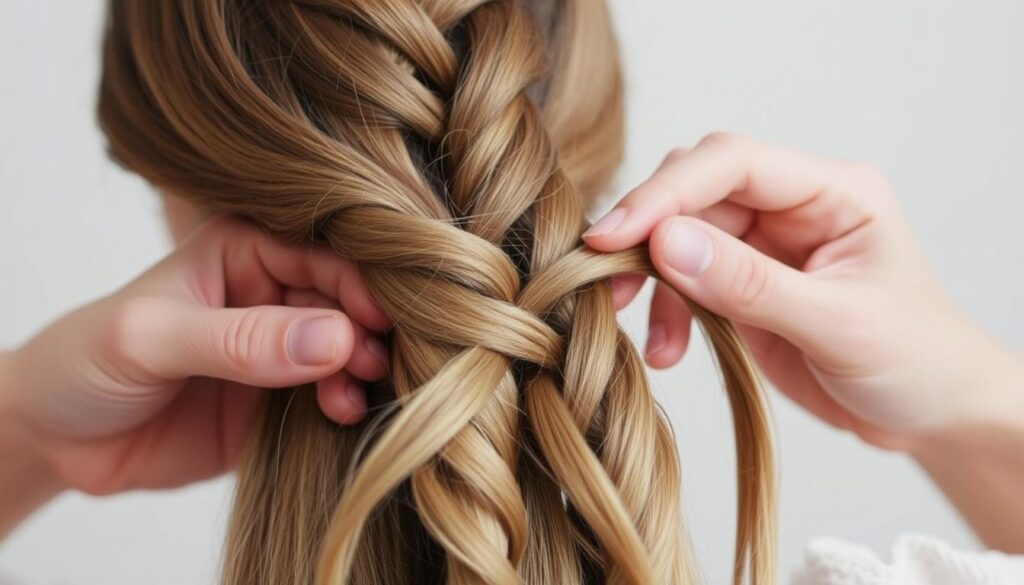
Mastering the basic hair braid is a game-changer for your styling skills. It’s a simple technique that can elevate your look for any occasion1.
This guide will teach you the three-strand braid technique. You’ll learn how to create polished and stylish braids with ease2.
Braiding is more than just a hairstyle – it’s an art form. With practice, you can move from basic braids to more complex styles1.
Key Takeaways
- Learn the fundamental three-strand braid technique
- Understand different hair parting methods
- Practice proper hair preparation before braiding
- Master the basic steps of hair braiding
- Explore various braid styles for different occasions
Introduction to Basic Hair Braiding
Braiding hair transforms simple strands into stunning hairstyles. It’s an art form with various styles like French braids, fishtails, and cornrows. Understanding the basics is key to creating beautiful braids3.
Essential Supplies for Braiding
To start braiding hair, you’ll need a few tools. Here’s what to gather:
- Wide-toothed comb
- Hair brush
- Hair ties
- Styling cream
- Detangling spray
Understanding Hair Texture
Your hair’s texture greatly impacts braiding success4. Fine hair may need a texturizing spray for better grip. Thick hair works well with smoothing products5.
Different hair types suit specific braid styles. Here’s a quick guide:
| Hair Type | Recommended Braid Style |
|---|---|
| Fine Hair | Tight fishtail or dutch braid |
| Thick Hair | Chunky box braids or cornrows |
Creating the Perfect Braiding Environment
Choose a spot with good lighting and a large mirror. For beginners, slightly damp hair is easier to manage5. Braiding works best on hair that’s not freshly washed.
Natural oils help hold the style better3. This makes your braids last longer and look more polished.
Pro tip: Practice makes perfect when learning to braid!
Try different braiding techniques to find what suits your hair type. Explore various styles to discover your personal favorites3.
Step-by-Step Tutorial for a Basic Braid
Braiding your hair can transform your look with simple techniques. Creating a perfect three-strand braid is an essential hair styling skill. With practice, anyone can master this art form6.
Preparing Your Hair for Braiding
Start with smooth, tangle-free hair. Use a wide-tooth comb to remove knots gently. Work from the ends to the roots.
For frizzy hair, consider using an anti-frizz spray. This will help control flyaways and make braiding easier7.
- Brush hair thoroughly
- Remove all tangles
- Apply hair product if needed
The Braiding Technique Explained
The classic three-strand braid is a fundamental technique. It’s the foundation for many hairstyles6. Begin by dividing your hair into three equal sections.
Your goal is to create a smooth, even braid. Do this by crossing sections over each other systematically.
- Separate hair into three equal sections
- Cross right section over the middle
- Cross left section over the new middle
- Repeat until you reach the end of your hair
Securing Your Braid
Finish your braid with a small elastic band. For a relaxed look, gently pull the braid’s edges. This creates volume and softness.
Practice is key to perfecting your braid. Don’t get discouraged if it’s not perfect at first. Learn more braiding techniques6.
“Braiding is an art that improves with each attempt”
Different hair types might need slight adjustments. Experiment with various braiding styles. Find what works best for your hair6.
Tips and Tricks for Perfecting Your Braid
Mastering braiding takes practice and attention to detail. Learn common pitfalls and how to avoid them for better results. Simple three-strand braids or complex dreadlocks styles can elevate your hair game89.
Common Mistakes to Avoid
Proper technique prevents hair damage. Don’t braid too tightly to avoid scalp pain and breakage. Braid dry hair to reduce mold growth and damage risks8.
Keep tension even throughout your braid for a polished look10.
Accessorizing Your Braid
Spice up your hair styling with decorative elements. Add ribbons, flowers, or hair clips for visual appeal. For special events, try metallic accents or beads9.
ZALA hair extensions offer over 25 shades for ultra-thick, standout braids10.
Maintaining Your Braid Throughout the Day
Sleep on a silk pillowcase to keep your braid fresh. Use light hold hairspray or smoothing cream for flyaways. Protect box braids or dreadlocks with a satin scarf at night8.
Touch up edges with a small brush and styling gel for a neat look8.
FAQ
How long does it take to learn basic braiding?
You can learn a basic three-strand braid in about 15-30 minutes. Most people feel comfortable after 3-5 attempts. Don’t worry, muscle memory develops quickly with practice.
What hair length works best for braiding?
Shoulder-length hair or longer works best for beginners. Shorter hair can be tricky for full braids. Longer hair offers more options for different braiding styles.
Can I braid wet hair?
It’s best to avoid braiding wet hair. Wet braids can lead to mold growth and hair damage. Work with dry or slightly damp hair for the best results.
How do I prevent my braid from falling apart?
Use a small amount of hair gel or texturizing spray for grip. Secure the end with a matching hair tie. Maintain consistent tension while braiding.
For fine hair, use light-hold hairspray to keep flyaways in place.
What’s the difference between a French braid and a regular braid?
A regular braid uses fixed sections of hair from start to finish. A French braid adds hair to each section as you go. This creates an intricate look starting at the crown.
How can I make my braid look fuller?
Gently pull on the braid’s edges for a fuller, relaxed look. Use texturizing spray for fine hair before braiding. For thick hair, use smoothing cream to control volume.
How do I care for my braid overnight?
Use a silk or satin pillowcase to reduce friction and prevent frizz. For longer braids, wear a satin bonnet or scarf while sleeping.
Can I braid different hair textures?
Yes! Each hair texture needs different preparation. Fine hair may need texturizing spray. Thick or curly hair benefits from smoothing products. Work with your natural texture and use the right products.
Source Links
- How to Braid Your Own Hair: A Beginner’s Guide – https://www.wikihow.com/Braid-Your-Own-Hair
- How to Braid Your Own Hair: A Step-by-Step Guide for Beginners – https://www.ipsy.com/blog/how-to-braid-your-own-hair
- Basic Braids 101: A Step-By-Step Guide To Easy Styles – https://jvnhair.com/blogs/under-the-dryer/basic-braids-101-a-step-by-step-guide-to-easy-styles
- Hair Braiding for Absolute Beginners – https://www.instructables.com/How-to-Braid-Your-Own-Hair/
- How to Braid Hair: 10 Techniques (With Videos) – https://www.wikihow.com/Braid-Hair
- How To Braid Hair: 7 Types You Can Learn At Home – https://www.southernliving.com/fashion-beauty/hairstyles/how-to-braid-hairstyles?srsltid=AfmBOooQQFyZ8typxqomltTCQICCnc1_VG7m7arKc47WV044wf3hVnkH
- Easy Side Braids for Long Hair – https://www.lucismorsels.com/easy-small-side-braid-hairdo-tutorial/
- How to Braid Hair: The Ultimate Guide for Beginners – https://aiirprofessional.com/blogs/braids/how-to-braid?srsltid=AfmBOoq032yB7-LyU4J_Sq9ILwILjxNsjtwhvOF1sGJo7Jlztff4iUn_
- Learn these 5 Braid Techniques – https://www.tymestyle.com/blogs/lifetyme-blog/learn-these-5-braid-techniques?srsltid=AfmBOoqNlCfIxrxdiNgk9ZpyFTO-h7HBJ8_tcKR1PyR6IW9h36OsIv8i
- Braid Hacks | Tips & Tricks for the Perfect Braids – Zala Hair – https://zalahair.com/blogs/styling/braid-hacks?srsltid=AfmBOoqOKdruwoMuMlorxYJGz_CLh9TRbywuJT5bC9iqUbfDapSfy0aU

