
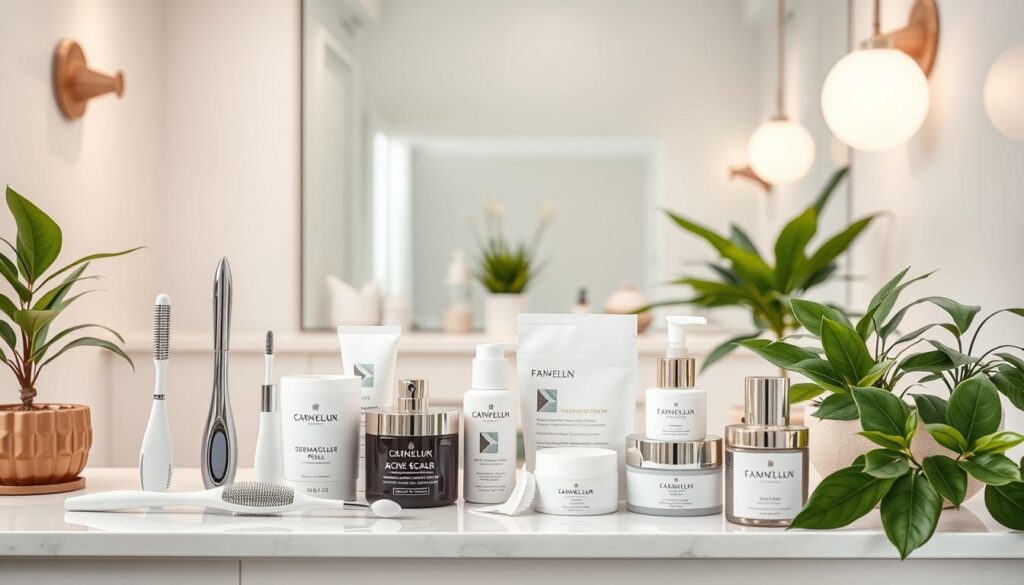
Acne scars can be tough to handle. Many people face this common skin issue. Learning about treatment options is key to achieving smoother skin1.
Different treatments work for various skin types. That’s why personalized care is so important1. There’s no one-size-fits-all fix for acne scars.
Your path to better skin involves trying different methods. From creams to professional treatments, you have many choices2. Each can help reduce the look of scars.
Skin experts suggest a well-rounded approach. Fillers, laser treatments, and skin needling can all help1. Some results are short-term and need repeat sessions1.
Key Takeaways
- Acne scar treatments vary based on individual skin type and scar severity
- Multiple treatment options exist, from topical solutions to professional procedures
- Consultation with a dermatologist is crucial for personalized treatment
- Some treatments provide temporary results and may require repeat sessions
- Combining different approaches often yields the best outcomes
Understanding Acne Scars and Their Types
Acne scars can be a frustrating reminder of past skin struggles. They tell a unique story of your skin’s healing journey. Understanding acne scarring is key for effective prevention and reduction strategies.
What Causes Acne Scars?
Acne scars form when your skin experiences deep tissue damage during breakouts. Severe or improperly treated acne can trigger permanent skin changes. Most people will encounter at least a few acne scars in their lifetime.
Types of Acne Scars Explained
Acne scars come in various shapes and depths. Here are the primary types:
- Ice Pick Scars: Narrow, deep scars that look like small puncture marks3
- Rolling Scars: Wide and shallow, creating a wavy skin texture3
- Boxcar Scars: Round or oval depressions with defined edges3
- Hypertrophic Scars: Raised scars that develop after acne clears3
The Impact of Skin Type on Scarring
Your skin tone plays a big role in scar formation and treatment. Darker skin tones are more prone to raised acne scars. They also experience post-inflammatory hyperpigmentation more often.
These pigmentation changes can appear red, pink, brown, or bluish-gray. The color depends on your specific skin tone.
Remember, not all skin marks are permanent. With proper care and professional guidance, you can minimize the appearance of acne scars.
For personalized acne scar reduction strategies, consult a board-certified dermatologist. They can provide targeted treatments tailored to your unique skin needs3.
Effective Treatments for Acne Scars
Acne scars can be tough to handle. But don’t worry! There are many ways to help smooth your skin. Let’s explore some effective treatments that can make a real difference.
Topical Treatments You Should Consider
Acne Scar Creams can work wonders for your skin. Retinoids and alpha hydroxy acids (AHAs) are powerful ingredients to look for. These can help improve your skin’s texture.
Atrophic scars affect most people with acne scarring. Here are some key ingredients to consider:
- Salicylic acid (30% concentration)
- Glycolic acid peels (5-70% strength)
- Retinoid-based treatments
Professional Procedures: What to Expect
For tougher scars, professional treatments offer advanced solutions. Lasers, especially fractional ones, are top-notch for improving acne scars4. Here are some key professional options:
| Treatment | Effectiveness |
|---|---|
| Laser Resurfacing | High effectiveness for boxcar and rolling scars |
| Microneedling | Reduces scar depression |
| Chemical Peels | Improves various scarring types |
At-Home Remedies for Mild Scarring
For mild Acne Scar Remedies, try these at-home treatments:
- Regular exfoliation with gentle chemical exfoliants
- Consistent use of sunscreen to prevent further discoloration
- Hydration and gentle skincare routine
Remember, patience is key when treating acne scars. Results take time and consistency.
Consult a dermatologist to determine the most suitable treatment for your specific skin type and scar characteristics.
Maintaining Healthy Skin Post-Treatment
Successful acne scar reduction demands ongoing skincare commitment. Your post-treatment care is vital for preventing new scars. About 20% of people face acne scars, so you’re not alone.
Sun protection is key for acne scar prevention. Chronic stress can hinder skin healing and cause hormonal imbalances. Aim for 7-9 hours of sleep nightly to support skin repair.
Your lifestyle greatly impacts acne scar reduction. Peptides can boost collagen production, enhancing skin resilience. Managing stress and eating well can help prevent scarring.
Avoid picking at your skin and use gentle cleansers. Consult a dermatologist for personalized advice on your skin care routine567.
FAQ
What causes acne scars to form?
Acne scars form when breakouts damage deep skin tissues. Severe acne causes intense inflammation, leading to permanent scarring. The breakout’s depth and severity determine the type and extent of scarring.
What are the different types of acne scars?
Acne scars come in two main types: atrophic (depressed) and hypertrophic (raised). Atrophic scars include boxcar, ice pick, and rolling scars. These appear as skin indentations.
Hypertrophic scars are raised and often found on the chest and back. Each type needs a different treatment approach. Identifying your scar type is key to effective treatment.
How can I prevent acne scars from forming?
To prevent acne scars, don’t pick or squeeze pimples. Use gentle, non-comedogenic skincare products. Treat acne early and consistently. Protect your skin from sun exposure.
Eat a healthy diet, stay hydrated, and manage stress. These habits can reduce the chance of severe scarring.
What topical treatments work best for acne scars?
Effective topical treatments include AHAs, lactic acid, retinoids, and salicylic acid. These improve skin texture and promote cell turnover. They also reduce scar appearance.
Over-the-counter products can help mild scarring. Severe scars may need professional treatments.
Are professional treatments more effective than at-home remedies?
Professional treatments often give better, longer-lasting results than at-home remedies. These include laser resurfacing, chemical peels, microneedling, and dermal fillers. They target deeper skin layers and boost collagen production.
The best approach depends on your scar type, skin tone, and overall condition.
How important is sun protection in treating acne scars?
Sun protection is crucial when treating acne scars. UV exposure can darken scars and make them more noticeable. It can also interfere with healing.
Use a broad-spectrum sunscreen with at least SPF 30. Wear protective clothing and avoid direct sunlight during peak hours.
Can diet and lifestyle affect acne scarring?
Yes, diet and lifestyle significantly impact skin health. Eat a balanced diet rich in vitamins and antioxidants. Stay hydrated, manage stress, and get enough sleep.
Foods high in omega-3 fatty acids, zinc, and vitamin C help skin repair. They also reduce inflammation.
When should I consult a dermatologist about my acne scars?
See a board-certified dermatologist if you have persistent, deep, or widespread acne scars. Seek help if over-the-counter treatments don’t work. A professional can assess your skin type and scar characteristics.
They can recommend a personalized treatment plan. This may include advanced procedures like laser therapy or chemical peels.
Source Links
- Acne scars: What’s the best treatment? – https://www.mayoclinic.org/diseases-conditions/acne/expert-answers/acne-scars/faq-20058101
- Acne scars: Consultation and treatment – https://www.aad.org/public/diseases/acne/derm-treat/scars/treatment
- Acne scars: Signs and symptoms – https://www.aad.org/public/diseases/acne/derm-treat/scars/symptoms
- What Is the Most Effective Treatment for Acne Scars? | Essential Dermatology – https://www.essential-derm.com/what-is-the-most-effective-treatment-for-acne-scars/
- Acne is Bad Enough. Get the Information You Need to Find the Right Treatment for Skin Damage and Scars. – https://www.webmd.com/skin-problems-and-treatments/acne/guide-to-treating-acne-scars-and-skin-damage
- How Do You Maintain Your Skin After Acne Treatment? – trilogymedicalcenter.com – https://trilogymedicalcenter.com/how-do-you-maintain-your-skin-after-acne-treatment/
- Eternal Dermatology & Aesthetic Center – https://www.eternaldermatology.com/say-farewell-to-acne-scars-a-guide-to-effective-treatments/

