
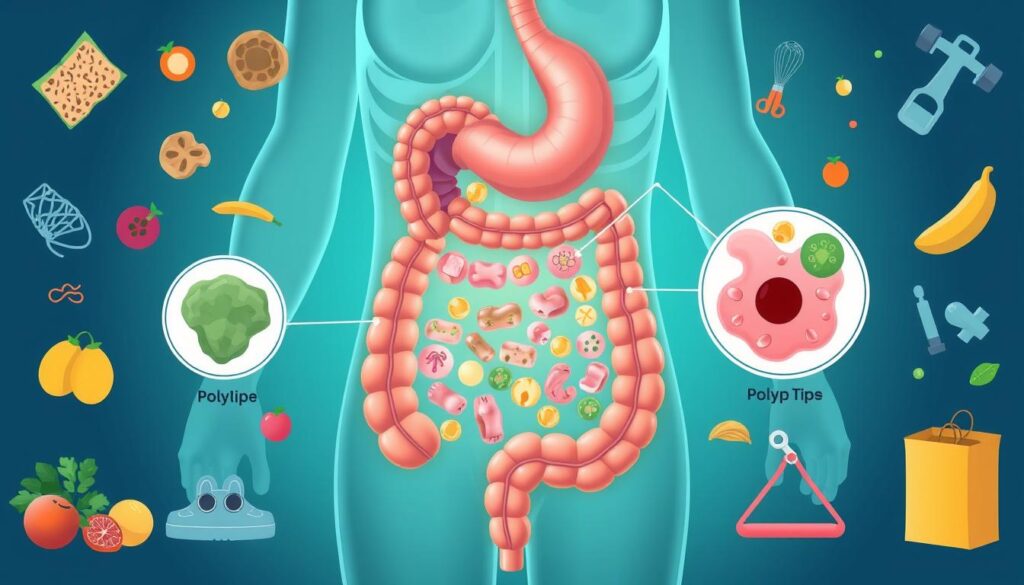
Colon polyps are small growths in your gut, mostly found in the colon. They can be tiny or grow several inches wide1. While usually harmless, some polyps may become cancerous over time2.
Surprisingly, 15% to 40% of adults have colon polyps. The risk goes up with age. Over 40% of people in their 50s develop precancerous polyps12.
Your lifestyle choices greatly affect polyp growth. Diet, exercise, and health habits all play a role. Certain medical conditions can increase your risk too.
Diabetes, being overweight, and family history make you more likely to get polyps12. Smoking, drinking alcohol, and eating lots of fatty foods also raise your chances12.
Key Takeaways
- Colon polyps can vary in size and potential for cancer development
- Age is a significant risk factor for polyp formation
- Lifestyle choices dramatically impact polyp risk
- Regular screenings are crucial for early detection
- Most polyps are benign but can become cancerous if untreated
What are Colon Polyps and Why They Matter?
Colon polyps are small growths on your colon’s inner lining. These tiny clusters can become serious health issues if not found early3. Knowing about them is key for your digestive health.
Types of Colorectal Polyps
Colon polyps come in different forms. Each type has its own traits:
- Adenomatous Polyps: The most common type, representing approximately 70% of all colon polyps4
- Serrated Polyps: Including hyperplastic and sessile serrated varieties
- Inflammatory Polyps: Typically associated with inflammatory bowel conditions
Prevalence and Risk Factors
Colon polyps are more common than you might think. About 20% of adults have these growths. This number goes up to 40% for people over 503.
Factors that can lead to polyps include:
- Diet high in fat and red meat
- Lack of fiber intake
- Smoking
- Obesity
Cancer Risk and Early Detection
Some polyps can become dangerous. About 75% of colorectal cancers start from adenomatous polyps3. Only 5% of adenomas turn into cancer3. Finding them early through screening is vital.
Symptoms and Screening
Most colon polyps don’t cause symptoms. Regular check-ups are crucial. Possible warning signs include:
- Blood in stool
- Changes in bowel habits
- Unexplained abdominal pain
- Iron deficiency anemia
“Early detection of polyps can prevent the development of colon cancer” – Gastroenterology Experts
Doctors suggest polyp screenings starting at age 45. Those with higher genetic risk may need earlier checks5. Colonoscopy is the best way to remove and check polyps5.
Causes of Colon Polyps: What You Should Know
Colon polyps stem from various factors. These range from genes to lifestyle choices. Understanding these causes is key for preventing polyps and managing gut diseases.
Genetic Factors and Family History
Your genes play a big role in colon cancer risk. Some people inherit conditions that boost polyp growth. Certain genetic syndromes can greatly increase your chances of developing colon polyps6.
- Hereditary syndromes like Lynch syndrome
- Familial Adenomatous Polyposis
- MUTYH-associated polyposis
Lifestyle Choices that Contribute
Your daily habits can affect polyp formation. Some choices raise your risk of colon polyps7:
- Smoking
- Frequent alcohol consumption
- Sedentary lifestyle
- High-fat diet
Eating fruits, veggies, and whole grains can help lower your risk7.
Age and Other Risk Factors
Age plays a crucial role in polyp growth. Your risk goes up a lot after 456. Men face twice the risk of advanced lesions compared to women8.
Early detection and knowing your risk factors are vital to prevent complications.
Other risk factors include obesity and type 2 diabetes. Lack of exercise also raises your risk. Knowing these causes helps you take steps to prevent colon cancer.
Prevention and Screening Recommendations
Colon cancer screening is vital for early detection and prevention. The American Cancer Society advises adults to begin colorectal cancer screening at age 45. Regular check-ups should continue after that9.
Your risk factors determine your screening plan. Those with higher risks may need earlier or more frequent screenings. This includes people with a family history of colorectal cancer or certain health conditions9.
Screening options vary in frequency. Colonoscopies are done every 10 years. Flexible sigmoidoscopies happen every 5 years. Fecal immunochemical tests (FIT) are yearly9.
Diet plays a key role in polyp prevention. Eat more fruits, vegetables, and whole grains. Cut back on fatty foods. Exercise regularly and maintain a healthy weight10.
Avoid smoking to lower your risk. If you notice changes in bowel habits, talk to your doctor. They can help create the best screening plan for you10.
FAQ
What are colon polyps?
Colon polyps are small cell clumps growing on the colon’s inner lining. Most are harmless, but some can develop into cancer over time. They come in different shapes and types, including adenomatous, serrated, and inflammatory polyps.
How common are colon polyps?
Colon polyps affect about 20% of adults and 40% of people over 50. Your risk increases with age. Factors like obesity, smoking, and family history can raise your chances of developing polyps.
What causes colon polyps to form?
Colon polyps result from abnormal cell growth in the colon lining. Genetic factors play a significant role, especially with hereditary disorders. Lifestyle factors like a high-fat diet, obesity, and smoking can also contribute to polyp formation.
Do colon polyps cause symptoms?
Most colon polyps don’t cause symptoms, making regular screening crucial. Some signs include blood in stool, changes in bowel habits, and abdominal pain. Consult your doctor if you experience these symptoms.
How can I prevent colon polyps?
Eat a diet rich in fruits, vegetables, and whole grains. Reduce fat intake, limit alcohol, and quit smoking. Maintain a healthy weight and exercise regularly. Calcium and vitamin D intake may offer protective benefits.
When should I start getting screened for colon polyps?
Screening typically begins at age 50 for those with average risk. If you have a family history or other risk factors, you might need earlier screening. Consult your doctor to determine the best screening schedule for you.
What screening methods are available?
Several screening methods exist, including colonoscopy, CT colonography, flexible sigmoidoscopy, and stool tests. Colonoscopy is the most thorough method. It allows for both detection and immediate removal of polyps during the procedure.
Are all polyps cancerous?
Not all polyps are cancerous. They’re classified as neoplastic (potentially cancerous) or non-neoplastic (generally non-cancerous). Regular screening is essential to monitor and remove any polyps that might develop into cancer.
Source Links
- What Causes Colon Polyps? | Colorectal Cancer Specialists at Compass – https://www.compassoncology.com/blog/what-causes-colon-polyps
- What to Know About Colon Polyps – https://www.webmd.com/colorectal-cancer/colon-polyps-basics
- Colon polyps: Different Types & Cancer Risk – https://my.clevelandclinic.org/health/diseases/15370-colon-polyps
- Colon and Rectal Polyps | University of Michigan Health – https://www.uofmhealth.org/conditions-treatments/digestive-and-liver-health/colon-and-rectal-polyps
- Patient education: Colon polyps (Beyond the Basics) – https://www.uptodate.com/contents/colon-polyps-beyond-the-basics/print
- Colon Polyps: Symptoms, Causes, Types (Tubular Adenoma, Sessile) – https://www.cancercenter.com/cancer-types/colorectal-cancer/risk-factors/colon-polyps
- What You Should Know About Colonic Polyps – https://www.healthline.com/health/colorectal-polyps
- Factors that Increase Risk of Colon Polyps – https://pmc.ncbi.nlm.nih.gov/articles/PMC2780253/
- Screening for Colorectal Cancer – https://www.cdc.gov/colorectal-cancer/screening/index.html
- Colorectal Cancer: Screening – https://www.uspreventiveservicestaskforce.org/uspstf/recommendation/colorectal-cancer-screening

