
Struggling to find pants that fit just right? Your waist measurement is the secret weapon. It’s essential for discovering comfortable, flattering clothing that fits perfectly.
Accurate waist measurement isn’t just about numbers. Different brands use varying sizing strategies. Most add 1 to 1.5 inches to waist measurements, creating “vanity sizing”1.
For example, a size 32 waist might actually measure 34.5 inches1. This can make shopping a bit tricky.
Women’s waist measurements are typically grouped in 2-inch intervals. These correspond to specific jeans sizes. A 23″-25″ waist would fit a size 24 jeans2.
Men’s jean sizes work differently. A 30-32″ waist typically represents a size 28 jeans2. It’s important to check brand-specific sizing charts.
The right fit goes beyond simple measurements. Fabric stretch, pant style, and personal comfort all matter. These factors play big roles in selecting the perfect pair of pants3.
Key Takeaways
- Waist measurements vary between men’s and women’s clothing
- Brands often add 1-1.5 inches to listed waist sizes
- Different jean styles require different measurement approaches
- Always check brand-specific sizing charts
- Comfort is key when selecting pants
Understanding Your Measurements
Accurate measurements are key to finding the perfect pants. They’re your secret weapon for successful clothing shopping. Knowing your body’s dimensions helps both online and in-store purchases.
Why Accurate Measurements Matter
Your body’s unique shape determines how well pants fit. Inseam length and hip measurement are crucial factors. They affect both the look and feel of your pants.
Wrong measurements can cause problems. You might end up with uncomfortable or ill-fitting pants. It can also lead to wasted time and money on returns.
- Uncomfortable clothing
- Ill-fitting pants
- Wasted time and money on returns
Common Measurement Mistakes to Avoid
Professional tailoring tips can help you measure correctly. Here are some important points to remember:
- Never measure over clothing4
- Keep measuring tape parallel to the floor
- Avoid pulling the tape too tight
- Consider body shape variations4
“The right measurement can transform your entire clothing experience” – Tailoring Experts
Pro tip: Compare your measurements to size charts and finished measurement charts. This helps ensure the most accurate fit before buying.
Custom clothing services like Luxire focus on precise measurements. They guarantee a perfect fit by tailoring to your individual body dimensions5.
How to Measure Your Waist Correctly
Accurate measurements are key to finding perfect pants. Knowing men’s and women’s sizing helps with garment construction and comfort6.
Tools You’ll Need
Get these tools for precise measurements:
- Flexible measuring tape
- Mirror
- Comfortable, form-fitting clothing
Step-by-Step Measuring Guide
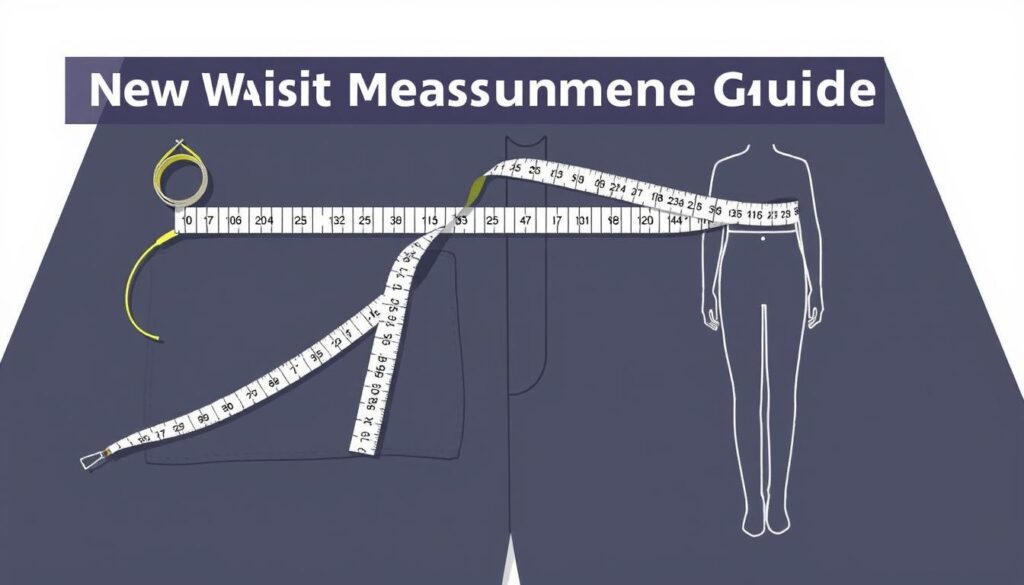
Accuracy is crucial when measuring your waist. Stand straight and find your natural waist between your ribs and belly button6.
Follow these steps for the best measurement:
- Wrap the measuring tape around your waist
- Keep the tape snug but not tight
- Ensure the tape is parallel to the floor
- Measure against bare skin or thin clothing
Tips for Getting the Right Fit
Different pants styles need different measurement methods. Pant rises can range from 7 to 12, affecting size translations6.
For women’s jeans, waist measurements often match specific sizes7:
| Waist Measurement | Women’s Jeans Size |
|---|---|
| 25″ – 27″ | 26 |
| 29″ – 31″ | 30 |
| 31″ – 33″ | 32 |
Pro tip: Round up if between sizes. Try on pants before buying for the best fit7.
Choosing the Right Pants Size
Finding the perfect pants can be challenging. Brands have different sizing approaches. Men’s pants typically range from XS to XXXL, with some offering up to 6XL8.
Size charts are crucial for selecting pants. Focus on waist and inseam measurements for an ideal fit9. Pants sizes are often shown as waist by inseam, like 34×328.
A pants sizing guide can help you understand garment construction. It also offers useful tailoring tips for a better fit.
Different styles need unique considerations. Straight leg and skinny fit cuts affect how pants look and feel8. Fabric stretch and body type also impact the fit.
Measure carefully and be open to adjustments for maximum comfort9. Your goal is pants that fit well and boost your confidence.
For online shopping, always check the brand’s size chart. Measurements vary between manufacturers8. Don’t assume one size fits all brands.
FAQ
How do I measure my waist for pants accurately?
Use a soft measuring tape to wrap around your waist’s smallest part. Stand relaxed with feet slightly apart. Keep the tape parallel to the floor and snug, not tight.
Measure against bare skin for accuracy. Adjust your measurement point for different pants styles. Low-rise pants need hip measurements, while high-waisted ones require waist measurements.
Why do clothing sizes vary between brands?
Brands have unique sizing systems, target demographics, and design philosophies. This leads to size differences between companies. Always check the brand’s specific size chart when purchasing.
Fabric type, cut, and intended fit also affect how a size feels. These factors can change how clothes look on your body.
Should I measure over clothing or directly on my skin?
Measure directly on bare skin or with minimal, form-fitting clothing. Bulky clothes can add extra inches, leading to incorrect sizing. Wear tight underwear or clothing for the most precise measurements.
What’s the difference between men’s and women’s pants sizing?
Women’s pants account for a wider hip-to-waist ratio than men’s. Women’s sizes include more detailed measurements. Men’s sizes typically show waist and inseam length (e.g., 32 x 34).
How do I know if I’m between sizes?
If between sizes, it’s best to round up for comfort. Consider the fabric’s stretch and pants style. Some brands, like DUER, suggest sizing down due to stretch properties.
Check the brand’s size chart and return policy. Try on the item if possible for the best fit.
What tools do I need to measure my pants size at home?
A flexible measuring tape gives the most accurate results. You can use string and a ruler if you don’t have tape. Use a mirror to position the tape correctly.
Wear form-fitting clothing during measurement. A helper ensures the tape is straight and parallel to the floor.
Source Links
- How To Measure Waist for Pants | Step-by-Step Guide – Nimble Made – https://www.nimble-made.com/blogs/news/how-to-measure-waist-for-pants?srsltid=AfmBOoqzyZ4-AljADosHycGO_LFq5vIFZRDuSmeE8Ba1wZZkwDWMKfxS
- How To Measure Your Waist To Determine Your Jeans Size – https://shopduer.com/blogs/uncuffed/how-to-measure-waist-for-jeans?srsltid=AfmBOopunon9MBdmcmi8_cuuSjmbC-B41nrG9XgOYfpq3AbRxQED1au0
- How To: Find your Waist and Inseam For Pants – https://www.mountainkhakis.com/blogs/news/how-to-find-your-waist-and-inseam-of-pants?srsltid=AfmBOopKMtL2ecxmGF-SuGGv3HvuaR4nZZpXScvoebHaHGRuGPFIVVPb
- How to take measurements for pants — Made by Rae – https://www.made-by-rae.com/blog/2020/4/how-to-take-measurements-pants
- How to Measure the Body for Pants Measurements – https://luxire.com/pages/pants-body-measurements-guide?srsltid=AfmBOooVnEuFAQ-h5MnzZvGKRBxg_fQs1BQL1DS8VcNlPBAZN0BQ6O_D
- How to Measure Your Pants: 8 Steps (with Pictures) – wikiHow – https://www.wikihow.com/Measure-Your-Pants
- How To Measure Your Waist To Determine Your Jeans Size – https://shopduer.com/blogs/uncuffed/how-to-measure-waist-for-jeans?srsltid=AfmBOopQtQOcmZYMMHRaTj0O846tLiREh_Avfk8Ap1WFyAjsF_uv4lI5
- The Ultimate Men’s Pants Size Guide (With Size Charts) – https://www.overlookboots.com/blogs/boots/mens-pants-size-guide?srsltid=AfmBOorzRp8p3GVd6DMwDgl64rKIqS9str9FEETYotVZZx34zQ3MFdWl
- How To Measure Pants Sizes: A Simple Guide For Men – https://xiosamerica.com/blogs/news/how-to-measure-pants-sizes-a-simple-guide-for-men?srsltid=AfmBOopN_dPu0V6ZRpfT9AKo20dcbwSHyY5bxcJ3nWvJDLKPxrpe0tqU

