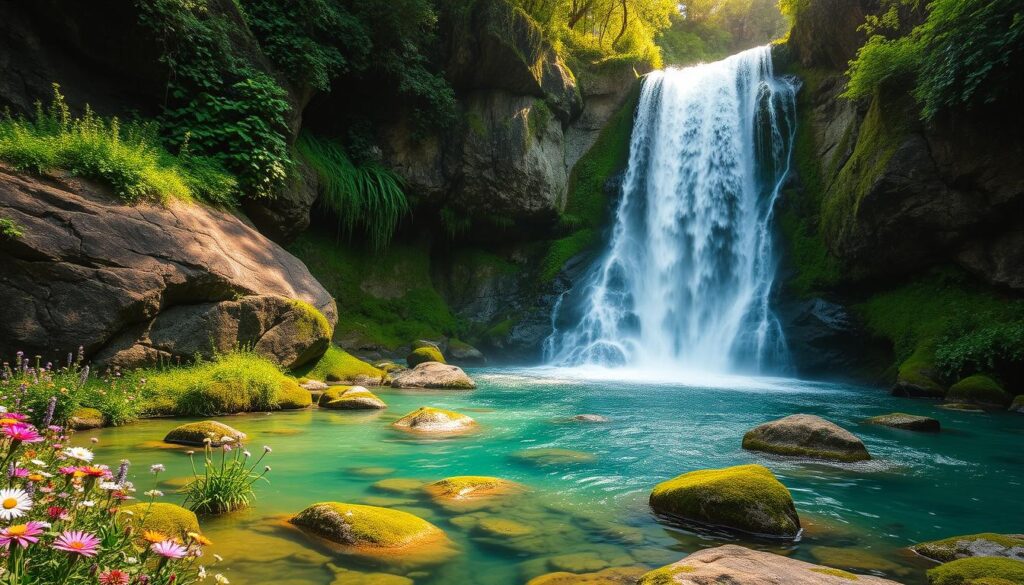
Capturing waterfalls demands skill and the right techniques. It transforms ordinary scenes into stunning visual experiences. Landscape photographers can document the beauty of cascading waters through careful planning12.
Waterfall photography isn’t just point-and-shoot. You need to master techniques for silky-smooth water effects. Understanding camera settings and equipment is key to achieving remarkable results1.
Slow shutter speeds create dreamy, ethereal water movement. This technique makes waterfall images truly captivating2.
A sturdy tripod is essential for long exposures. It eliminates camera shake, ensuring sharp images1.
Camera settings are crucial for the perfect waterfall shot. Lower ISO, adjust aperture, and use neutral density filters. These steps help create breathtaking images of silky water flow12.
Key Takeaways
- Master slow shutter techniques for smooth water effects
- Invest in a reliable tripod for sharp images
- Use neutral density filters to control light
- Choose the right lens for comprehensive landscape shots
- Practice timing and lighting for optimal results
Understanding Waterfall Photography Basics
Waterfall photography blends technical skills with creative vision. It transforms rushing waters into mesmerizing visuals. This art form goes beyond simple point-and-shoot techniques3.
The Importance of Light in Waterfall Photography
Light is key to creating stunning waterfall images. Overcast days offer ideal conditions for even exposure. They also help reduce harsh shadows3.
Early mornings and late evenings provide soft, diffused light. This lighting can turn your waterfall photos into magical scenes.
Choosing the Right Gear
Proper equipment is crucial for long exposure waterfall photography. Here are some key gear recommendations:
- DSLRs and mirrorless cameras with manual controls3
- Wide-angle lenses like Fujifilm 10-24mm3
- Sturdy tripod for stability during long shutter speeds4
Essential Photography Techniques
Master these critical techniques to elevate your waterfall shots:
| Technique | Recommended Settings |
|---|---|
| Shutter Speed | 2-10 seconds for smooth water texture5 |
| Aperture | f/11 to f/16 for optimal depth3 |
| ISO | Lowest native setting3 |
Filter Techniques for Perfect Shots
Enhance your waterfall photography with these filter tips:
- Neutral Density (ND) filters for longer exposures5
- Circular polarizers to reduce water glare3
- Remote shutter release to minimize camera shake4
Pro tip: Always research your destination and prepare your gear before embarking on a waterfall photography adventure!
Techniques for Capturing Stunning Waterfalls
Waterfall photography blends technical skills with creative vision. Mastering specific techniques can transform your waterfall images from ordinary to extraordinary. Let’s explore some key methods to enhance your shots.
Long Exposure Magic
Create dreamy, silky water effects with long exposure shots. Use a slow shutter speed, between 1/4 to several seconds6. Choose a low ISO (100-200) and a smaller aperture like f/11 or f/167.
Essential Filters for Enhanced Images
Neutral Density (ND) filters are crucial for waterfall photography. They help achieve longer exposures by reducing light entering your camera8. Circular polarizers can cut down light by 1.5 to 2 f-stops8.
Composition Strategies
- Apply the rule of thirds for balanced framing
- Use leading lines to guide viewer’s eye
- Incorporate foreground elements for depth
- Experiment with different perspectives6
Use a telephoto lens to isolate unique sections of the waterfall. This can add a creative twist to your images6. Different focal lengths help capture intricate patterns within cascading water6.
“Photography is about capturing a moment that will never come back.” – Unknown
| Technique | Recommended Settings |
|---|---|
| Aperture | f/11 to f/16 |
| Shutter Speed | 1/4 second to several seconds |
| ISO | 100-200 |
Pro tip: Don’t be afraid to get creative and explore unique compositions that go beyond the obvious shot. Each waterfall offers a chance to showcase your photographic skills6.
Preparing for Your Waterfall Adventure
Waterfall photography needs careful planning. Your success hinges on thorough research and a smart approach. Explore capturing stunning waterfall scenes in nature and landscape photography.
Good prep ensures great images and safety. Know your destination well to improve your photos.
Researching Your Destination
Study potential waterfall spots carefully. Key research points include:
- Water flow seasonality
- Accessibility of the location
- Photographic potential
- Local terrain and hiking difficulty9
Timing Your Visit
Smart timing can boost your landscape photos. Visit when water flow is most impressive10.
Early morning or late afternoon often have the best light11.
| Season | Water Flow | Photography Potential |
|---|---|---|
| Spring | High | Excellent |
| Summer | Medium | Good |
| Fall | Low | Variable |
| Winter | Low/Frozen | Unique |
Safety Considerations
Put safety first during outdoor photo trips. Always bring the right gear:
- Waterproof hiking boots
- Rain protection for camera equipment
- Microfiber cloth for lens cleaning
- First aid kit
“Preparation is the photographer’s best lens.” – Anonymous Nature Photographer
Stick to marked trails and watch for slippery rocks. Stay aware of weather and possible dangers9.
Your safety lets you keep taking amazing waterfall photos.
Editing and Showcasing Your Waterfall Photos
Your photography journey doesn’t end with capturing waterfall images. Post-processing transforms raw captures into compelling visual stories. Adobe Lightroom and Capture One offer powerful tools for enhancing nature photography12.
These programs help refine exposure, adjust color balance, and recover details in bright and dark areas. With thoughtful editing, you can bring out the best in your waterfall shots12.
Strategic social media sharing can amplify your visual narrative. Research platform-specific image requirements and use targeted hashtags for increased visibility. Consider creating a comprehensive waterfall photography guide to showcase your skills13.
Curate images that highlight unique perspectives. Focus on water textures or include human elements for scale. This approach sets your work apart12.
Building a professional portfolio requires careful selection of your best work. Group related waterfall images by location, technique, or visual theme. Include technical metadata like camera settings and location details14.
Adding post-processing techniques provides context for your images. This approach transforms your collection into a professional narrative of your landscape photography journey14.
FAQ
What camera settings are best for waterfall photography?
For silky water effects, use a slow shutter speed of 1/4 second or longer. Set your camera to low ISO (100-200) and small aperture (f/11 or f/16). A Neutral Density filter helps achieve longer exposures in bright conditions.
What equipment do I need for waterfall photography?
You’ll need a camera with manual controls and a wide-angle lens. A sturdy tripod and cable release are crucial to minimize camera shake. Neutral Density filters and circular polarizers help control light and reduce reflections.
When is the best time to photograph waterfalls?
Early morning or late evening provide soft, diffused lighting. Overcast days are also excellent for waterfall shots. Consider the season and aim for times with strong water flow.
How do I compose a great waterfall photograph?
Apply the rule of thirds and use leading lines in your composition. Include foreground elements like rocks or vegetation to add depth. Try different angles, such as shooting from low positions or using telephoto lenses.
What post-processing techniques work best for waterfall photos?
Use software like Adobe Lightroom to adjust exposure, contrast, and color balance. Focus on recovering highlights and shadows to preserve details. When sharing, use relevant hashtags and consider platform-specific image sizes.
How can I stay safe while photographing waterfalls?
Stick to designated trails and wear waterproof boots. Bring rain protection for your camera and be cautious around slippery rocks. Research your location beforehand and check weather forecasts.
Do I need special filters for waterfall photography?
Neutral Density (ND) filters are highly recommended for waterfall shots. They allow slower shutter speeds, creating smooth, silky water effects. Circular polarizers help reduce reflections and enhance color saturation.
Source Links
- How to Photograph Waterfalls – https://photographylife.com/how-to-photograph-waterfalls
- How to photograph waterfalls | Chris Bray Photography – https://chrisbrayphotography.com/tips/waterfall_photos_how_to.php
- How to Photograph Waterfalls – A Beginner’s Guide – Digital Photo Mentor – https://www.digitalphotomentor.com/how-to-photograph-waterfalls-a-beginners-guide/
- Ultimate Guide To Perfecting Waterfall Photography – https://www.inwanderment.com/waterfall-photography/
- How to Photograph Waterfalls – Tutorial | Alex Wise Photography – https://www.alexwisephotography.net/blog/2011/11/16/how-to-photograph-waterfalls-tutorial/
- My Favorite Techniques For Shooting Waterfall Photography – https://shainblumphoto.com/2022/12/05/waterfalls-2/
- How To Photograph Waterfalls | 5 Waterfall Photography Tips – https://shainblumphoto.com/2023/08/12/waterfallphotography/
- 6 Effective Ideas for Stunning Waterfall Photography – https://visualwilderness.com/fieldwork/6-effective-ideas-for-stunning-waterfall-photography
- Mastering the Art of Waterfall Photography – https://www.newenglandwaterfalls.com/waterfallsphotography.php
- How to Create Wonderful Waterfall Photography – https://digital-photography-school.com/falling-for-waterfalls/
- Waterfall Photography Beginners Tips and Tricks – https://www.world-of-waterfalls.com/waterfall-photography/
- Capturing Stunning Waterfall Images | Aperture Adventure – https://www.apertureadventure.com/capturing-stunning-waterfall-images/
- How to Photograph Waterfalls and Overcome the Challenges – https://www.josephfiler.com/gallery/six-challenges-of-photographing-waterfalls/
- Create Silky Smooth Waterfalls In Photoshop – https://www.photoshopessentials.com/photo-effects/waterfalls/