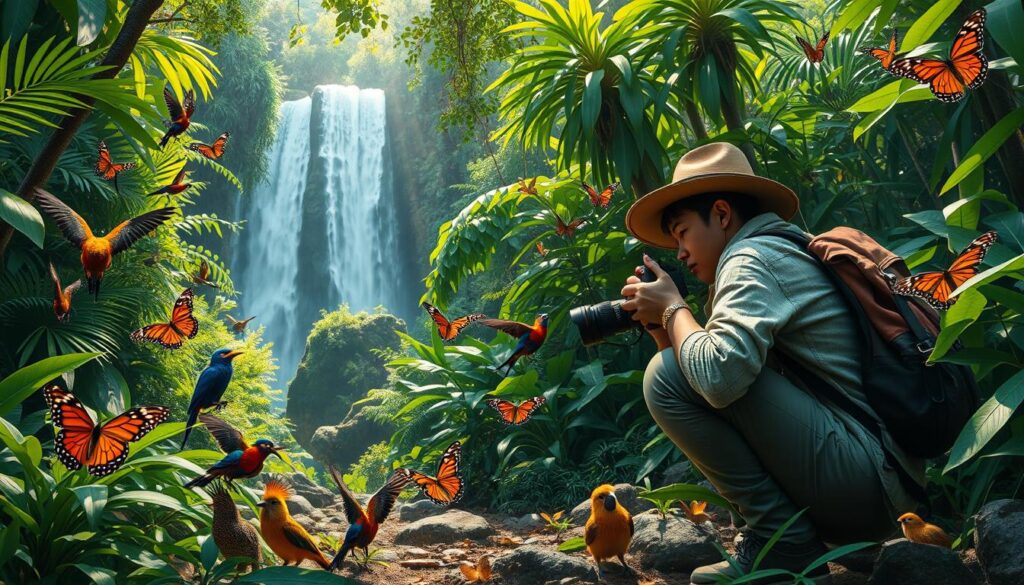
Wildlife photography turns everyday moments into captivating visual tales. It’s about revealing nature’s essence in its purest form1. To succeed, you must grasp the nuances of animal behavior2.
Outdoor photography demands more than just technical know-how. You need to predict animal movements and understand their habitats1. Try different camera settings and compositions for stunning shots1.
Planning is crucial for amazing wildlife images. Research where and when to find your target animals2. Study their habits to catch those rare, magical moments1.
Key Takeaways
- Understand animal behaviors for better wildlife photography
- Research locations and seasonal patterns
- Experiment with camera settings and compositions
- Anticipate wildlife movements and interactions
- Focus on telling a visual story through your images
Understanding Wildlife Behavior
Wildlife photography is more than just aiming a camera at animals. It requires deep knowledge of animal behavior and habitats. Your success hinges on understanding how animals live and interact.
Importance of Researching Species
Before your photography trip, research specific wildlife species. Animals have basic needs that shape their behavior.
- Seeking food and shelter
- Social interactions
- Reproductive opportunities3
Observing Patterns and Habitats
Knowing animal habitats helps predict their movements. Different species thrive in unique environments, from forests to plains4.
Expert photographers suggest watching one species for long periods. This helps you truly grasp their patterns.
“Patience and observation are the keys to extraordinary wildlife photography.” – Wildlife Photography Expert
Techniques for Safe and Sustainable Viewing
Responsible wildlife photography requires ethical approaches:
- Use camouflage clothing
- Minimize noise and disturbance
- Respect animal territories5
Understanding animal habits helps you capture unique moments. These insights let you tell compelling stories about wildlife3.
Essential Equipment for Wildlife Photography
Capturing wildlife moments needs more than skill—it requires the right gear. Your equipment can make or break your travel photography experience.
Choosing the Right Camera and Lens
Pro wildlife photographers use advanced camera systems for top performance. The Nikon Z9, Canon EOS R3, and Sony A1 offer great features for wildlife shots.
Telephoto lenses are key for safe distance while capturing intimate wildlife scenes6.
- Recommended cameras for wildlife photography:
- Nikon Z9
- Canon EOS R5
- Sony A7R V
- Essential lens types:
- Telephoto lenses
- Wide-angle lenses
- Macro lenses
Importance of Tripods and Stabilization
Stabilization is vital in wildlife and landscape photography. Fast autofocus and high shutter frame rates help capture dynamic wildlife behavior precisely6.
Get a strong tripod that can handle tough outdoor conditions.
Accessories: Filters, Memory Cards, and More
Smart photographers plan for unexpected situations. Carry extra memory cards to avoid data loss. Pack spare batteries for long shooting sessions7.
Look for weather-resistant gear that works in extreme environments6.
“The right equipment transforms good wildlife photography into extraordinary visual storytelling.”
Choose gear that’s reliable, versatile, and high-performing. Your equipment should help you capture stunning wildlife moments without risking image quality or safety.
Best Practices for Wildlife Photography
Wildlife photography blends planning and skill. It transforms ordinary shots into extraordinary images. Regular practice helps photographers capture stunning moments in nature.
Timing is crucial for photographic success. Early morning light creates magical scenes. Pros recommend shooting during golden hours for the best lighting.
Camera settings are vital. Watch your shutter speed and white balance. These adjustments ensure crisp, vibrant images.
Composition makes wildlife images compelling. Focus on the animal’s eyes for a powerful connection. Try different angles to tell a dynamic story.
A comprehensive wildlife photography guide can help you master these techniques.
Ethics are crucial in wildlife photography. Always put animal welfare first. Keep a respectful distance and follow local rules.
Make sure your practices support conservation. Your photos can help protect wildlife and their habitats8.
FAQ
What is the most important skill in wildlife photography?
Patience and understanding animal behavior are key in wildlife photography. Research your subject’s habitat and routines to capture unique moments. Learning to read animal body language helps predict interesting actions.
What camera equipment do I need for wildlife photography?
A DSLR or mirrorless camera with a telephoto lens is essential. Zoom lenses offer flexibility, while prime lenses provide superior image quality. Don’t forget a sturdy tripod, filters, extra batteries, and high-capacity memory cards.
How can I take better wildlife photographs?
Focus on understanding your subject and mastering light conditions. Shoot during golden hours and use the rule of thirds for composition. Always prioritize the animal’s well-being over getting a shot.
Keep a safe distance and wear neutral-colored clothing to minimize disturbance. Practice ethical photography to protect wildlife and their habitats.
What are the best times to photograph wildlife?
The golden hours after sunrise and before sunset offer the most beautiful lighting. Different animals are active at various times. Predators often hunt during twilight, while herbivores graze during daylight.
Research your target species to understand their active periods. This knowledge will help you plan your photography sessions effectively.
How close should I get to wildlife when photographing?
Always maintain a safe and respectful distance from wildlife. Use a telephoto lens to capture close-up images without disturbing animals. Follow local guidelines and conservation rules to protect wildlife.
What camera settings work best for wildlife photography?
Use a wide aperture (f/2.8 or f/4) for low-light conditions. Set a fast shutter speed to capture quick movements. Choose a higher ISO if needed for proper exposure.
Consider using continuous shooting mode to increase your chances of capturing the perfect moment.
How can I improve my wildlife photography skills?
Practice consistently and study animal behavior to enhance your skills. Invest in good equipment and learn post-processing techniques. Attend workshops and join photography groups to learn from others.
Spend time in nature observing wildlife. Always prioritize conservation alongside your photographic goals.
Source Links
- 10 Tips to Improve Your Wildlife & Nature Photography – https://www.nathab.com/blog/10-tips-to-improve-your-wildlife-nature-photography/
- Beginners Guide To Wildlife Photography — Kevin Pepper Photography – https://www.kevinpepperphotography.com/blog/beginners-guide-to-wildlife-photography
- Wildlife Photography: Understanding Animal Behaviour for Better… – https://www.naturettl.com/wildlife-photography-animal-behaviour/
- Photographing wildlife by studying animal behaviour – https://amateurphotographer.com/technique/photographing-wildlife-by-studying-animal-behaviour/
- Wildlife Photography: A Guide for Beginners | VSCO Learn – https://www.vsco.co/learn/wildlife-photography-guide
- Wildlife Photography Gear and Accessories — Kevin Pepper Photography – https://www.kevinpepperphotography.com/wildlife-photography-gear-and-accessories
- What to Take on a Wildlife Photography Trip – https://photographylife.com/wildlife-photography-trip-equipment
- My Favourite tips and tricks to improve your Wildlife Photography – Best of the Blue Mountains – https://www.bestofthebluemountains.com/my-favourite-tips-and-tricks-to-improve-your-wildlife-photography/