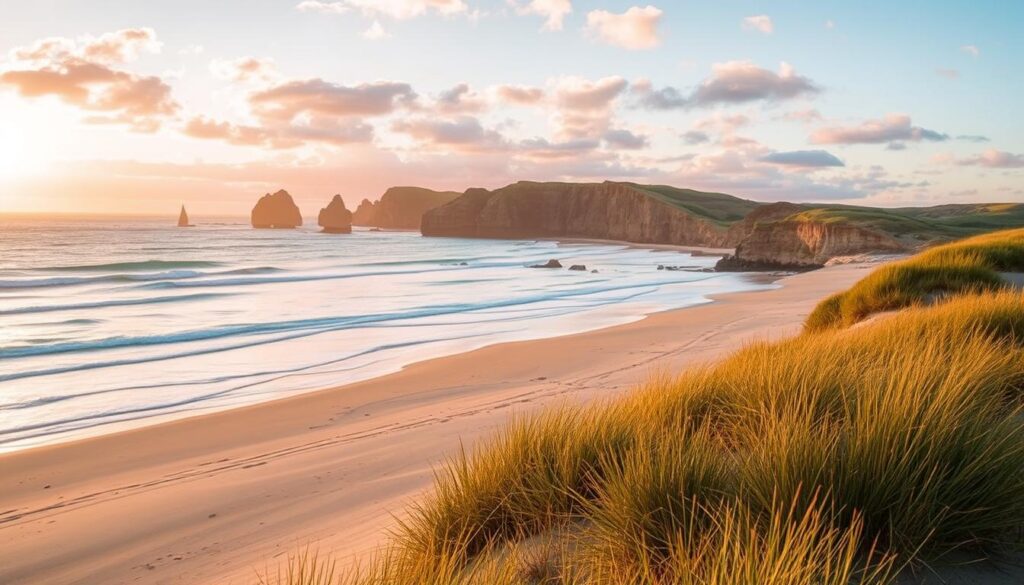
Beach photography captures the ever-changing beauty of coastal landscapes. Seascape images showcase the diverse attractions of shorelines. Each moment tells a unique visual story1.
Coastal scenes transform constantly, offering different views throughout the day. Lighting conditions can dramatically alter the mood of your photos1.
Mastering coastal photography takes patience and keen observation. Your shots can range from vibrant scenes to moody compositions1.
For stunning results, try shooting just before dawn or after dusk. These times often provide the most remarkable coastal landscapes1.
Wind, waves, and natural movement bring coastal photographs to life. Experiment with both horizontal and vertical orientations for engaging images1.
Key Takeaways
- Coastal locations offer dynamic and changing photographic opportunities
- Lighting and time of day significantly impact coastal imagery
- Experiment with different perspectives and orientations
- Capture natural movement in your coastal photographs
- Embrace the diverse color palette of beach environments
Understanding Your Environment
Coastal landscapes require a deep grasp of unique environments. Photographers must read intricate details of coastal ecosystems for stunning images2.
Choosing the Right Time of Day
Golden hour transforms coastal scenes into magical landscapes. The light after sunrise and before sunset enhances beach views3. Timing can turn an ordinary shot into an extraordinary image.
- Sunrise offers concentrated colors and fewer crowds
- Sunset provides spread-out colors with rich atmospheric conditions
- Night photography can capture stunning starry skies
Identifying Unique Coastal Features
Coastal environments are dynamic systems with fascinating geographical traits. Shorelines can be high relief erosional or low relief depositional landscapes2.
Understanding these features helps photographers capture unique visual compositions.
| Coastal Feature | Photographic Potential |
|---|---|
| Beach Ridges | Textural landscape elements |
| Wave-Cut Scarps | Dramatic geological formations |
| Marine Terraces | Expansive scenic backgrounds |
Recognizing Weather Impact
Weather conditions transform coastal tourism and photography opportunities. Storm systems create moody scenes with intense wave energy3.
Tides and seasonal changes impact the visual landscape. They offer photographers diverse shooting conditions.
“The coast is a dynamic canvas, constantly reshaped by natural forces.”
Grasping these environmental nuances elevates coastal photography. It turns simple snapshots into compelling visual stories of seashore exploration2.
Essential Photography Techniques
Mastering key photography techniques can transform your seaside getaways into stunning visual memories. These skills will help you capture the beauty of shoreline attractions effectively.
Understanding composition is crucial when photographing beach activities. The rule of thirds helps create balanced and visually appealing coastal landscape images4.
Mastering Composition Techniques
Try these essential techniques for breathtaking shoreline attractions:
- Use a 16-35mm wide-angle zoom lens for expansive coastal views4
- Experiment with different angles to add depth and interest
- Incorporate leading lines like shorelines or rock formations
Optimizing Camera Settings
For stunning coastal photography, pros recommend these settings:
| Setting | Recommended Range |
|---|---|
| Exposure | 1.6 to 131 seconds |
| Aperture | f/11 to f/16 |
| ISO | 100 to 400 |
Capturing Dynamic Coastal Scenes
Use neutral density filters to create dramatic effects in your beach photos4. Try 3-stop, 6-stop, or 10-stop ND filters to manage bright sunlight5.
Pro tip: The best coastal photographs often happen during the golden hours of dawn and dusk4.
Use apps like Photographer’s Ephemeris or PhotoPills to plan your shoot4. Patience and practice are key to mastering seaside photography techniques.
Equipment and Accessories for Beach Photography
The right gear can turn ordinary beach shots into stunning masterpieces. Coastal photography presents unique challenges that require specific tools. A well-chosen set of equipment helps photographers navigate these obstacles effectively.
Professional gear must withstand harsh beach conditions. Sand, salt, and intense sunlight can damage equipment. Choosing the right tools ensures exceptional image quality in these challenging environments.
Recommended Camera Types
Weather-sealed cameras are ideal for beach photography. They can handle tough coastal conditions with ease. DSLRs and mirrorless cameras offer great versatility for capturing seascapes.
- Weather-sealed professional cameras
- Mirrorless systems with high dynamic range
- Cameras with robust dust and moisture protection
Essential Lenses for Coastal Photography
Lens choice significantly impacts beach photographs. The Canon 16-35mm L lens excels at wide-angle shots. For flexibility, the Canon 100-400mm L zoom is an excellent option6.
| Lens Type | Best Used For | Recommended Focal Length |
|---|---|---|
| Wide-Angle | Sweeping Seascapes | 16-35mm |
| Telephoto | Distant Details | 100-400mm |
| Macro | Tide Pool Creatures | 60-100mm |
Protective Accessories
Protecting your gear is crucial in beach settings. Invest in quality accessories to shield equipment from damaging elements. These items help preserve your gear’s longevity and performance.
- Waterproof camera bags
- Lens cleaning kits
- Silica gel packets to absorb moisture
- Rain covers for unexpected weather
Pro tip: Always have a microfiber cloth and compressed air for quick cleanups after beach shooting sessions.
Long exposures create dreamy water effects in beach photos. Photographers recommend 2-4 second exposures for stunning results7. With the right equipment, you’ll be ready to capture breathtaking coastal moments.
Editing Your Beach and Coastline Photos
Photo editing transforms good beach images into stunning visual memories. It brings out the true beauty of seascapes. Mastering key techniques can enhance your coastal photographs significantly8.
Start by adjusting exposure and white balance for challenging lighting conditions. Use selective editing tools to reveal textures in sand, rocks, and water. These steps can dramatically improve your coastal photography techniques9.
Consider luminosity masking to blend multiple exposures. This technique ensures your images maintain a natural and vibrant appearance.
When sharing on social media, focus on image composition and crop sizes. Different platforms have unique requirements. Experiment with various crops to find the most impactful presentation.
Use relevant hashtags to increase visibility and connect with other enthusiasts. This can help you reach people who appreciate stunning seascapes8.
Editing is an art form that requires practice and patience. Your skills will help bring each photograph’s unique story to life. With time, you’ll transform simple beach snapshots into compelling visual experiences.
FAQ
What is the best time of day for beach photography?
The golden hour offers stunning light for beach photography. This occurs just after sunrise and before sunset. During these times, you’ll capture warm, soft lighting that enhances colors.
Sunrise typically offers fewer crowds and more concentrated colors. Sunset provides spread-out hues that can be equally breathtaking.
What camera equipment should I bring for beach photography?
Bring a versatile camera setup for beach photography. Include a wide-angle lens for sweeping seascapes and a mid-range zoom lens for flexibility.
Don’t forget essential accessories like a lens hood to prevent glare. A tripod for stability during long exposures is also useful.
Use protective gear such as weather-sealed camera bags. These shield your equipment from sand and saltwater.
How can I protect my camera when photographing at the beach?
Use weather-sealed cameras and lenses to protect your gear. Invest in a protective camera bag and bring microfiber cloths to clean sand.
Consider using underwater housing for water shots. A waterproof point-and-shoot camera works well for casual beach photography.
Keep your equipment away from direct sand and water. Clean it thoroughly after each beach session.
What photography techniques work best for coastal landscapes?
Apply the rule of thirds to create balanced compositions. Experiment with different angles, like low shots for foreground details.
Use leading lines like shorelines to guide the viewer’s eye. Try long exposures to create silky water effects.
Play with different apertures. Use wide for portraits and smaller for comprehensive landscape shots.
How do I handle challenging beach lighting conditions?
Use exposure compensation or manual mode to prevent overexposure in bright sunlight. Stick to a low ISO (100-400) for daytime shots to minimize noise.
Consider using filters like Neutral Density (ND) or polarizing filters. These help manage bright conditions.
When editing, adjust exposure, contrast, and white balance. This compensates for tricky lighting and brings out the scene’s natural beauty.
What should I look for when composing beach photographs?
Look for interesting focal points like unique rock formations, shells, or sand patterns. Pay attention to reflections in water and capture movement using longer shutter speeds.
Consider the color palette, from vibrant blues to subtle storm hues. Look for small, compelling details that tell a story.
Experiment with horizontal and vertical formats. This can add variety to your beach photographs.
Are there any seasonal considerations for beach photography?
Visiting beaches during the off-season provides unique photographic opportunities. You’ll encounter different conditions and fewer crowds.
Weather changes like storms can dramatically alter coastal landscapes. This creates moody and impressive images.
Different seasons and tide levels significantly impact your shots. Revisit locations at various times for diverse and exciting photographs.
Source Links
- How to Photograph Coastlines [10 Tips] – https://digital-photography-school.com/photographing-coastlines/
- Beaches and Coastal Landforms – Geology (U.S. National Park Service) – https://www.nps.gov/subjects/geology/coastal-landforms.htm
- Coastal Processes and Beaches | Learn Science at Scitable – https://www.nature.com/scitable/knowledge/library/coastal-processes-and-beaches-26276621/
- How to Photograph the Coast – Nature TTL – https://www.naturettl.com/how-to-photograph-coast/
- 10 Coastal Photography Tips for Better Cliffs and Coastlines – https://expertphotography.com/cliffs-coastal-photography/
- Invaluable Beach Photography Tips to capture Breathtaking Photos – https://visualwilderness.com/fieldwork/invaluable-beach-photography-tips-to-capture-breathtaking-photos
- Seascapes – Coastal Photography – Shutter Speed Considerations – Nature Photography Articles & Tutorials – https://www.icelandaurora.com/photo-tutorials/sea-scapes-exposure-considerations/
- How To Photograph Seascapes and Coasts To Get Great Photos – https://www.josephfiler.com/gallery/challenges-coastal-seascape-photography/
- Travel Photography Tips – Photographing the Coast – https://digital-photography-school.com/travel-photography-tips-photographing-the-coast/