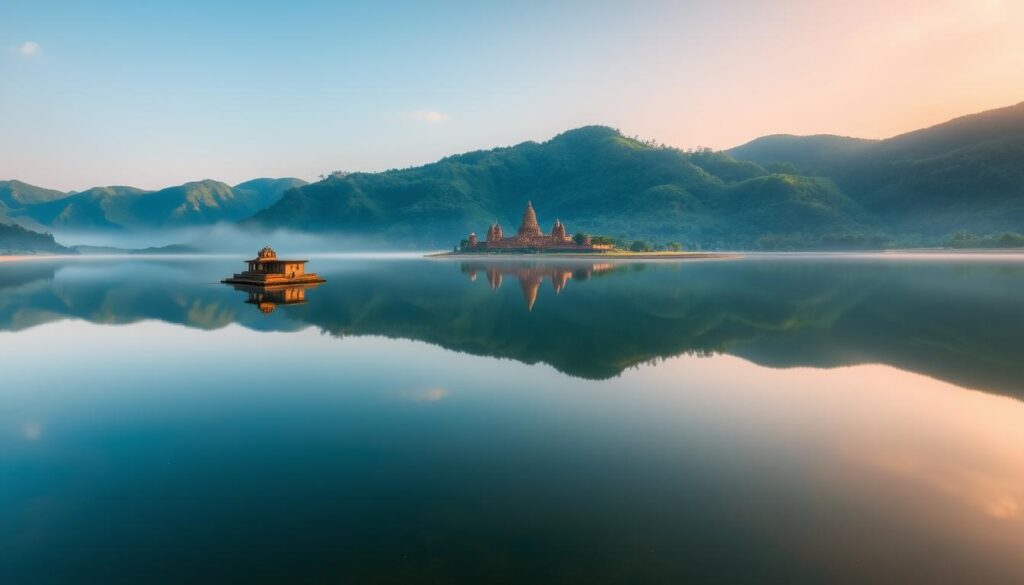
Symmetry photography can turn ordinary travel images into extraordinary ones. Mirrored Images create stunning compositions that captivate viewers. Reflective Compositions transform simple scenes into visual stories of balance and harmony12.
Symmetry isn’t just a photography technique; it’s an art form used across creative fields. Artists and photographers use it to create Balanced Visuals that grab attention3.
Understanding symmetry can boost your travel photography skills. It works for both architectural wonders and natural landscapes1.
Travel photographers can use symmetry to make compelling images. Geometric patterns in Islamic art and reflective modern architecture offer great photo opportunities1.
Key Takeaways
- Symmetry transforms ordinary scenes into extraordinary images
- Multiple types of symmetry exist in photography
- Balanced compositions create visual harmony
- Symmetry can be found in architecture, nature, and human forms
- Practice and creative vision are key to mastering symmetrical photography
Understanding Symmetry in Photography
Photography tells stories through images. Symmetry creates captivating pictures. Geometric patterns and balanced framing turn ordinary scenes into extraordinary visual experiences.
Symmetry brings balance to photographs. It creates visual harmony through precise arrangement. Elements are mirrored within the frame4.
What is Symmetry?
Symmetry balances a photo’s composition. One half of the image mirrors the other. This creates eye-catching kaleidoscopic effects5.
Types of Symmetry in Photography
- Vertical Symmetry: A line splits the photo into identical halves from top to bottom6
- Horizontal Symmetry: Common in landscapes, especially with water reflections6
- Radial Symmetry: Patterns repeat around a central point, like in flowers or wheels4
Why Use Symmetry in Travel Photography?
Symmetry offers minimalist aesthetics for striking images. It transforms ordinary scenes into compelling compositions. Balance and precision help tell a story4.
Symmetry is not just about perfect mirroring, but about creating a visual harmony that speaks to the viewer’s sense of order and beauty.
Symmetry elevates travel photography. It turns snapshots into powerful visual narratives. Your experiences are captured in a unique way5.
Tips for Capturing Symmetrical Shots
Symmetry in photography demands keen observation and smart techniques. It can transform your travel photos with striking compositions. Mastering this skill opens up new possibilities in Architectural Symmetry and Balanced Visuals.
Striking compositions are within reach when you grasp symmetrical shot techniques. Your photos will stand out with this powerful visual tool.
Find Your Subject
For Abstract Symmetry, choosing the right subject is key. Look for these symmetrical elements in your surroundings:
- Bridges with perfect reflections
- Buildings with mirrored facades
- Natural landscapes with central compositions
- Urban architectural structures
Utilize Natural Framing
Natural framing enhances symmetrical shots. Use doorways, archways, or reflective surfaces for balanced compositions7. Wide-angle lenses excel in architectural photography, capturing expansive symmetrical scenes7.
Pro Tip: Position yourself precisely in the center to maximize symmetrical impact.
Adjust Your Angle
Camera positioning greatly affects symmetry. Try different angles to create compelling visual stories7. For water reflections, use low angles to capture mirror-like surfaces7.
Here are some recommended camera settings for symmetrical shots:
- Horizontal symmetry: f/16, 120 seconds, ISO 1008
- Vertical symmetry: f/2.8, 1/60 seconds, ISO 64008
- Reflective symmetry: f/16, 1/125 seconds, ISO 2508
Symmetry is about balance, precision, and visual harmony. Practice these techniques to improve your travel photography. You’ll soon create stunning, mirror-like compositions that captivate viewers.
Post-Processing Techniques for Symmetry
Post-processing is key to enhancing symmetrical compositions in travel photos. Pros use Adobe Lightroom or Photoshop to refine their symmetrical visual storytelling. Mirrored images can turn ordinary shots into stunning visuals9.
Cropping is crucial for perfecting symmetry. Adjust your frame to center the subject. Ensure both sides have equally weighted visual elements10.
Reflective compositions benefit from precise alignment. This can dramatically improve the image’s overall balance and appeal9.
Kaleidoscopic effects add an artistic dimension to symmetrical images. Black and white conversions often highlight texture and shape. This creates a more dramatic visual impact10.
Be careful not to over-edit. Subtle adjustments maintain authenticity while showcasing symmetrical qualities. Some intentional asymmetry can prevent images from looking too rigid10.
Your goal is to create a balanced, engaging photograph. It should draw the viewer’s eye and tell a compelling story9.
FAQ
What is symmetry in photography?
Symmetry in photography creates balanced, visually pleasing compositions. It occurs when two halves of an image mirror each other. This technique distributes focal points evenly, resulting in visual harmony.
What are the main types of symmetry in photography?
Three basic types of symmetry exist in photography. Vertical symmetry splits an image from top to bottom. Horizontal symmetry divides it from left to right. Radial symmetry repeats patterns around a central point.
How can I capture symmetrical shots while traveling?
Use your camera’s grid and live view to center shots precisely. Look for symmetry in architecture like bridges and buildings. Try wide-angle lenses and interesting angles for unique perspectives.
In group portraits, balance the frame by carefully positioning your subjects. This creates a visually appealing and symmetrical composition.
What camera settings help create symmetrical images?
Enable your camera’s grid overlay to improve composition. Use live view to check alignment and choose a wide-angle lens. Focus on centering your subject and maintaining balance in the frame.
Can post-processing enhance symmetry in photographs?
Yes, editing software can fine-tune symmetrical compositions. Use Adobe Lightroom or Photoshop to convert images to black and white. This emphasizes texture and enhances symmetrical aspects.
Cropping can improve balance, while filters can highlight symmetrical features. These tools help perfect your symmetrical images.
Where are the best places to find symmetry for photography?
Symmetry abounds in architecture, nature, and urban landscapes. Look for repeating patterns in buildings, bridges, and flowers. Reflective surfaces and balanced geometric designs offer great symmetrical opportunities.
Is perfect symmetry always the best approach?
Not always. Slight asymmetry can add interest to your photos. It prevents compositions from looking too contrived. Aim for balance while keeping your image engaging and dynamic.
What types of lenses work best for symmetry photography?
Wide-angle lenses excel at capturing symmetrical scenes in architecture and landscapes. Prime lenses with sharp focus emphasize precise lines. These lenses help create balanced, symmetrical compositions in your photography.
Source Links
- Symmetry In Photography: The Definitive Guide – https://www.travelphotographyguru.com/travel-blogs/symmetry-in-photography
- How To Use Symmetry To Improve Composition – https://www.travelphotographyguru.com/travel-blogs/how-to-use-symmetry-to-improve-composition
- 7 Great tips to use Symmetry in Photography – https://www.pixpa.com/blog/symmetry-photography
- How to Use Symmetry in Photography – https://www.format.com/magazine/resources/photography/symmetry-photography
- How to Use Symmetry in Photography – Adorama – https://www.adorama.com/alc/how-to-use-symmetry-in-photography/
- What Is Symmetry in Photography? (How to Really Use It) – https://expertphotography.com/symmetry-in-photography/
- Focus: 10 tips and tricks for creating stunning symmetrical images – https://focus.picfair.com/articles/10-tips-and-tricks-for-creating-stunning-symmetrical-images
- Symmetry in Photography – Killer Tips to Improve Composition — The School of Photography – Courses, Tutorials & Books – https://www.theschoolofphotography.com/tutorials/symmetry-in-photography
- Master Symmetry in Photography: Tips for Stunning Compositions – https://www.wimarys.com/tips-for-creating-striking-symmetry-in-your-photos/
- Take Your Time Composing For Stronger Symmetry Photos – https://fstoppers.com/architecture/take-your-time-composing-stronger-symmetry-photos-171106