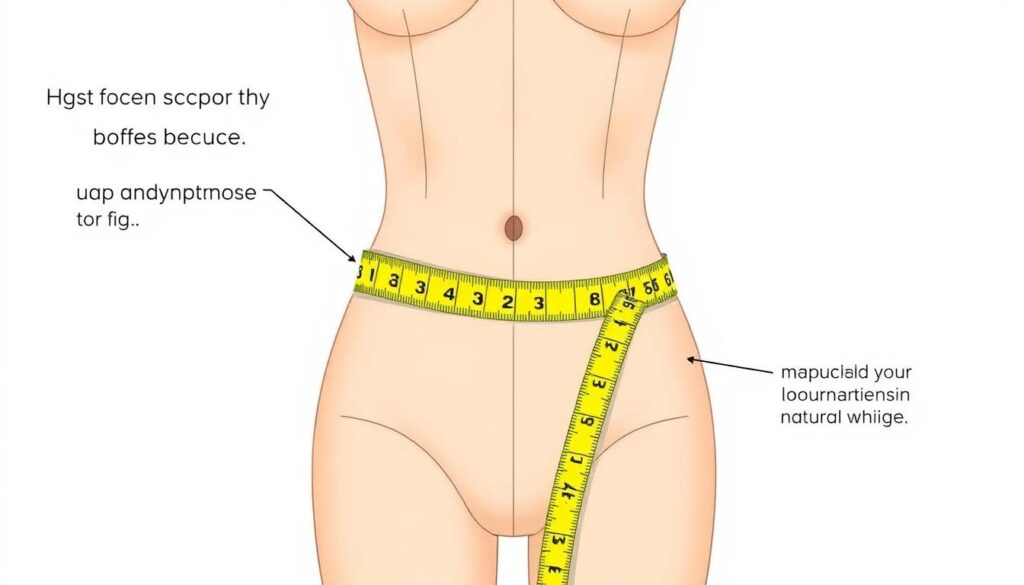
Measuring your waist is a vital health assessment tool. It reveals key insights about your wellness and potential health risks12. Mastering this technique provides valuable information about your body composition.
Accurate waist measurement helps track fitness progress. It can also provide early warning signs of health concerns1. Regular tracking is crucial for monitoring changes in your body.
This guide will show you how to measure your waist correctly. You’ll learn the precise steps for the most accurate results1. Proper measurement is key for assessing health risks and monitoring weight loss.
Key Takeaways
- Waist measurement is a critical health assessment tool
- Accurate measurement requires specific techniques
- Regular tracking helps monitor health changes
- Waist size can indicate potential health risks
- Proper measurement involves specific positioning and tools
Why Measuring Your Waist is Important
Your waist size is more than just a number. It’s a key sign of your overall health. Measuring your waist can reveal potential risks for various medical conditions.
It offers insights into your body makeup. Tracking waist size helps understand risks linked to belly fat.
Your waist size shows more than looks. It’s a window into your internal health status. Experts suggest measuring waist to spot risks from belly fat3.
Understanding Waist Measurement Standards
Health groups have set guidelines for healthy waist size:
- For women: 35 inches or less is considered healthy3
- For men: 40 inches or less is recommended3
- A waist-to-height ratio above 0.5 indicates increased health risks3
Health Implications of Waist Size
Too much belly fat can lead to serious health issues. Fat around your organs may increase risks of:
- High cholesterol
- High blood pressure
- Type 2 diabetes
- Coronary heart disease4
“Your waist measurement is a powerful predictor of potential health challenges.”
Setting Personal Goals
Tracking your waist helps set realistic health goals. Try these strategies:
- Exercise at least 30 minutes, three times weekly5
- Track calories in a food journal5
- Increase water intake5
- Reduce added sugar consumption5
Losing just ten percent of body weight can boost your health5. Talk to healthcare pros for personalized advice on your wellness journey.
What You Need to Measure Your Waist
Measuring your waist requires careful planning and the right tools. A successful waist size calculator needs appropriate equipment and a good environment. Understanding these essentials is crucial for accurate measurement.
Essential Tools for Accurate Measurement
To get precise results, you’ll need specific tools. Here are the key items:
- Flexible measuring tape (preferably non-elastic)
- Pen and notebook or digital device for recording
- Mirror for proper tape placement
A professional measurement guide recommends using a tape that conforms to your body. Avoid metal or cloth tapes that might stretch or give inaccurate readings6.
Choosing the Right Clothing
Your clothing choice affects measurement accuracy. Consider these guidelines:
- Wear thin, form-fitting clothing
- Measure directly on bare skin if possible
- Remove bulky garments that add extra padding
Pro tip: Knowing your waist size helps pick the right jeans across different brands7.
Creating a Comfortable Environment
Choose a private space with good lighting and a full-length mirror. Make sure you can move freely and see your entire torso. A good environment helps maintain proper posture for accurate measurement6.
Accurate measurements are the first step toward understanding your body and achieving your health goals.
Step-by-Step Guide to Measure Your Waist
Accurate waist measurement is crucial for clothing and health decisions. Many people guess their waist size incorrectly. This can lead to ill-fitting clothes and discomfort.
Preparing for Accurate Measurement
Stand straight and locate the midpoint between your hip bones and rib cage. Use a flexible measuring tape for best results. Wear minimal clothing to ensure accuracy.
Stand naturally and wrap the tape snugly around your waist. Don’t pull it too tight. This waist measurement technique helps achieve the most precise measurement.
Recording Your Measurements
Keep a log of your waist size to track body changes. Measure every few months to monitor your health and body transformations.
Your measurements are vital for choosing well-fitted clothing. They can also provide insights into your overall health8.
FAQ
Why is waist measurement important for my health?
Waist measurement is a crucial health indicator. It signals potential risks from excess abdominal fat. A large waist can increase chances of diabetes, heart disease, and stroke.
For men, over 40 inches (102 cm) is high-risk. For women, it’s over 35 inches (89 cm).
What tools do I need to measure my waist accurately?
You need a flexible, non-elastic tape measure. Avoid cloth tapes that stretch or rigid metal tapes. Choose a tape that wraps smoothly without gaps or bunching.
A mirror and a device to record measurements are also useful.
Where exactly should I measure my waist?
Measure midway between your hip bones and rib cage. This is usually at your belly button level. It’s the most consistent spot for waist measurement.
How tight should the tape measure be when I’m measuring?
The tape should be snug but not digging in. It should sit parallel to the floor. Allow yourself to breathe normally while measuring.
How often should I measure my waist?
Measure at the same time daily, preferably before eating. Take multiple measurements and find the average. Many experts suggest monthly tracking for health monitoring.
Can I measure my waist through clothing?
Measure on bare skin or wear thin, fitted clothing. Bulky clothes can add padding and skew results. Remove thick layers before measuring.
What’s the difference between waist measurement and waist-to-hip ratio?
Waist measurement shows your waist circumference. Waist-to-hip ratio (WHR) compares waist size to hip size. WHR offers insights into body fat distribution.
Both measurements are important health indicators.
Source Links
- How to Measure Your Waist: 8 Steps (with Pictures) – wikiHow – https://www.wikihow.com/Measure-Your-Waist
- What Waist Circumference Can Tell You About Your Health – https://www.verywellfit.com/what-is-waist-circumference-3495558
- Calculating Your Waist Circumference – https://www.webmd.com/diet/calculating-your-waist-circumference
- Why your waist size matters – https://www.bhf.org.uk/informationsupport/heart-matters-magazine/medical/measuring-your-waist
- Your waist circumference matters more than your weight – https://intermountainhealthcare.org/blogs/your-waist-circumference-matters-more-than-your-weight
- Centimeters Waist measurement – https://media.specialolympics.org/resources/health/disciplines/health-promotion/Health-Promotion-Waist-Measurement-Instructions-Metric.pdf
- How To Measure Your Waist To Determine Your Jeans Size – https://shopduer.com/blogs/uncuffed/how-to-measure-waist-for-jeans?srsltid=AfmBOoo05f3uk8YMVUvOfFH-1T7pE-VGBXGpB4SyGeIkj5YGjF_X4hio
- How to measure your waist: A step-by-step guide – https://www.medicalnewstoday.com/articles/how-to-measure-your-waist