
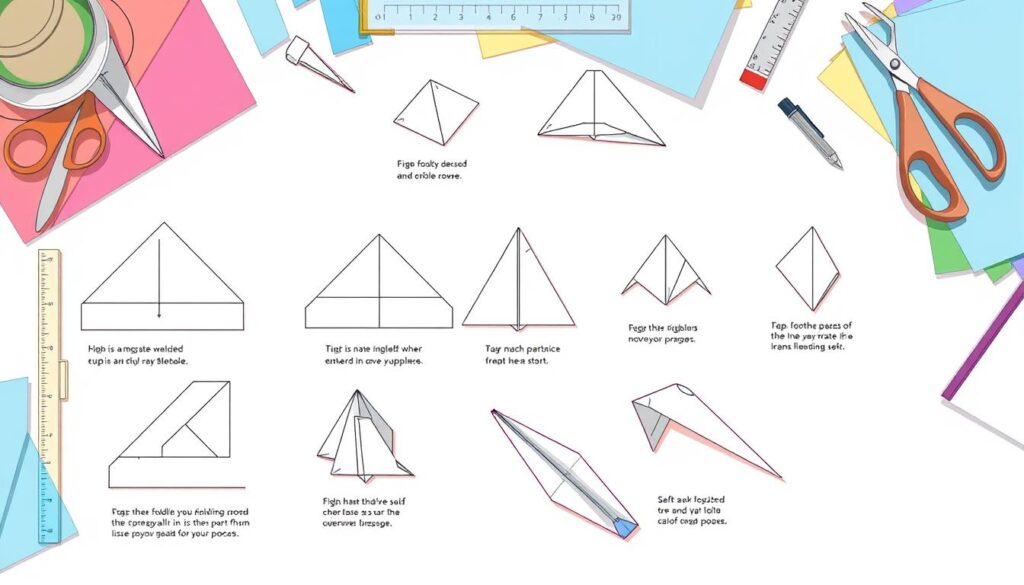
Paper airplanes offer a thrilling mix of creativity, science, and fun. They’re perfect for curious kids and playful adults alike. Mastering this art can be an incredible journey1.
These flying wonders teach basic aerodynamics and engineering. Elementary school kids can quickly learn to create complex designs. Watch as your creations soar through the air1.
Start your adventure with a standard 8.5 x 11-inch sheet of paper. Try different designs like dart, arrow, and raptor. Each offers a unique flying experience1.
The key is to experiment and enjoy while learning. Let your imagination take flight as you fold and fly.
Key Takeaways
- Paper airplanes are an accessible and educational hobby
- Multiple design types offer varied flying experiences
- Folding skills improve with practice
- Indoor and outdoor flying can be equally enjoyable
- Basic aerodynamics can be learned through paper airplane creation
Choosing the Right Paper for Your Airplane
The perfect paper airplane starts with the right paper. Your choice of material can greatly affect how well your plane flies.
Different papers offer unique benefits for your airplane designs. Understanding paper characteristics is key when following airplane instructions.
Paper Type Selection
- Printer paper (20-24 lb weight)
- Construction paper
- Origami paper
- Lightweight cardstock
Size Considerations
Paper sizes affect airplane performance. A4 and letter-sized papers are common choices with specific dimensions that impact flight2.
Larger papers like A3 or Ledger can create bigger airplane designs2. These sizes offer more room for creative folding techniques.
Weight and Thickness Dynamics
Paper weight directly affects your airplane’s flight. Lighter papers often glide smoothly, while heavier ones can be more stable3.
Try different paper weights to find what works best for your design3. This hands-on approach can lead to exciting discoveries.
“Choosing the right paper is like selecting the perfect canvas for an artist” – Paper Airplane Enthusiast
Experimenting with various paper types can reveal interesting performance insights3. Change only one thing at a time to accurately assess each paper’s qualities3.
Basic Techniques for Folding Paper Airplanes
Mastering paper airplane folding takes patience and practice. Understanding basic folding methods is key to creating successful flying machines. Start with simple designs and gradually move to more complex ones.
Understanding Paper Airplane Difficulty Levels
Paper airplane designs come in various skill levels. Here are three key categories:
- Beginner Level: The Bulldog Dart – Simple design with few folds that flies well4
- Intermediate Level: The Harrier – More advanced with additional folds4
- Expert Level: The Hammer – Most complex design requiring multiple precise folds4
Essential Folding Instructions
Follow these critical steps when creating your paper airplane:
- Use standard 8½ in x 11 in paper5
- Fold paper precisely in half lengthwise5
- Ensure symmetrical wings for level flight5
Pro Tips for Perfect Folding
Precision in folding requires attention to detail. Construction paper offers interesting color variations and slight weight differences5.
Always make crisp, clean folds. Double-check that both sides match exactly.
Remember: Practice makes perfect in paper airplane design!
Throwing Techniques for Maximum Performance
| Technique | Description |
|---|---|
| Arm Position | Keep arm level or slightly tilted up5 |
| Throwing Motion | Step forward while swinging airplane ahead5 |
| Testing Location | Throw outdoors to catch wind for increased distance5 |
Your paper airplane journey starts with these fundamental principles. Keep practicing and stay patient. Enjoy becoming a paper airplane master!
Testing and Improving Your Paper Airplane
Creating paper airplane instructions requires understanding performance testing. Evaluate and refine your designs systematically. Paper airplanes experience complex aerodynamic forces that affect their flight6. Simple adjustments can greatly improve your aircraft’s performance6.
Experts suggest spending 20 minutes perfecting your design7. Measure your airplane’s flight distance and time in the air. Focus on wing size, body weight, and throwing technique6. You might learn tricks used by record holders like John Collins7.
Try different designs and record your results. Educational resources offer great guidance on flight dynamics. Invite a family member to join your paper airplane project7. Each change can transform your paper airplane’s performance6.
Hold friendly competitions to test your creations. Compare flight distances and throwing techniques. Explore various paper airplane designs. Enjoy the process of engineering your perfect flying machine!
FAQ
What is the average distance a paper airplane can fly?
A typical 10-year-old’s paper airplane flies about 40.8 ft (12.5 m). The average flight time is 1.4 seconds. Design, folding technique, and paper type can affect these numbers.
What type of paper works best for making paper airplanes?
Standard letter or A4 paper is often used. Paper weight and thickness impact flight performance. Heavier paper offers stability, while lighter paper helps with distance.
Try different paper types to find the best fit for your design.
How difficult is it to make a paper airplane?
Paper airplane designs range from simple to complex. Beginner-friendly models like the Falcon or Seagull need fewer folds. Advanced designs like the Owl or Elk require precise folding techniques.
There are designs for all skill levels!
Can I improve my paper airplane’s performance?
Yes! Try different folding techniques and adjust wing angles. Test various designs and focus on symmetry and precision. Some enthusiasts create custom launchers to boost distance and flight time.
Are there world records for paper airplane flights?
Paper airplane fans track records for distance, time aloft, and unique designs. Advanced models like the Albatross, Jupiter, and Neptune are known for great performance.
Where can I find detailed paper airplane folding instructions?
Websites like Fold’N Fly offer step-by-step instructions and video tutorials. They provide printable templates for over 50 paper airplane designs. These guides cover easy to advanced difficulty levels.
What are some common mistakes to avoid when making paper airplanes?
Uneven folds, asymmetrical wings, and using the wrong paper are common errors. Make crisp, symmetrical folds and use the right paper weight. Take your time with each fold to create a well-balanced airplane.
Source Links
- How To Make the Best Paper Airplanes – With Free Printables – https://mommypoppins.com/anywhere-kids/how-to-make-the-best-paper-airplane-free-printables
- Fold ‘N Fly » Does paper size matter when making a paper airplane? – https://www.foldnfly.com/lounge/paper-size.php
- What type of paper makes the best paper airplane? – https://www.canr.msu.edu/news/what_type_of_paper_makes_the_best_paper_airplane
- How to Make the World’s Best Paper Airplanes – https://www.artofmanliness.com/skills/how-to/how-to-make-the-worlds-best-paper-airplanes/
- How to Make a Paper Airplane: 12 Steps (with Pictures) – wikiHow – https://www.wikihow.com/Make-a-Paper-Airplane
- Make A Better Paper Airplane – https://www.sciencefriday.com/educational-resources/paper-airplane-flight-challenge/
- Lesson 1: Paper Airplane Challenge • NERDING – https://nerding.org/stem-lesson-1-paper-airplane-challenge/

