
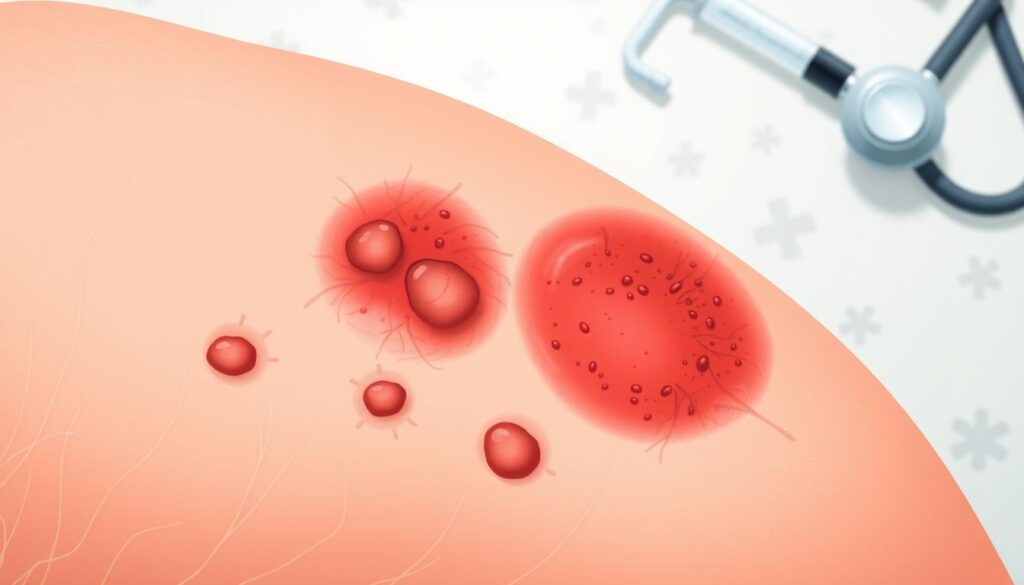
MRSA is a dangerous staph infection resistant to many antibiotics. It’s a major concern in medical and community settings1. This bacteria’s resistance makes it challenging to treat1.
Some groups face higher MRSA risks. These include people with long hospital stays or weak immune systems2. Chemotherapy patients, those with HIV, or other immune-compromising conditions should be extra careful2.
MRSA spreads through contact with infected people or contaminated surfaces1. It’s now common in schools, gyms, and locker rooms3.
Key Takeaways
- MRSA is a highly resistant form of staph bacteria
- Infections can spread through direct personal contact
- Certain groups are at higher risk of infection
- Proper hygiene is crucial for prevention
- Early detection and treatment are essential
Understanding MRSA and Its Impact on Health
MRSA poses a serious healthcare challenge. Staph bacteria naturally exist on human skin and in noses. Some strains have developed dangerous antibiotic resistance4.
- Healthcare-associated MRSA (HA-MRSA): Primarily affects hospitalized patients4
- Community-associated MRSA (CA-MRSA): Impacts healthy individuals outside medical settings4
What is Methicillin-resistant Staphylococcus aureus?
MRSA is a staph bacteria strain resistant to many antibiotics. These include methicillin, amoxicillin, and oxacillin5. About 2% of people carry this bacteria.
Most carriers don’t develop serious infections5.
Common Sites of MRSA Infection
| Infection Location | Characteristics |
|---|---|
| Skin | Often begins as painful boils or abscesses |
| Surgical Wounds | High risk of bacterial colonization in medical settings |
| Bloodstream | Potentially life-threatening infection |
Health Risks and Complications
MRSA infections can range from mild skin conditions to severe systemic problems. In 2005, over 94,000 people developed life-threatening MRSA infections. Nearly 19,000 deaths occurred during hospital stays4.
Prevention is crucial in managing the spread of this dangerous bacterial strain.
Potential complications include pneumonia, sepsis, and serious invasive infections. These are especially risky for people with weak immune systems5.
Healthcare facilities have seen up to 70% fewer infections. This is due to strict prevention practices5.
Signs, Symptoms, and Risk Factors of MRSA
MRSA is a tough skin infection that can be dangerous. About 5% of people always carry the bacteria that cause MRSA6. Knowing the signs and risks helps catch it early.
Spotting MRSA symptoms quickly can help with treatment. Look out for these signs:
- Red, swollen, and painful skin bumps
- Warm areas around the infection site
- Pus or drainage from the wound
- Fever and body aches
Your MRSA risk depends on several things. One in three people has staph germs on their skin or in their nose7.
High-risk groups include:
- Healthcare workers and patients
- Athletes participating in contact sports
- People living in crowded conditions
- Individuals with weakened immune systems
“Prevention is always better than cure when it comes to MRSA infections.”
MRSA risks vary in different places. Hospital-associated MRSA is common in nursing homes, especially among older adults6.
Community-associated MRSA spreads through skin contact, shared items, and dirty environments7. Keep clean and watch out for exposure to lower your MRSA risk.
Prevention and Treatment Strategies for MRSA Infections
MRSA prevention requires a mix of personal hygiene, medical awareness, and strategic techniques. Your health depends on understanding and using effective strategies against this tough bacterial infection.
Safeguarding yourself from MRSA is crucial for your well-being. By following proven methods, you can lower your risk of infection significantly.
Personal Hygiene Practices
Preventing MRSA starts with simple yet vital personal hygiene steps. About 25% to 30% of people carry staph bacteria on their skin without infection8.
To reduce transmission risks, follow these key practices:
- Wash hands frequently with soap and water
- Keep wounds clean and covered
- Avoid sharing personal items like towels or razors
- Use alcohol-based hand sanitizers when soap is unavailable
Healthcare Setting Prevention
Hospitals use strict contact precautions to minimize MRSA spread. Models suggest these precautions can cut MRSA transmission by 47% in hospitals9.
Healthcare professionals use active surveillance to find and isolate potential carriers quickly. This helps control the spread of MRSA in medical settings.
Treatment Options and Antibiotic Use
Decolonization procedures are key in managing MRSA. Most staph skin infections can be treated without antibiotics8.
When antibiotics are needed, doctors carefully choose medications based on bacterial resistance profiles. This targeted approach helps fight MRSA effectively.
| Prevention Strategy | Effectiveness |
|---|---|
| Hand Hygiene | Most Important Factor |
| Contact Precautions | 47% Transmission Reduction |
| Universal Glove/Gown Use | 44% MRSA Transmission Reduction |
“Hand hygiene is the single most important factor in preventing the spread of MRSA” – CDC Recommendation
By using these prevention strategies, you can greatly lower your risk of MRSA infection10. Stay informed and practice good hygiene to protect yourself and others.
Conclusion
MRSA prevention demands ongoing awareness and proactive strategies. Public health experts stress personal hygiene and smart antibiotic use. Up to 30% of healthy people may carry Staphylococcus aureus, making vigilance essential11.
Your MRSA prevention role starts with simple, effective practices. Wash your hands often, cover cuts, and avoid sharing personal items. These steps can greatly reduce transmission risks11.
Healthcare settings and community spaces need extra care to prevent outbreaks. Daycare centers, prisons, and athletic facilities require special attention11.
Ongoing research and education are vital to fight MRSA. Understanding this complex pathogen helps protect you and your community12. Stay informed about new prevention and treatment methods.
Your commitment to good healthcare practices is crucial. Use antibiotics wisely and maintain personal hygiene. These actions help reduce MRSA spread and protect vulnerable people from infections.
FAQ
What exactly is MRSA?
MRSA is a type of staph bacteria resistant to many antibiotics. It’s found on the skin or in the nose of about one-third of people. MRSA can cause serious infections, especially in healthcare settings or close-contact community environments.
How does MRSA spread?
MRSA spreads through direct contact with infected people, contaminated surfaces, or open wounds. It can transmit through skin-to-skin contact or sharing personal items. In healthcare settings, it can spread through medical devices or contact with workers.
What are the main types of MRSA?
There are two primary types of MRSA: Healthcare-associated MRSA (HA-MRSA) and Community-associated MRSA (CA-MRSA). HA-MRSA typically occurs in hospitals or long-term care facilities. CA-MRSA spreads in community settings like schools, gyms, and sports facilities.
What are the typical symptoms of a MRSA infection?
MRSA infections often appear as red, swollen, and painful skin bumps. They can look like pimples or spider bites and quickly develop into deep abscesses.
Other symptoms may include fever, warmth around the infected area, and pus drainage. In severe cases, serious complications like pneumonia or bloodstream infections can occur.
Who is at highest risk for MRSA?
Several groups have higher MRSA risk, including athletes and military personnel. Hospitalized patients, people with weakened immune systems, and those in crowded conditions are also at risk.
Other high-risk groups include daycare and school students, men who have sex with men, and drug users.
How can I prevent MRSA infections?
Prevention involves practicing good hand hygiene and keeping wounds clean and covered. Avoid sharing personal items like towels or razors. Maintain clean environments and use protective equipment in healthcare settings.
Regular handwashing and proper wound care are crucial steps in prevention.
How is MRSA typically treated?
Treatment depends on the infection’s severity and location. It may involve specific antibiotics chosen based on the strain’s resistance profile. Surgical drainage of abscesses might be necessary in some cases.
Decolonization procedures using special nasal creams, body washes, and shampoos can eliminate bacterial colonization.
Can MRSA infections be serious?
Yes, MRSA can lead to serious complications if left untreated. Potential outcomes include pneumonia, sepsis, and bloodstream infections. In rare cases, it can cause life-threatening conditions.
Seek prompt medical attention if you suspect a MRSA infection.
Are there special precautions in healthcare settings?
Healthcare facilities use active surveillance and isolation of MRSA-positive patients. They follow strict protective equipment protocols and regularly disinfect surfaces and medical equipment. Molecular diagnostics help quickly identify and manage potential infections.
Can I be a MRSA carrier without knowing?
Yes, many people are asymptomatic carriers of MRSA. They have the bacteria on their skin or in their nose without showing symptoms. About one-third of people carry staph bacteria, but not all develop an active infection.
Regular hygiene and awareness are important for managing potential transmission.
Source Links
- MRSA (for Teens) – https://kidshealth.org/en/teens/mrsa.html
- MRSA – https://www.nhs.uk/conditions/mrsa/
- What Does MRSA Look Like? – https://www.hopkinsmedicine.org/health/conditions-and-diseases/what-does-mrsa-look-like
- Methicillin-Resistant Staphylococcus Aureus (MRSA) – https://www.bcm.edu/departments/molecular-virology-and-microbiology/emerging-infections-and-biodefense/specific-agents/mrsa
- Understanding MRSA Infection – https://www.webmd.com/skin-problems-and-treatments/understanding-mrsa
- MRSA infection-MRSA infection – Symptoms & causes – Mayo Clinic – https://www.mayoclinic.org/diseases-conditions/mrsa/symptoms-causes/syc-20375336
- Methicillin-resistant Staphylococcus aureus (MRSA) Basics – https://www.cdc.gov/mrsa/about/index.html
- Prevention and Control of Methicillin-resistant Staphylococcus aureus (MRSA) Infections in the Camp Setting – https://www.health.ny.gov/diseases/communicable/staphylococcus_aureus/methicillin_resistant/community_associated/health_advisory_2008-05-09.htm
- IDSA/SHEA Strategies to Prevent Methicillin-Resistant Staphylococcus Aureus Transmission and Infection in Acute-Care Hospitals Guideline Summary – https://www.guidelinecentral.com/guideline/2947022/
- SHEA/IDSA/APIC Practice Recommendation: Strategies to prevent methicillin-resistant Staphylococcus aureus transmission and infection in acute-care hospitals: 2022 Update – https://pmc.ncbi.nlm.nih.gov/articles/PMC10369222/
- Patient education: Methicillin-resistant Staphylococcus aureus (MRSA) (Beyond the Basics) – https://www.uptodate.com/contents/methicillin-resistant-staphylococcus-aureus-mrsa-beyond-the-basics
- Methicillin-Resistant Staphylococcus aureus (MRSA): One Health Perspective Approach to the Bacterium Epidemiology, Virulence Factors, Antibiotic-Resistance, and Zoonotic Impact – https://pmc.ncbi.nlm.nih.gov/articles/PMC7519829/

