
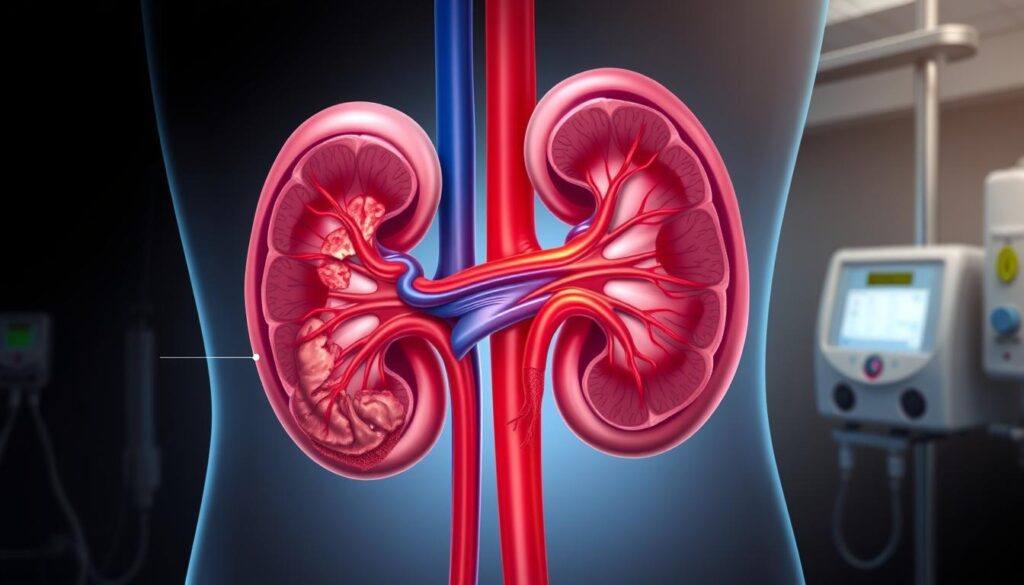
Acute Kidney Injury (AKI) is a serious condition affecting kidney function. It occurs when kidneys suddenly stop filtering blood waste effectively. Hospital patients, especially in intensive care, face the highest risk of AKI12.
AKI severity ranges from mild to life-threatening. Doctors use creatinine levels and glomerular filtration rate to check kidney health. Quick treatment is vital to prevent permanent damage or death2.
Knowing risk factors and early signs is key for quick action. Diabetes, high blood pressure, and heart disease increase AKI chances3. Age, overall health, and current treatments also affect your risk1.
Key Takeaways
- AKI can develop rapidly, often within 48 hours
- Hospitalized patients are at higher risk
- Early detection is critical for successful treatment
- Multiple health conditions can contribute to AKI
- Prompt medical intervention can prevent permanent kidney damage
What is Acute Kidney Injury?
Acute kidney injury (AKI) is a serious condition that affects kidney function. Your kidneys filter waste and maintain bodily balance. Sometimes, they suddenly struggle to do their job4.
AKI causes a quick drop in kidney function, often within hours. It usually has multiple causes. These can include infections, low blood flow, and toxic substances4.
Defining Kidney Function Disruption
AKI happens when kidneys lose their filtering ability fast. This can occur in 48 hours to 7 days. It greatly affects your body’s internal balance5.
Common Causes of Acute Kidney Injury
- Severe infections5
- Reduced blood flow to kidneys5
- Urinary tract blockages5
- Certain medications (NSAIDs, blood pressure drugs)5
Critical Risk Factors
| Risk Category | Specific Factors |
|---|---|
| Age-Related | Over 65 years old5 |
| Health Conditions | Diabetes, heart failure, chronic kidney disease5 |
| Environmental | Dehydration, hospitalization6 |
Hydration is key for kidney health. Not drinking enough water can raise your AKI risk5. Watch your urine output and stay hydrated to protect your kidneys.
Understanding your personal risk factors can help you take proactive steps to protect your kidney health.
AKI is common in hospitals. It affects up to 15% of inpatients. In critical care, it can impact 60% of patients4.
Spotting early signs and maintaining kidney health can improve your medical outcomes. Stay informed and take care of your kidneys.
Symptoms of Acute Kidney Injury
Acute kidney injury (AKI) can show various symptoms. These range from subtle to severe. Knowing these signs is key for early detection and quick treatment.
Your body may signal kidney function problems. Pay attention to these warnings for your health’s sake.
Early Warning Signs
AKI’s initial symptoms can be subtle yet important. Keep an eye out for these early signs:
- Decreased urine output
- Unexpected fatigue
- Mild swelling in legs or ankles
- Slight changes in Electrolyte Imbalance7
Severe Symptoms
As kidneys worsen, more serious symptoms may appear. These can include:
- Confusion or mental disorientation
- Severe chest pain
- Nausea and loss of appetite
- Shortness of breath
- Potential seizures7
When to Seek Medical Attention
Creatinine Levels and Glomerular Filtration Rate show kidney health. Seek help right away if you have:
| Symptom Category | Warning Signs |
|---|---|
| Urgent Symptoms | Chest pain, extreme confusion, seizures |
| Moderate Symptoms | Persistent fatigue, swelling, reduced urination |
Early detection of kidney problems can significantly improve treatment outcomes and prevent long-term complications.
Some people might not notice symptoms. Regular check-ups are vital, especially with risk factors. These include diabetes, advanced age, or chronic conditions8.
Treatment Options for Acute Kidney Injury
Treating acute kidney injury involves multiple strategies to support recovery and prevent further damage. Your medical team will create a personalized plan for your specific condition. This approach addresses your unique health challenges9.
Renal replacement therapy might be needed based on your kidney function. Dialysis is crucial when kidneys can’t filter waste or balance fluids properly10.
Treatment often requires a hospital stay. Medical professionals will monitor your hydration and adjust interventions as needed10.
Medication management is key to your recovery. Doctors may prescribe potassium binders or calcium infusions to stabilize electrolyte levels10.
These treatments are chosen based on blood tests tracking urea and creatinine levels10. Your long-term recovery depends on the injury’s cause and your overall health9.
Regular check-ups will assess your kidney function and prevent future complications. For more on acute kidney injury research, check out this comprehensive medical study.
FAQ
What exactly is acute kidney injury (AKI)?
Acute kidney injury is a sudden drop in kidney function. It happens within hours or days. AKI affects how your kidneys filter waste from your blood.
This can cause chemical imbalances and waste buildup. AKI ranges from mild to severe. It’s most common in hospitalized patients, especially those in intensive care.
What are the main causes of acute kidney injury?
AKI has three main causes. These are reduced blood flow to kidneys, direct kidney damage, and urinary tract blockage.
Common triggers include severe infections and certain medications. Dehydration, major surgeries, and health conditions like diabetes can also cause AKI.
What symptoms should I watch out for?
Early AKI signs include less urine output and swelling in legs or ankles. Fatigue and shortness of breath are also warning signs.
Severe symptoms can include confusion, nausea, and chest pain. In extreme cases, seizures may occur. Some patients might not show any symptoms.
Who is most at risk for developing acute kidney injury?
Your risk increases if you’re over 65 or have pre-existing kidney disease. Diabetes, high blood pressure, and heart disease also raise your risk.
Currently hospitalized patients are more likely to develop AKI. Those in intensive care units are especially vulnerable.
How is acute kidney injury treated?
Treatment focuses on addressing the underlying cause. It also supports kidney function. This might include lifestyle changes and a kidney-friendly diet.
Proper hydration and medications to control blood pressure are important. In severe cases, dialysis or renal replacement therapy may be needed.
Can acute kidney injury be reversed?
Yes, AKI can often be reversed if caught and treated early. Recovery time varies from days to months.
The severity of injury and your overall health affect recovery. Regular follow-up care is crucial to monitor kidney function.
When should I seek immediate medical attention?
Seek help if you have less urine output or unexpected swelling. Persistent fatigue, confusion, or chest pain are also concerning symptoms.
This is especially important if you have known kidney problem risk factors. Don’t hesitate to get medical help if you’re worried.
How can I prevent acute kidney injury?
Stay well-hydrated and manage chronic conditions like diabetes. Avoid nephrotoxic medications without doctor approval. Maintain a healthy lifestyle.
Regular medical check-ups are important, especially if you’re high-risk. These steps can help prevent AKI and protect your kidney health.
Source Links
- Acute Kidney Injury (AKI) – https://www.kidney.org/kidney-topics/acute-kidney-injury-aki
- Acute kidney injury – Symptoms and causes – https://www.mayoclinic.org/diseases-conditions/kidney-failure/symptoms-causes/syc-20369048
- Acute kidney injury (AKI) – https://www.kidneyfund.org/all-about-kidneys/other-kidney-problems/acute-kidney-injury-aki
- Acute Kidney Injury: Definition, Pathophysiology and Clinical Phenotypes – https://pmc.ncbi.nlm.nih.gov/articles/PMC5198510/
- Acute kidney injury – https://www.nhs.uk/conditions/acute-kidney-injury/
- Acute Kidney Injury: A Guide to Diagnosis and Management – https://www.aafp.org/pubs/afp/issues/2012/1001/p631.html
- Acute Kidney Injury | Conditions We Treat | Nephrology | UPMC – https://www.upmc.com/services/kidney-disease/conditions/acute-kidney-injury
- Acute kidney injury (AKI) – https://www.nidirect.gov.uk/conditions/acute-kidney-injury-aki
- Approach Considerations, Vasodilators, Dietary Modification – https://emedicine.medscape.com/article/243492-treatment
- Acute kidney injury – Diagnosis and treatment – https://www.mayoclinic.org/diseases-conditions/kidney-failure/diagnosis-treatment/drc-20369053

