
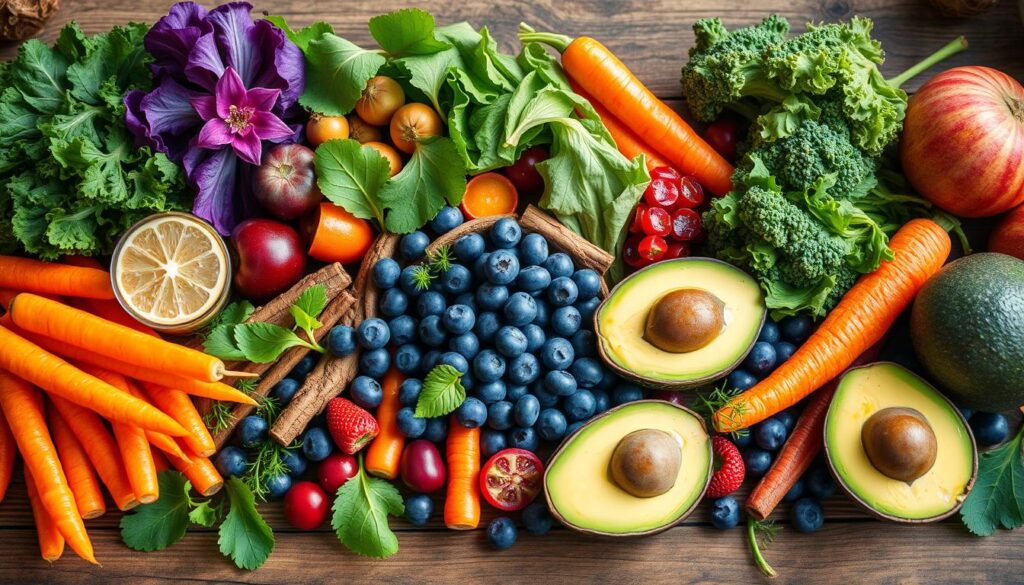
A vitamin-rich diet can transform your health journey. Your body needs essential nutrients for optimal functioning. Nutrient-dense foods boost energy, support immunity, and prevent deficiencies1.
Colorful fruits and veggies provide a wide range of vitamins. Eggs, milk, carrots, and sweet potatoes are rich in Vitamin A1. Oranges, strawberries, and broccoli offer Vitamin C to strengthen your immune system1.
Wild Atlantic salmon provides high-quality protein and omega-3 fatty acids2. Spinach, black beans, and almonds deliver essential magnesium and other minerals1. Potatoes offer multiple B vitamins and minerals for overall nutrition2.
Key Takeaways
- Diversify your diet with colorful, nutrient-dense foods
- Include multiple vitamin sources in daily meals
- Choose whole foods over processed alternatives
- Prioritize fruits, vegetables, and lean proteins
- Focus on foods rich in Vitamins A, B, C, D, E, K
Understanding the Power of Nutrient-Dense Foods
Nutrient-dense foods pack maximum nutrients with minimal calories. They help optimize your daily diet. The 2005 Dietary Guidelines Advisory Committee stressed their importance for essential vitamins and minerals3.
What Makes Foods Nutrient-Dense
Nutrient-dense foods boast impressive nutritional profiles. A study of 47 foods revealed key insights about vitamin sources4:
- 41 foods met the criteria for powerhouse fruits and vegetables
- Nutrient density scores ranged from 10.47 to 122.68
- 97% of classified foods were protective against cancer and heart disease4
Benefits of a Vitamin-Rich Diet
Essential vitamins in foods offer numerous health advantages. Your body needs specific nutrients to function well. Nutrient profiling helps individuals make smarter food choices by ranking foods3.
| Nutrient Category | Daily Recommended Intake |
|---|---|
| Fat (Men) | 95g per day |
| Fat (Women) | 70g per day |
| Fiber | 30g for adults |
Role of Vitamins in Body Functions
Vitamins are the silent heroes that keep your body running smoothly.
Vitamins play crucial roles in maintaining your health. They support cell renewal and protect against oxidative damage. These micronutrients are essential for your overall well-being5.
Focus on nutrient-dense foods for necessary vitamins and minerals. Quality matters more than quantity in nutrition. Your body will function at its best with the right nutrients.
Foods with Vitamins A, B, C, D, E, K
A vitamin-rich diet is key for good health. Various foods offer essential vitamins that support your body. Let’s look at nutrient-packed foods that boost your well-being.
Vitamin A is vital for vision and immunity. Carrots are champions, providing 148% Daily Value per cup6. Other great sources include sweet potatoes and winter squash.
Spinach and kale are also excellent vitamin A sources. These leafy greens pack a nutritional punch.
- Sweet potatoes
- Winter squash
- Spinach
- Kale
B vitamins are essential for energy metabolism. You can find them in many foods.
- Lean meats
- Poultry
- Seafood
- Eggs
- Leafy green vegetables
| Vitamin | Top Food Sources | Daily Value Percentage |
|---|---|---|
| Vitamin C | Guavas, Citrus Fruits | 419% per cup6 |
| Vitamin D | Trout, Salmon | 168% per 6 oz6 |
| Vitamin E | Sunflower Seeds | 49% per ounce6 |
| Vitamin K | Kale | 453% per cup6 |
Pro tip: The National Cancer Institute suggests vitamin D may lower colorectal cancer risk7. A balanced diet beats supplements for getting essential vitamins.
“Your food is your first line of defense in maintaining health and preventing diseases.”
Add these vitamin-rich foods to your meals. You’ll be supporting your body’s needs naturally and tastily.
Smart Strategies for Incorporating Vitamin-Rich Foods
Boosting your vitamin intake doesn’t have to be hard. You can easily support your health by making smart food choices. Understanding how to pick and mix the right foods is key.
Meal Planning Tips for Maximum Nutrition
Planning meals for better vitamin intake needs some thought. Here are some key tips to help you:
- Choose a variety of colorful fruits and vegetables8
- Incorporate lean proteins and whole grains
- Snack on nutrient-dense options like nuts and berries9
Best Food Combinations for Nutrient Absorption
Some vitamins work better when paired with other foods. Combine foods to enhance nutrient absorption:
| Food Combination | Nutrient Benefits |
|---|---|
| Iron-rich foods with Vitamin C | Improved iron absorption |
| Leafy greens with healthy fats | Better absorption of fat-soluble vitamins8 |
Shopping Guide for Vitamin-Rich Foods
Use these tips when grocery shopping for nutrient-rich foods:
- Shop the perimeter of the store for fresh produce
- Select fortified foods like cereals and plant-based milk8
- Read nutrition labels carefully
“Small, consistent dietary changes can have a significant impact on your overall health and nutrient intake.”8
By using these strategies, you’ll be on track to a healthier diet. Your body will thank you for meeting its vitamin needs.
Conclusion
A diet rich in vitamins A, B, C, D, E, and K is vital for good health10. Understanding fat-soluble vitamins can change how you view nutrition. These nutrients support key functions like immune defense and bone health11.
Your diet should include diverse food sources for complete nutrition. Vitamins play unique roles in the body. Vitamin A supports vision, while vitamin K helps blood clot10.
Experts suggest eating nutrient-dense foods to meet daily vitamin needs. This approach is better than relying solely on supplements11.
Smart food choices involve weighing risks and benefits. Whole foods like leafy greens and lean proteins can help balance your diet. Professional advice is key for a personalized nutrition plan.
Always talk to healthcare experts about your specific health needs. They can help create a diet that’s right for you.
FAQ
What are nutrient-dense foods?
Nutrient-dense foods pack lots of vitamins and minerals with few calories. They’re low in sugar, sodium, and unhealthy fats. These foods include fruits, veggies, lean meats, fish, whole grains, dairy, and legumes.
Nuts and seeds also fall into this category. They nourish your body and boost overall health.
Which foods are the best sources of different vitamins?
Different foods offer various vitamins. For Vitamin A, try eggs, milk, carrots, and sweet potatoes. B vitamins are in whole grains and lean meats.
Vitamin C abounds in citrus fruits, strawberries, and bell peppers. Fatty fish and egg yolks provide Vitamin D. Avocados and nuts contain Vitamin E.
Leafy greens and broccoli are rich in Vitamin K.
How can I improve my nutrient intake?
Focus on whole foods and limit processed items to boost your nutrient intake. Shop around the store’s perimeter for fresh produce and lean proteins.
Choose colorful fruits and veggies, whole grains, and lean proteins. Combine nutrient-rich foods to maximize absorption, like pairing iron-rich foods with vitamin C sources.
Why are vitamins important for my body?
Vitamins play crucial roles in body functions. They support cell repair, boost immunity, promote healthy skin, and help prevent chronic diseases.
Vitamin A promotes healthy cell turnover. Vitamin C supports collagen production. Vitamin E protects against oxidative damage.
Can I get all my nutrients from food alone?
A varied diet can provide most nutrients, but some people might need supplements. No single food provides all necessary nutrients.
It’s essential to eat a diverse range of foods. If you’re worried about your nutrient intake, talk to a healthcare pro or dietitian.
How do nutrient-dense foods impact long-term health?
Nutrient-dense foods can reduce inflammation, oxidative stress, and cellular damage. They may support healthy organ function and lower disease risks.
These foods can help manage conditions like type 2 diabetes and dementia. A diet rich in vitamins and minerals contributes to overall well-being.
What are some quick ways to add more nutrient-rich foods to my diet?
Add berries to breakfast, snack on nuts, and include leafy greens in salads. Choose whole grain options and eat fatty fish like salmon.
Experiment with colorful veggies and use herbs and spices. Opt for minimally processed foods to maximize nutritional value.
Source Links
- Nutrient Rich Foods – Vitamins and Minerals | familydoctor.org – https://familydoctor.org/changing-your-diet-choosing-nutrient-rich-foods/
- 12 Of The Most Nutrient-Dense Foods You Can Eat – https://www.healthline.com/nutrition/11-most-nutrient-dense-foods-on-the-planet
- The nutrient density approach to healthy eating: challenges and opportunities – https://pmc.ncbi.nlm.nih.gov/articles/PMC10282407/
- Preventing Chronic Disease | Defining Powerhouse Fruits and Vegetables: A Nutrient Density Approach – https://www.cdc.gov/pcd/issues/2014/13_0390.htm
- Vitamins and minerals – https://www.nhsinform.scot/healthy-living/food-and-nutrition/eating-well/vitamins-and-minerals/
- The Top Foods High in Vitamins A, B, C, D, E and K | Livestrong.com – https://www.livestrong.com/article/248956-food-sources-of-vitamin-a-b-c-e/
- Nutrition: Great Foods for Getting Vitamins A to K in Your Diet – https://www.healthline.com/health/foods-nutrition-vitamins-a-b-c-d-e-k
- 7 Ways to Increase Vitamin Intake Through Nutrition! – https://mithaahara.com/7-ways-to-increase-vitamin-intake-through-nutrition/
- Nutrient Rich Foods – Vitamins and Minerals – https://continentalhospitals.com/blog/nutrient-rich-foods-vitamins-and-minerals/
- The Fat-Soluble Vitamins – https://www.healthline.com/nutrition/fat-soluble-vitamins
- Fat-soluble vitamins: Types, function, and sources – https://www.medicalnewstoday.com/articles/320310

