
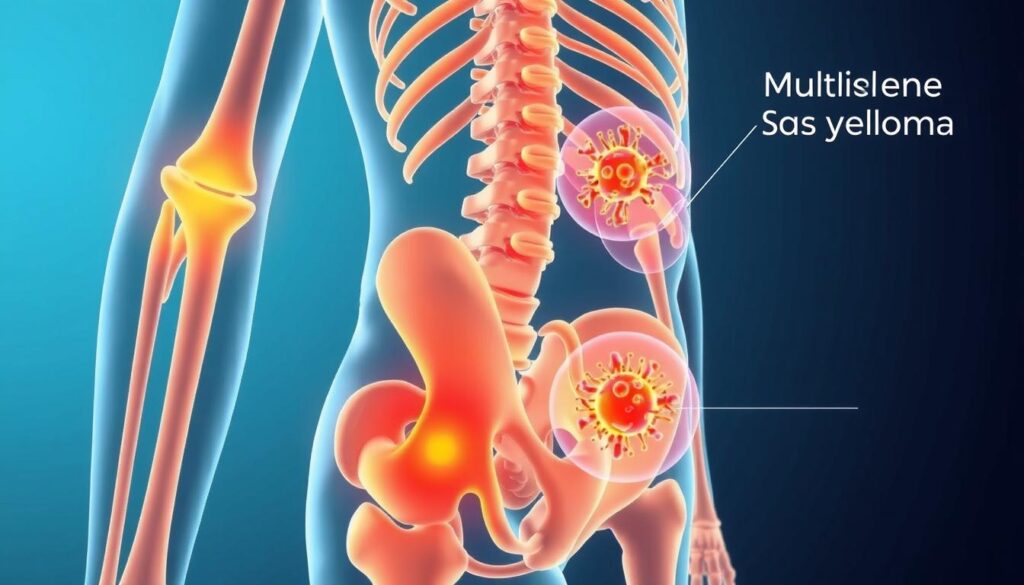
Multiple myeloma is a complex cancer affecting plasma cells in bone marrow. These cancerous cells disrupt normal body functions, creating significant health issues1. Early detection and understanding are vital for effective management.
About 124,733 people in the U.S. live with multiple myeloma. Men and Black individuals face slightly higher risks2. The disease progresses through stages, from slow growth to rapid advancement1.
Age, especially after 65, increases multiple myeloma risk. Family history can also play a role2. Some cases may not need immediate treatment.
Knowing potential symptoms and treatment options is crucial. This knowledge helps in managing your health effectively1.
Key Takeaways
- Multiple myeloma is a cancer affecting plasma cells in the bone marrow
- Risk factors include age, gender, and racial background
- Early detection can lead to better management strategies
- Treatment options vary based on disease stage and individual health
- Support and information are crucial for patient well-being
What is Multiple Myeloma?
Multiple myeloma is a blood cancer that affects plasma cells in bone marrow. It’s a complex condition that can seriously impact your health.
Understanding the Disease Process
A cancerous plasma cell multiplies rapidly, creating abnormal immunoglobulin proteins. These monoclonal proteins can harm your body’s normal functions3.
The disease typically progresses through several stages:
- Initial development of abnormal plasma cells
- Accumulation of monoclonal protein in the blood
- Potential progression to more serious symptoms
How Multiple Myeloma Impacts Your Body
Multiple myeloma can cause severe bone lesions, leading to pain and increased fracture risk4. Key impacts include:
- Bone damage affecting structural integrity
- Reduced blood cell production
- Potential kidney complications
Risk Factors to Consider
Several factors can increase your chances of developing multiple myeloma3:
- Advanced age (most diagnoses occur in late 60s)
- Male gender
- African American ethnicity
- Family history of the disease
Early detection and understanding of multiple myeloma can significantly improve potential treatment outcomes.
The condition often starts with monoclonal gammopathy of undetermined significance (MGUS). About 1% of MGUS patients develop more serious conditions yearly5.
Potential Health Complications
Multiple myeloma can lead to several serious health issues, including:
- Hypercalcemia due to bone breakdown
- Increased infection risk
- Kidney function deterioration
- Anemia from disrupted blood cell production
Multiple myeloma can’t be prevented. However, early detection and good medical care can help manage its impact on your life.
Recognizing the Signs of Multiple Myeloma
Multiple myeloma symptoms develop gradually over time. Spotting these signs early helps detect potential health issues. Quick action can lead to better medical care.
Common Symptoms to Monitor
Multiple myeloma shows through key health indicators. Bone pain often occurs in the back, hips, and skull6. This pain can greatly affect your daily life.
Patients may also experience other concerning symptoms. These include ongoing fatigue, weakness, and frequent infections7. Low blood cell counts and unexpected weight loss are also common67.
- Persistent fatigue and weakness7
- Frequent infections in respiratory and urinary systems7
- Low blood cell counts affecting red and white blood cells6
- Unexpected weight loss7
Critical Warning Signs
Some advanced symptoms need immediate medical attention. High calcium levels can cause extreme thirst and dehydration. These may lead to kidney problems6.
Neurological symptoms might also appear. These can include numbness, tingling, and peripheral neuropathy7. Such signs should not be ignored.
| Symptom Category | Potential Health Impact |
|---|---|
| Neurological Changes | Numbness, weakness, potential nerve damage |
| Blood-Related Issues | Anemia, increased infection risk |
| Metabolic Disruptions | Hypercalcemia, kidney strain |
When to Seek Medical Advice
Multiple myeloma often affects people over 65. It’s more common in Black populations and males8. Seek medical help if you have ongoing bone pain or frequent infections.
Unexplained weight loss is another reason to see a doctor. Quick action can lead to better treatment outcomes.
Early detection through stem cell transplant evaluation and understanding potential treatments like proteasome inhibitors and immunomodulatory drugs can significantly improve patient outcomes.
These symptoms might indicate multiple myeloma or other conditions. Always consult a doctor for an accurate diagnosis. Professional medical advice is key to proper care.
Treatment Options for Multiple Myeloma
Multiple myeloma treatment focuses on managing your health and slowing disease progression. Your care plan will target plasma cells in the bone marrow. Initial treatment usually involves 3 or 4 different types of drugs9.
Stem cell transplants are key in treating multiple myeloma. Autologous stem cell transplants are most common for this condition10. Your medical team may suggest strategies based on your cytogenetics profile9.
Advanced therapies like bispecific T-cell engagers (BiTEs) or CAR T-cell therapy might be part of your plan9. Some patients explore clinical trials for newer treatments. Medicines to maintain bone strength are typically included in comprehensive care9.
Multiple myeloma treatments are always improving. The goal is to manage symptoms and reduce myeloma cells. Your treatment strategy will be tailored to your unique medical needs.
FAQ
What is Multiple Myeloma?
Multiple myeloma is a cancer of plasma cells. These white blood cells usually make antibodies. In this disease, cancerous plasma cells build up in bone marrow. They crowd out healthy blood cells and make abnormal proteins called M proteins.
Who is at risk for Multiple Myeloma?
Risk factors include being over 60, male, or Black. Having a family history or MGUS also increases risk. Multiple myeloma isn’t hereditary and can’t be prevented.
What are the most common symptoms of Multiple Myeloma?
Common symptoms include bone pain, fatigue, and frequent infections. Nausea, constipation, and loss of appetite may occur. Mental fogginess, weight loss, and weakness are also possible.
Increased thirst and frequent urination can happen too. As the disease worsens, you might face anemia, kidney problems, and high calcium levels.
How does Multiple Myeloma affect the body?
Multiple myeloma crowds out healthy blood cells, causing anemia and infection risks. Abnormal M proteins can harm organs, especially the kidneys. The disease also damages bones, causing pain and increasing fracture risk.
What treatment options are available for Multiple Myeloma?
Treatment options include proteasome inhibitors and immunomodulatory drugs. Stem cell transplants are also used. Your treatment plan depends on your condition and disease stage.
Can Multiple Myeloma be cured?
Multiple myeloma can’t be fully cured. However, modern treatments can improve life quality and extend survival. Early detection and personalized treatment help manage the disease effectively.
When should I seek medical advice?
Seek medical help if you have ongoing bone pain or unexplained fatigue. Frequent infections or other concerning health changes are also reasons to consult a doctor.
Are there support resources for Multiple Myeloma patients?
Yes, various support resources are available for multiple myeloma patients. These include educational materials, support groups, and specialized care centers. They offer valuable information, emotional support, and guidance for patients and families.
Source Links
- Multiple myeloma – Diagnosis and treatment – https://www.mayoclinic.org/diseases-conditions/multiple-myeloma/diagnosis-treatment/drc-20353383
- Multiple Myeloma – https://www.mdanderson.org/cancer-types/multiple-myeloma.html
- Multiple myeloma – Symptoms and causes – https://www.mayoclinic.org/diseases-conditions/multiple-myeloma/symptoms-causes/syc-20353378
- What is Multiple Myeloma? Symptoms, Causes, & Prognosis – https://themmrf.org/multiple-myeloma/
- What Is Multiple Myeloma? | Plasma Cell Cancer – https://www.cancer.org/cancer/types/multiple-myeloma/about/what-is-multiple-myeloma.html
- Signs and Symptoms of Multiple Myeloma – https://www.cancer.org/cancer/types/multiple-myeloma/detection-diagnosis-staging/signs-symptoms.html
- Multiple Myeloma Symptoms – https://www.mskcc.org/cancer-care/types/multiple-myeloma/multiple-myeloma-symptoms
- What Are the First Symptoms of Multiple Myeloma? – https://www.healthline.com/health/multiple-myeloma/early-symptoms-of-multiple-myeloma
- Treatment Options for Multiple Myeloma and Other Plasma Cell Disorders – https://www.cancer.org/cancer/types/multiple-myeloma/treating/by-stage.html
- Multiple Myeloma Treatment – https://www.mdanderson.org/cancer-types/multiple-myeloma/multiple-myeloma-treatment.html

