
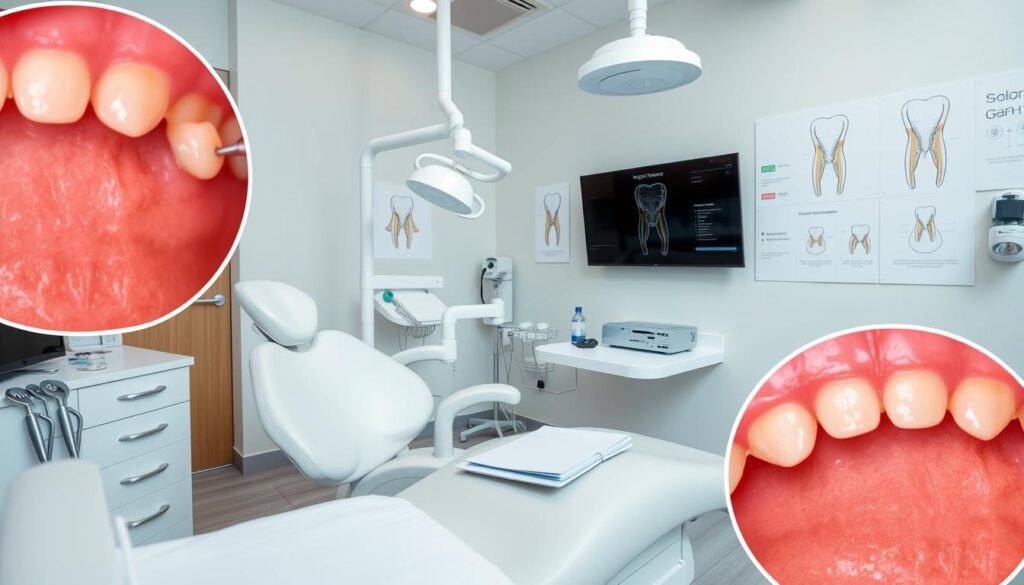
Periodontitis is a serious dental issue that attacks your gums and bone structure. If not treated, it can cause tooth loss and other oral problems1. Good oral hygiene is key to preventing and managing this condition2.
Recognizing early signs of gum disease is crucial. Gingivitis, the first stage, can be reversed with proper care1. Regular dental cleanings and daily oral care can stop gum disease from getting worse.
Brush your teeth two to three times daily. Don’t forget to floss and visit your dentist regularly. These habits help keep gum disease at bay1.
Gum disease risk factors go beyond poor dental habits. Smoking is the biggest threat to gum health. It greatly reduces treatment success2.
Other risks include hormonal changes and certain medical conditions. Diabetes and genetic factors can also play a role2.
Key Takeaways
- Periodontitis is a serious gum disease that can lead to tooth loss
- Early detection and proper oral hygiene are crucial for prevention
- Regular dental check-ups can help manage gum health
- Smoking significantly increases the risk of gum disease
- Treatment approaches vary based on disease severity
What is Periodontitis and Its Impact on Oral Health
Gum disease is a serious oral health condition that can develop silently. Periodontitis is an advanced stage of gum inflammation. It threatens your dental and overall health3.
About 4 in 10 U.S. adults aged 30 or older have experienced this challenging dental condition3. It’s a widespread issue affecting many Americans.
Understanding Gum Disease Progression
Periodontitis begins with plaque buildup, a sticky bacterial film on teeth. Left untreated, this plaque can transform into a more dangerous condition4.
The progression typically follows these stages:
- Initial gingivitis development
- Bacterial invasion beneath gum lines
- Potential bone and tissue destruction
- Risk of tooth loss
Risk Factors and Warning Signs
Several factors can increase your vulnerability to periodontitis:
- Smoking
- Hormonal changes
- Genetic predisposition
- Diabetes
- Poor nutrition
Common symptoms include swollen gums and bleeding during brushing. Persistent bad breath and loose teeth are also warning signs4.
Health Implications Beyond Your Mouth
Periodontitis isn’t just a dental issue. It can impact your overall health. Research suggests it may influence cardiovascular conditions and systemic inflammation4.
Prevention is always better than cure when it comes to gum health.
| Age Group | Periodontitis Prevalence |
|---|---|
| Adults 30-64 | 40% |
| Adults 65+ | 60% |
Regular dental check-ups and excellent oral hygiene can significantly reduce your risk of developing serious gum disease3.
Causes and Prevention of Gum Disease
Gum inflammation is a serious oral health issue. It can lead to major dental problems. Understanding its causes helps protect your oral hygiene and prevent complications5.
Dental plaque is the main cause of gum disease. It’s a sticky bacterial film on teeth. If not removed, plaque hardens into tartar6.
Only professional dental cleaning can remove tartar. Regular cleaning is crucial for preventing gum disease.
“Prevention is always better than cure when it comes to oral health.”
Key Risk Factors
- Smoking significantly increases gum disease risk5
- Genetic predisposition can make some individuals more susceptible6
- Hormonal changes impact gum health6
- Diabetes increases the likelihood of gum disease5
Stress and certain medications can weaken your immune system. This makes it harder to fight mouth bacteria6.
Prevention Strategies
- Brush teeth twice daily with fluoride toothpaste
- Floss regularly to remove plaque between teeth
- Use interdental cleaning devices
- Schedule routine dental check-ups
- Quit smoking
| Age Group | Gum Disease Risk |
|---|---|
| Teenagers | Low (mostly gingivitis)5 |
| Adults (30-40) | High risk of developing periodontitis5 |
Remember, early detection and consistent oral hygiene are your best defenses against gum disease.
Advanced Treatment Options for Periodontitis
Periodontitis treatment requires a tailored approach for your oral health needs. Dental experts use various methods to fight gum disease. These strategies aim to prevent further damage to teeth and gums7.
Non-Surgical Treatment Approaches
Scaling and root planing is a key non-surgical treatment for gum disease. This deep cleaning removes plaque and tartar below the gum line. It helps reduce bacterial infection and inflammation8.
- Remove bacterial deposits
- Smooth tooth root surfaces
- Promote gum reattachment
Surgical Interventions and Procedures
Periodontal surgery becomes necessary when non-surgical treatments aren’t enough. Here are some options:
| Surgical Procedure | Purpose |
|---|---|
| Flap Surgery | Reduce pocket depth and eliminate bacterial pockets |
| Bone Grafting | Regenerate bone lost due to advanced periodontitis7 |
| Soft Tissue Grafts | Reinforce damaged gum tissue |
Innovative Treatments: LANAP and PRF Therapy
LANAP is a cutting-edge approach to treating periodontitis. This laser treatment targets diseased tissue while preserving healthy gums. It’s minimally invasive and doesn’t use traditional surgical techniques.
Modern periodontal treatments offer hope for patients struggling with advanced gum disease.
Platelet-Rich Fibrin (PRF) therapy is an innovative healing technique. It uses your body’s growth factors to speed up tissue regeneration. PRF concentrates healing proteins to support faster recovery8.
Conclusion
Keeping your gums healthy requires active care. Prevent gum disease by maintaining good dental habits. Regular check-ups help catch early signs of problems through thorough oral exams9.
Patients with gum disease need ongoing care to avoid flare-ups9. Preventing gum issues involves more than just brushing. It needs a complete plan with professional care and lifestyle changes10.
While periodontitis can’t be cured, proper care can manage its progress. Your dedication is key to oral health. Brush twice daily, floss, use mouthwash, and see your dentist regularly10.
Catching problems early is your best defense against gum disease. By focusing on gum health, you’re boosting your overall wellness. Every step towards better oral care helps create a healthier you.
FAQ
What is periodontitis?
Periodontitis is an advanced stage of gum disease. It causes inflammation, plaque buildup, and possible tooth and bone loss. This condition develops from untreated gingivitis and can lead to sore, bleeding gums.
While not curable, periodontitis can be managed with proper treatment. Early intervention is key to controlling this dental issue.
What are the main symptoms of periodontitis?
Key signs include swollen, bleeding gums and persistent bad breath. You might notice receding gum lines, loose teeth, and changes in bite alignment.
Gums may bleed when brushing or flossing. You might also feel discomfort or sensitivity in your teeth and gums.
What causes periodontitis?
Poor oral hygiene is the main cause of periodontitis. It allows plaque to build up and harden into tartar.
Risk factors include smoking, hormonal changes, and certain medical conditions like diabetes. Genetic predisposition and inadequate dental care also play a role.
How is periodontitis diagnosed?
Dentists diagnose periodontitis through a thorough dental exam. This includes measuring gum pocket depths and checking for gum inflammation.
They also review your dental and medical history. X-rays may be taken to assess bone loss.
Can periodontitis be prevented?
Yes, you can prevent periodontitis by maintaining excellent oral hygiene. Brush twice daily with fluoride toothpaste and floss regularly.
Use interdental cleaning devices and schedule routine dental check-ups. Avoid smoking to further protect your oral health.
What treatment options are available for periodontitis?
Treatment options include both non-surgical and surgical approaches. Non-surgical treatments involve scaling and root planing, which is deep cleaning.
Surgical interventions may include pocket reduction surgery and bone grafting. Innovative techniques like Laser-Assisted New Attachment Procedure (LANAP) are also available.
How does periodontitis affect overall health?
Periodontitis can increase risks of cardiovascular disease and diabetes complications. It may also lead to respiratory infections and pregnancy-related issues.
The inflammation and bacteria from gum disease can spread throughout your body. This can impact your overall health and well-being.
Is periodontitis reversible?
Periodontitis isn’t reversible, but it’s manageable. Early detection and consistent treatment can help control the disease.
Proper care prevents further progression and minimizes potential complications. These may include tooth loss and bone deterioration.
How often should I see a dentist if I have periodontitis?
With periodontitis, you should visit your dentist every 3-4 months. These visits are for professional cleanings and monitoring.
Your specific schedule may vary based on your condition’s severity. Your overall oral health also affects visit frequency.
What are the long-term consequences of untreated periodontitis?
Untreated periodontitis can lead to complete tooth loss and significant bone deterioration. It increases systemic health risks and may impact your overall quality of life.
Prompt and consistent treatment is crucial for managing this condition. Regular dental care helps prevent these severe consequences.
Source Links
- Periodontal (Gum) Disease: How Serious Is It? – https://my.clevelandclinic.org/health/diseases/21482-gum-periodontal-disease
- Periodontal (Gum) Disease – https://www.nidcr.nih.gov/health-info/gum-disease
- About Periodontal (Gum) Disease – https://www.cdc.gov/oral-health/about/gum-periodontal-disease.html
- Periodontitis – Symptoms and causes – https://www.mayoclinic.org/diseases-conditions/periodontitis/symptoms-causes/syc-20354473
- Periodontal (Gum) Disease: Causes, Symptoms, and Treatments – https://www.nidcr.nih.gov/sites/default/files/2017-09/periodontal-disease_0.pdf
- The Periodontal Group – https://www.theperiodontalgroup.com/procedures/periodontal-disease/causes-of-periodontal-disease/
- Periodontitis – Diagnosis and treatment – https://www.mayoclinic.org/diseases-conditions/periodontitis/diagnosis-treatment/drc-20354479
- Advanced Periodontal Treatment – Periodontal Specialists – https://www.gumexpert.com/advanced-periodontal-treatment/
- periodontitis – https://www.ada.org/resources/ada-library/oral-health-topics/periodontitis
- What Is Periodontal Disease? | Periodontist Philadelphia | The Perio Group – https://www.theperiogroup.com/periodontics/what-is-periodontal-disease/

