
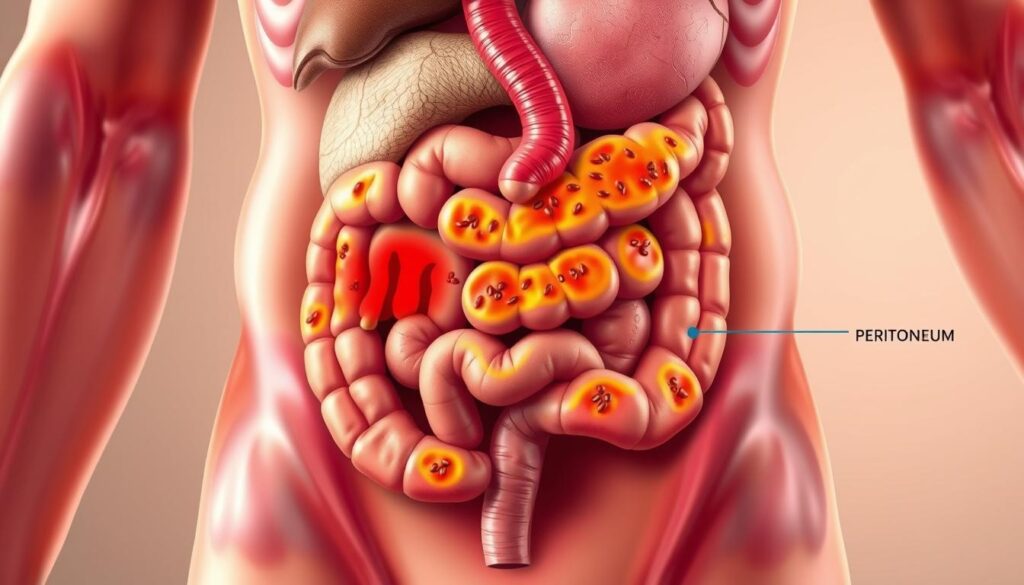
Peritonitis is a serious inflammation that needs quick medical help. It happens when bacteria or fungi attack the tissue lining your belly1. Knowing its signs and causes could save your life2.
Your body warns you with bad belly pain, fever, and bloating. You might also pee less1. These signs can get worse fast, so see a doctor right away2.
There are two main types of peritonitis: spontaneous and secondary1. Each type comes from different health issues and needs special care3.
Key Takeaways
- Peritonitis is a serious abdominal inflammation that can be life-threatening
- Symptoms include severe abdominal pain, fever, and reduced urine output
- Immediate medical treatment is critical for preventing complications
- Two main types of peritonitis exist: spontaneous and secondary
- Risk factors include peritoneal dialysis, liver disease, and certain medical procedures
Understanding Peritonitis and Its Warning Signs
Peritonitis is a serious condition affecting your abdominal cavity lining. Early symptom recognition is crucial to prevent life-threatening complications. Your body sends specific warning signals you shouldn’t ignore.
Common Symptoms to Watch For
Peritonitis triggers several distinctive symptoms requiring immediate attention. These include:
- Severe abdominal tenderness that intensifies quickly
- Persistent fever that signals your body’s fight against infection4
- Nausea and vomiting that disrupt your normal eating patterns
- Loss of appetite and significant weight loss
- Bloating and extreme discomfort in your abdomen5
Types of Peritonitis
Doctors recognize different types of peritonitis, each with unique features:
| Type | Key Characteristics | Primary Causes |
|---|---|---|
| Spontaneous Bacterial Peritonitis | Occurs in patients with liver disease | Cirrhosis, fluid buildup in abdomen5 |
| Secondary Peritonitis | Caused by organ perforation | Ruptured appendix, digestive diseases4 |
| Sterile Peritonitis | No direct infection present | Leaking fluids from organs5 |
Warning: Prompt medical attention is critical if you experience severe abdominal pain accompanied by fever or changes in your bodily functions. Quick action can prevent serious complications6.
Your health depends on recognizing these signs. Don’t hesitate to seek medical help if you notice any symptoms.
“Early recognition of peritonitis symptoms can be the difference between a manageable condition and a life-threatening emergency.” – Medical Professionals
What Causes Peritonitis and Risk Factors
Knowing peritonitis causes is key for early detection and prevention. It can develop through various pathways. Some conditions increase your risk significantly7.
Certain medical conditions raise your peritonitis risk. Liver cirrhosis is a major concern, especially with advanced liver disease7. Liver patients face higher chances of spontaneous bacterial peritonitis8.
- Serum bilirubin concentration above 2.5 mg/dL
- Variceal bleeding
- Previous peritonitis episodes
Medical interventions and conditions can increase your risk. Peritoneal dialysis and surgeries may introduce infection pathways9. Possible triggers include:
- Ruptured appendicitis
- Stomach ulcers
- Pancreatitis
- Bloodstream infections
Ascites, fluid buildup in the abdomen, can promote bacterial growth7. Your health profile, age, and nutrition affect peritonitis susceptibility8.
Prevention and early recognition are your best defenses against this serious condition.
Doctors suggest monitoring high-risk patients closely. They recommend preventive strategies like ongoing antibiotics for liver failure or acute digestive issues7.
Conclusion
Peritonitis is a serious medical issue requiring quick and thorough treatment. Understanding risks and prevention strategies can greatly improve patient outcomes10. Quick response to symptoms could save lives, as mortality rates can reach 10% in studies10.
Managing peritonitis involves a multi-pronged approach. Intravenous antibiotics fight infection, while surgery often addresses the root cause11. Patients with cirrhosis face higher risks, with 10-30% developing serious complications11.
Prevention is crucial, especially for those on peritoneal dialysis or with weak immune systems. Early detection and aggressive treatment are vital. Complications can be severe, including septicemia and organ failure.
Timely surgery and strong antibiotic treatments can greatly boost recovery chances10. Proper hygiene and seeking immediate medical help when symptoms appear are your best defenses. Stay informed and work closely with healthcare providers to reduce risks.
Your health and quick action are key in managing this complex condition. A comprehensive strategy of prevention, early intervention, and precise care is essential. Stay vigilant and prioritize your well-being to tackle this medical challenge effectively.
FAQ
What is peritonitis and how serious is it?
Peritonitis is a dangerous condition where the tissue lining your abdomen becomes inflamed. It’s usually caused by infections and needs urgent medical care. Without quick treatment, it can lead to severe health problems.
What are the main symptoms of peritonitis?
Key symptoms include severe belly pain, fever, nausea, and vomiting. You might also feel tired, confused, and notice less pee. Bloating and loss of appetite are common too.
For dialysis patients, the fluid might look cloudy or have white flecks.
What causes peritonitis?
Peritonitis can happen when organs in your belly get holes. This includes problems like burst appendix, stomach ulcers, or inflamed pancreas. Some medical procedures can also cause it.
People with liver problems are at higher risk for a type called spontaneous bacterial peritonitis.
How is peritonitis typically treated?
Treatment usually involves strong antibiotics given through an IV. Sometimes, emergency surgery is needed to remove the source of infection. For dialysis patients, preventing infection is crucial.
This means keeping hands clean and using sterile methods during treatments.
Who is at highest risk for developing peritonitis?
People on peritoneal dialysis face the highest risk. Those with liver problems or certain gut diseases are also more likely to get it. If you’ve had peritonitis before, you’re at higher risk too.
Can peritonitis be prevented?
Yes, there are ways to lower your risk. Good hygiene is key, especially for dialysis patients. Avoid belly injuries and treat other health issues quickly.
Some people might need to take antibiotics to prevent peritonitis.
What are the different types of peritonitis?
There are two main types of peritonitis. Spontaneous bacterial peritonitis often affects people with liver disease. Secondary peritonitis usually happens when an organ in the belly gets a hole.
Each type needs its own special care and treatment.
Source Links
- Peritonitis – Symptoms and causes – https://www.mayoclinic.org/diseases-conditions/peritonitis/symptoms-causes/syc-20376247
- Peritonitis – https://www.hopkinsmedicine.org/health/conditions-and-diseases/peritonitis
- What You Need to Know About Peritonitis – https://www.healthline.com/health/peritonitis
- Peritonitis – https://www.mountsinai.org/health-library/diseases-conditions/peritonitis
- Peritonitis: Symptoms, Treatments, Types, and Causes – https://www.webmd.com/digestive-disorders/peritonitis-symptoms-causes-treatments
- What is peritonitis? – https://www.kidney.org/kidney-topics/peritonitis
- Peritonitis – spontaneous bacterial – UF Health – https://ufhealth.org/conditions-and-treatments/peritonitis-spontaneous-bacterial
- What Causes Peritonitis? – https://www.news-medical.net/health/What-Causes-Peritonitis.aspx
- Peritonitis – secondary: MedlinePlus Medical Encyclopedia – https://medlineplus.gov/ency/article/000651.htm
- Causes of Acute Peritonitis and Its Complication – https://pmc.ncbi.nlm.nih.gov/articles/PMC8237913/
- Peritonitis and Abdominal Sepsis: Background, Anatomy, Pathophysiology – https://emedicine.medscape.com/article/180234-overview

